PDFEnergy & CombustionRefractory on the tube wall: The inspection points
Protecting without blocking the heat: what matters when lining a boiler tube wall.
In a boiler, the refractory has to protect the tubes against erosion and corrosion while still letting the heat through. Three principles determine service life and efficiency at the tube wall.

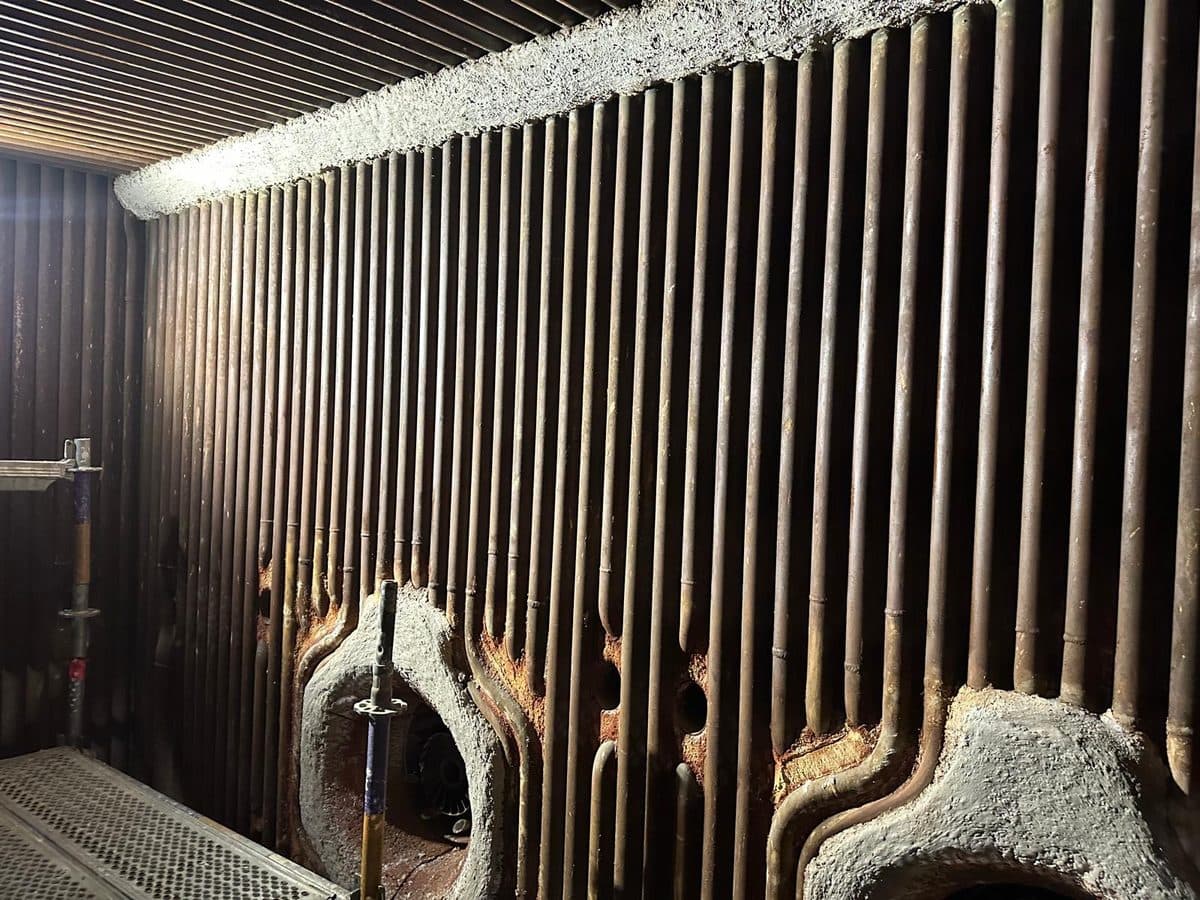
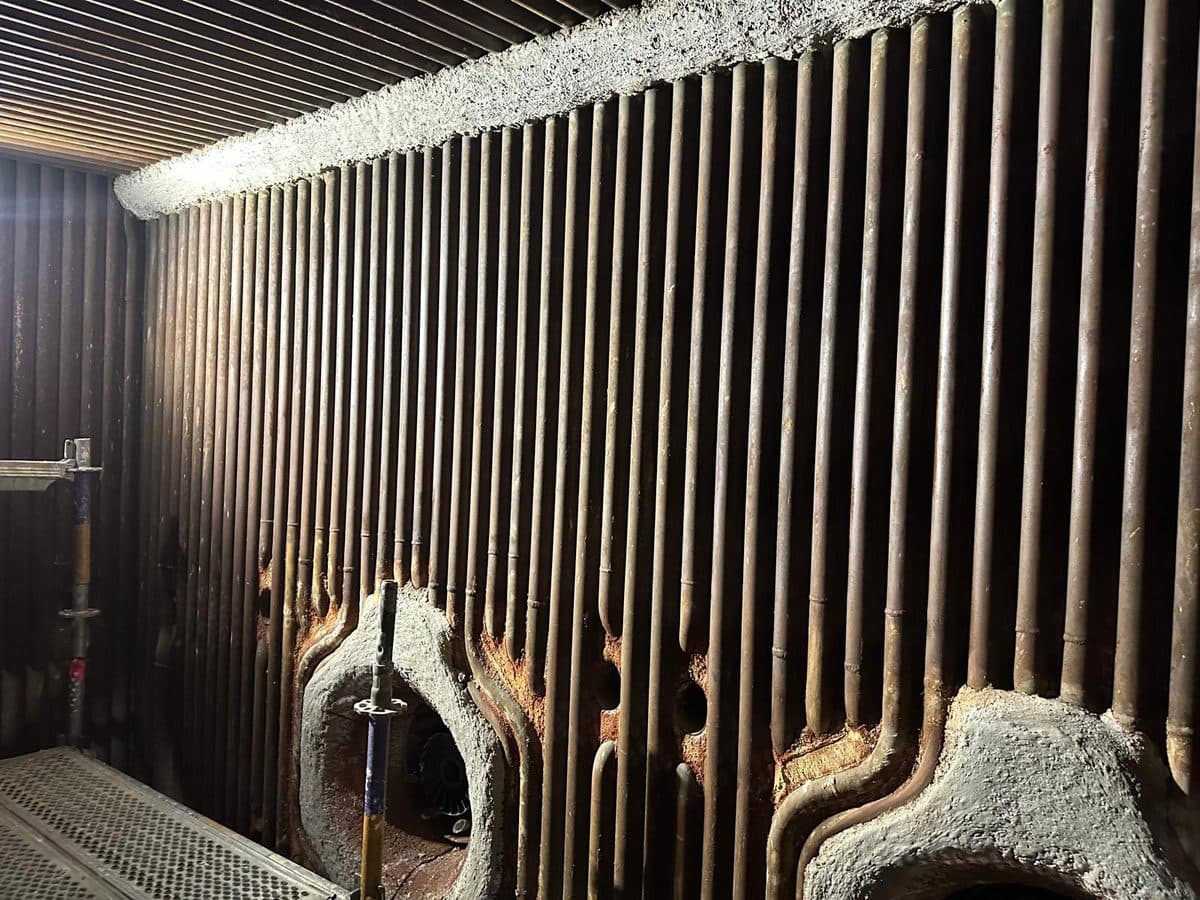
In the combustion chamber of a boiler, the refractory has a different job than in a melting furnace. Behind the lining there are no steel plates but water- or steam-cooled tubes that are meant to absorb the heat. The lining has to protect them without blocking the heat. Too little refractory, and erosion and corrosion attack the tubes. Too much, and the boiler loses output because the heat no longer reaches the tubes.
On a tube wall, refractory goes only where it is needed: in the zones where ash and particles cause erosion or flue gas causes corrosion. There it is applied thin, dense and cleanly screeded. A thick layer looks solid, but it insulates the tubes and shifts the heat to areas the boiler was not designed for.

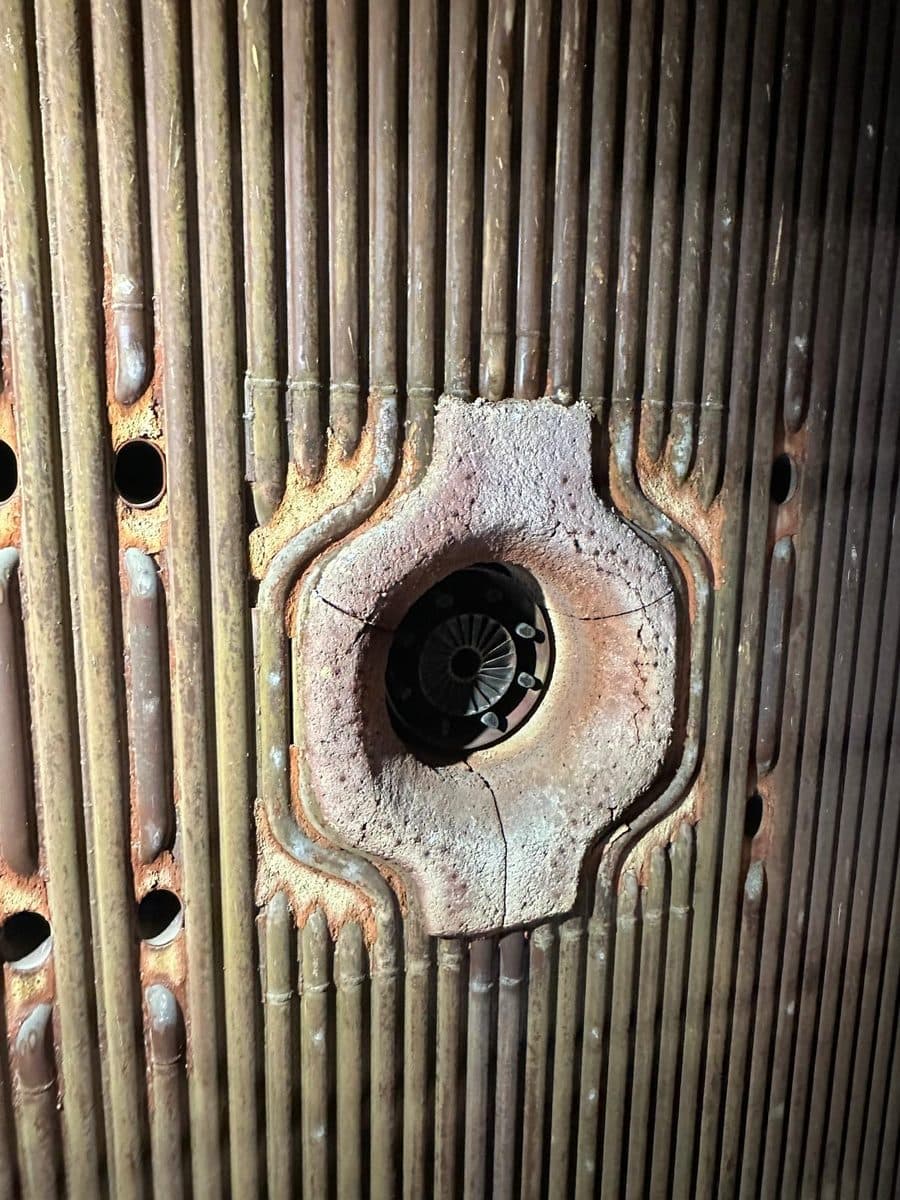
Where tubes are bent apart for burners, nozzles or sight holes, the geometry changes within a small space. Flame, flow and differential expansion meet there, and that is where the castable cracks first. We fit the openings precisely, round off the edges and start with them rather than with the plain surface.
The anchors holding the refractory are welded onto the fins between the tubes, never onto a tube. A weld on a pressure-bearing tube is an intervention in the boiler itself. Every weld is inspected before the castable is applied.
A tube wall is not a furnace shell. The refractory protects the tubes, but the boiler depends on the heat reaching them. A tube wall is lined correctly where it is attacked, and nowhere else.

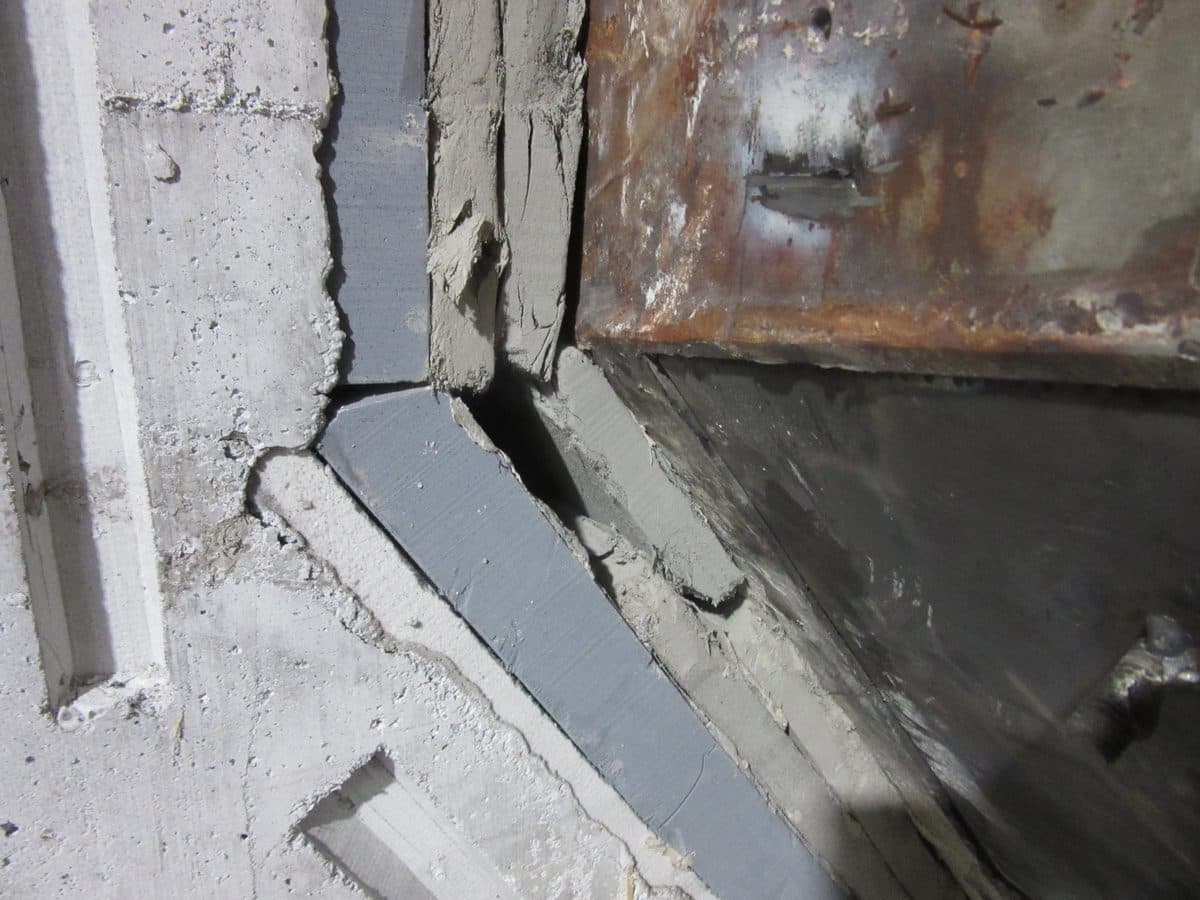
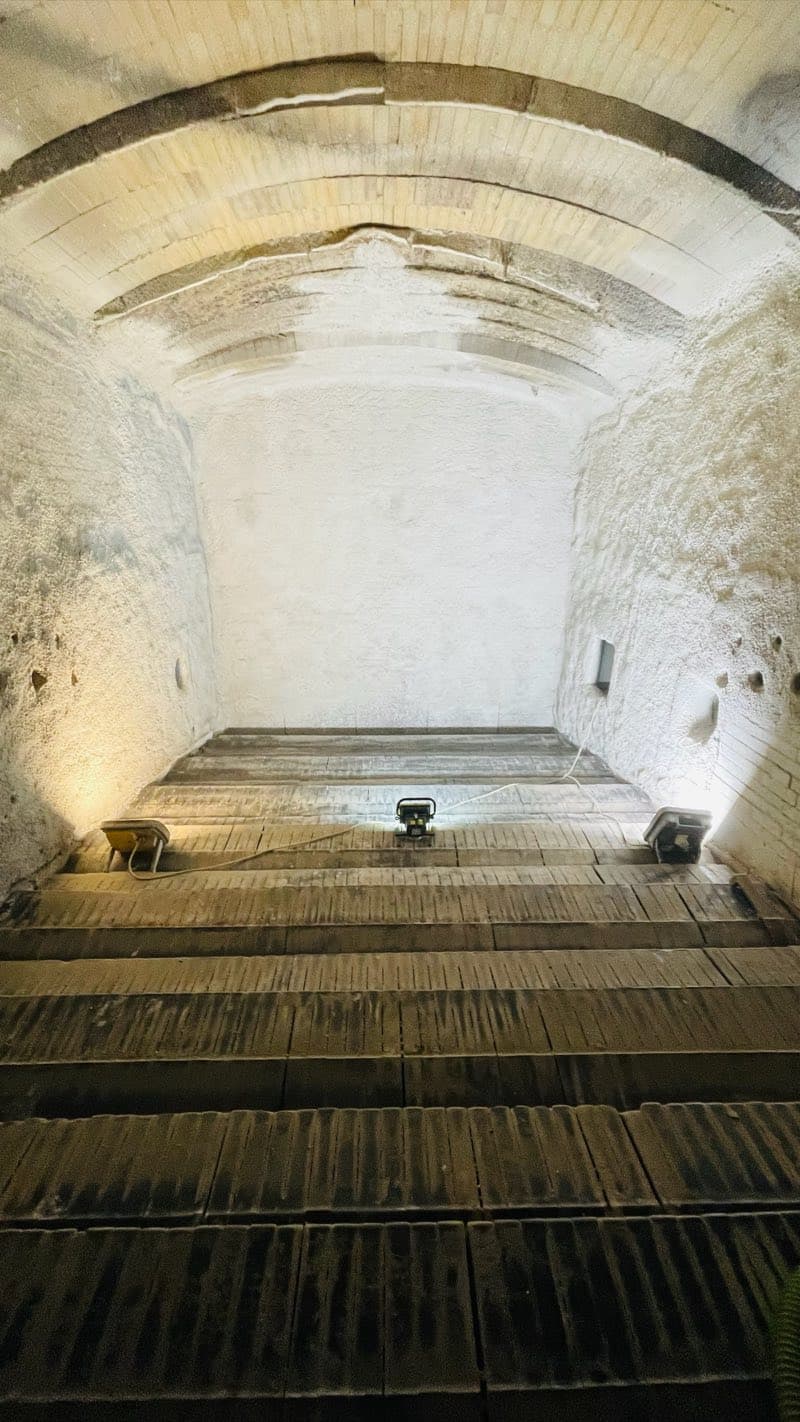
Refractory relining in the waste-to-energy plant of a major energy provider near Nuremberg – brickwork of the combustion chamber within the scheduled overhaul window.

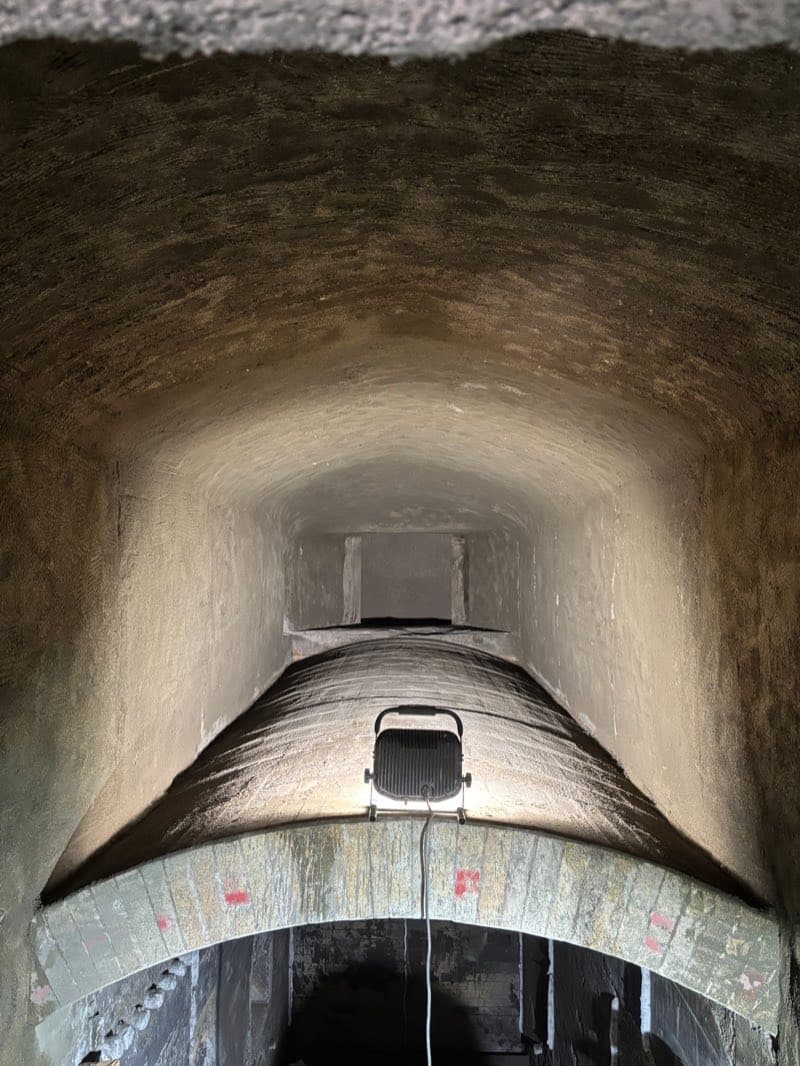
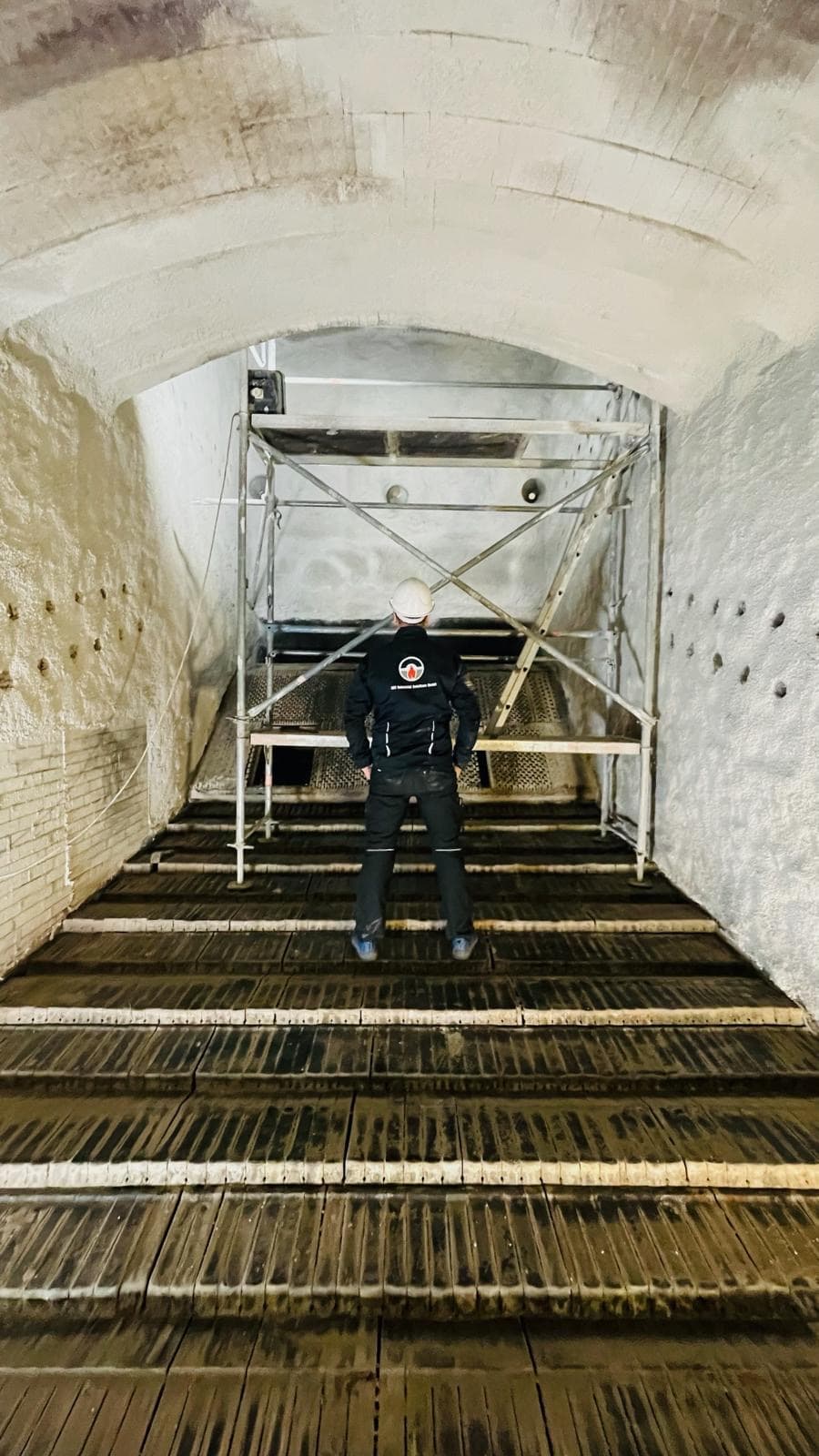
Relining of the combustion chamber of a biomass CHP plant with a moving grate: brickwork above the grate, monolithic lining above it, a stepped interlocking transition and secondary-air nozzles restored to the millimetre.

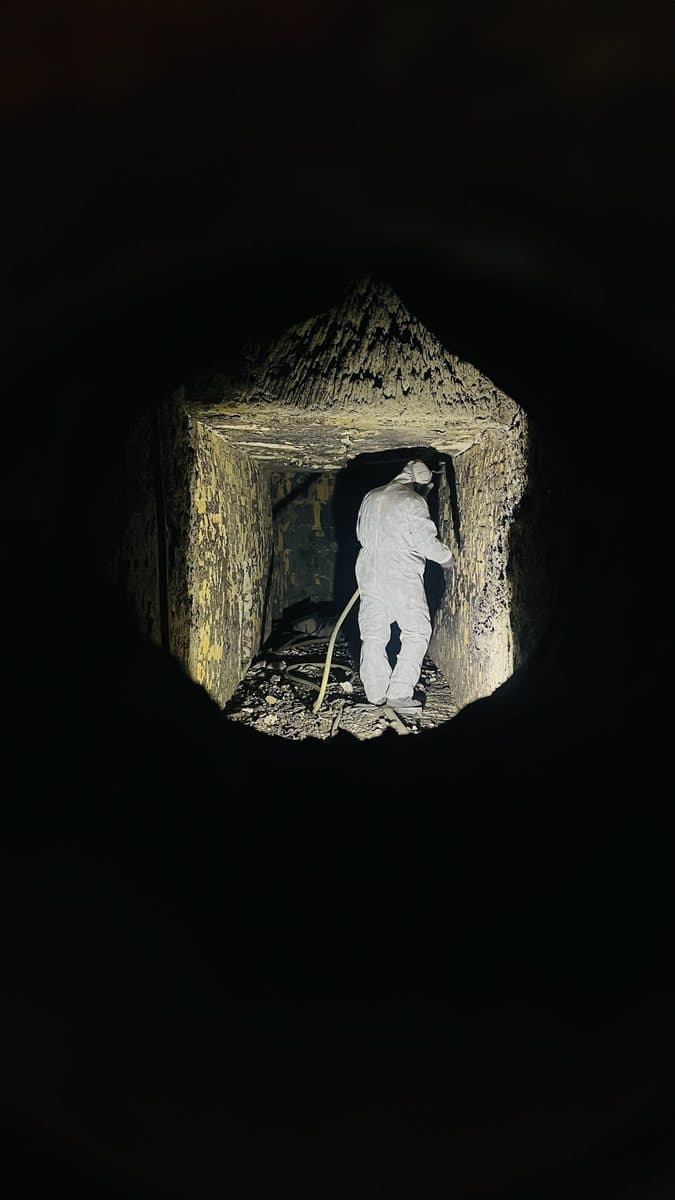
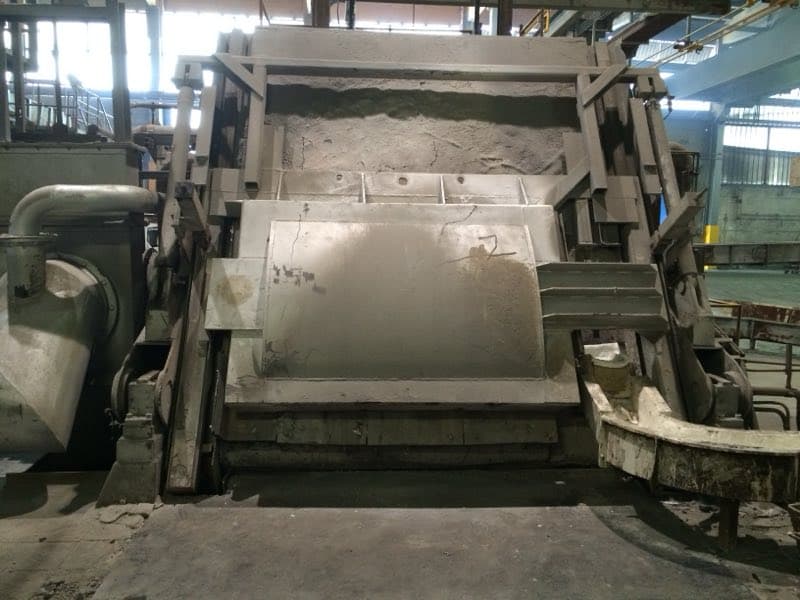
Extensive preventive maintenance of an 18 MW wood combustion plant – furnace cleaning, renewal of arch rings and maintenance gunning for maximum operational reliability.
Practice sheets, checklists and guides as print-ready PDFs — with content you will not find online. One sign-up unlocks all of them, permanently. Newsletter once a month, unsubscribe any time.
PDFEnergy & CombustionProtecting without blocking the heat: what matters when lining a boiler tube wall.
PDFAll furnace typesWhen a targeted repair is enough, and the three findings where only a relining will hold.
PDFAll plantsAccess, supervision, light and air: what is settled before anyone enters a furnace or boiler.
More insights from our projects
New insights from the job site every week – damage patterns, relinings and practical refractory know-how.
Whether complete relining, repair or emergency — free initial consultation and a fast response.
Your privacy matters to us.
We use cookies and similar technologies to ensure that our website functions properly and to analyse how our content is used. In the settings you can choose which cookies you wish to allow. Privacy policy