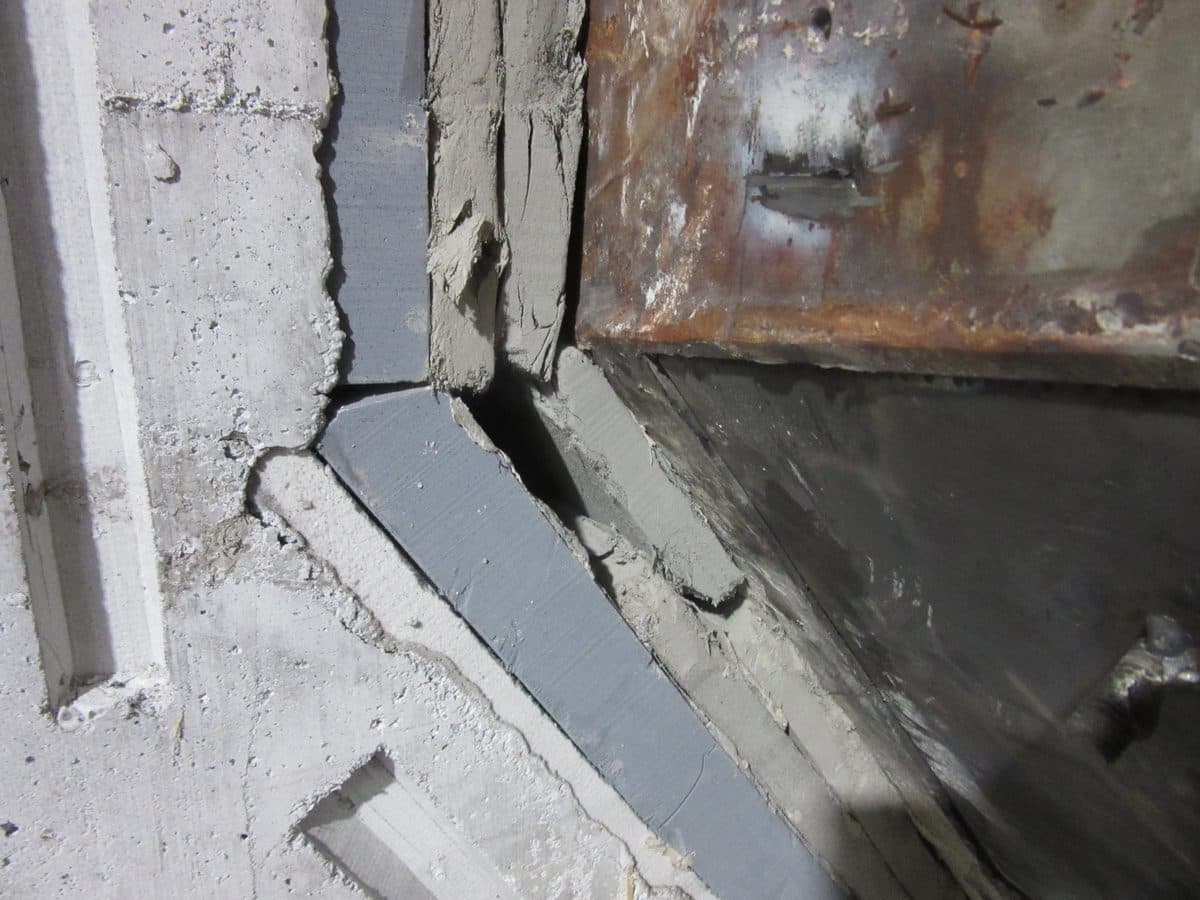
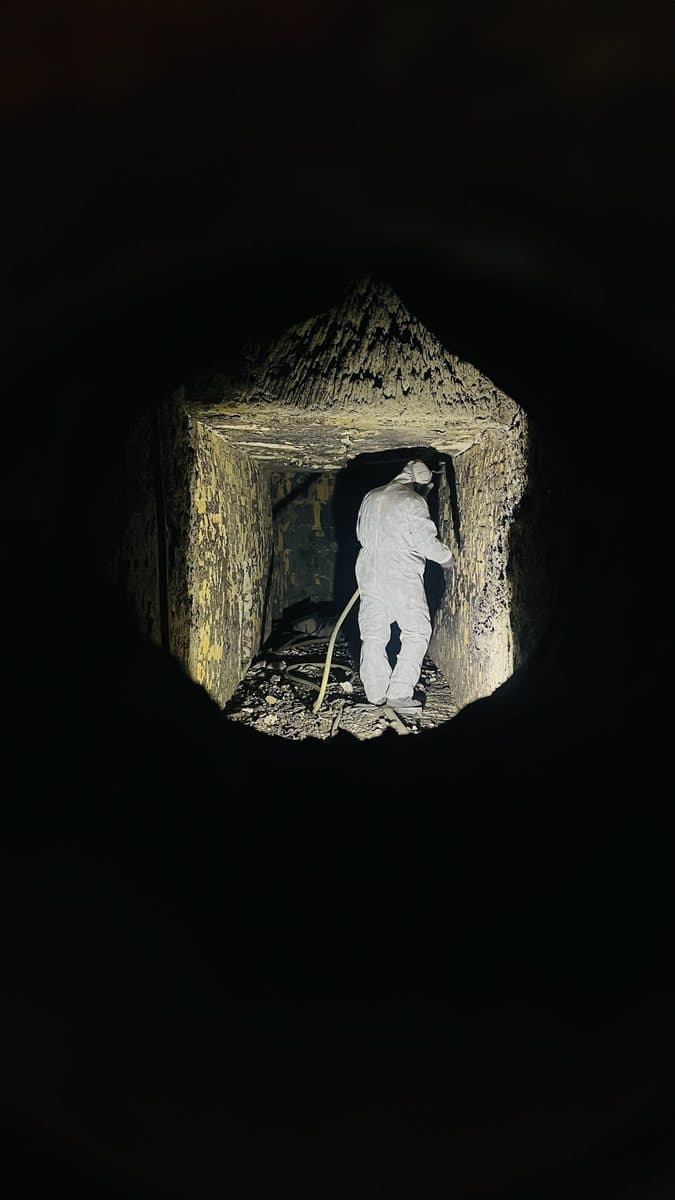
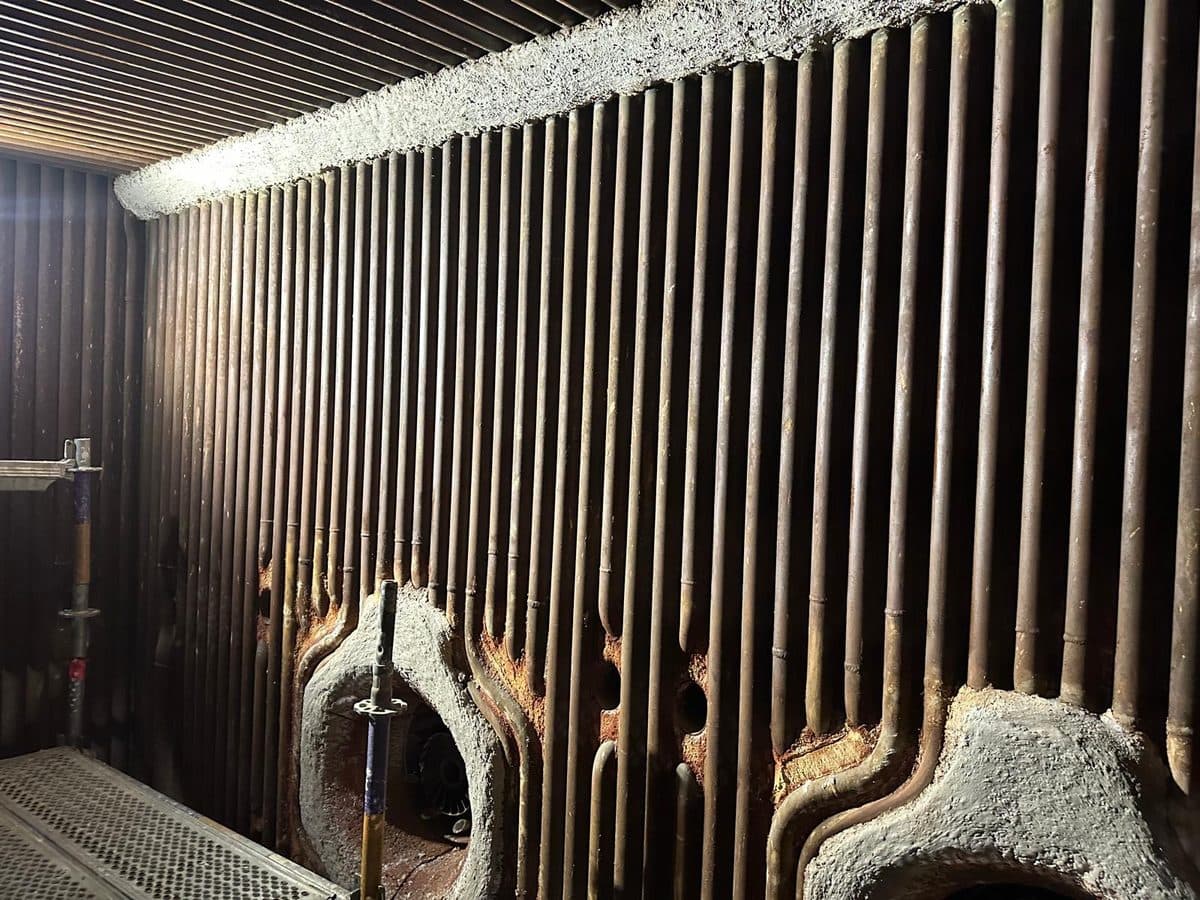
At the tube wall two trades meet: boiler making and refractory. The damage almost always occurs at the boundary — and almost always falls into the gap in responsibility between them.
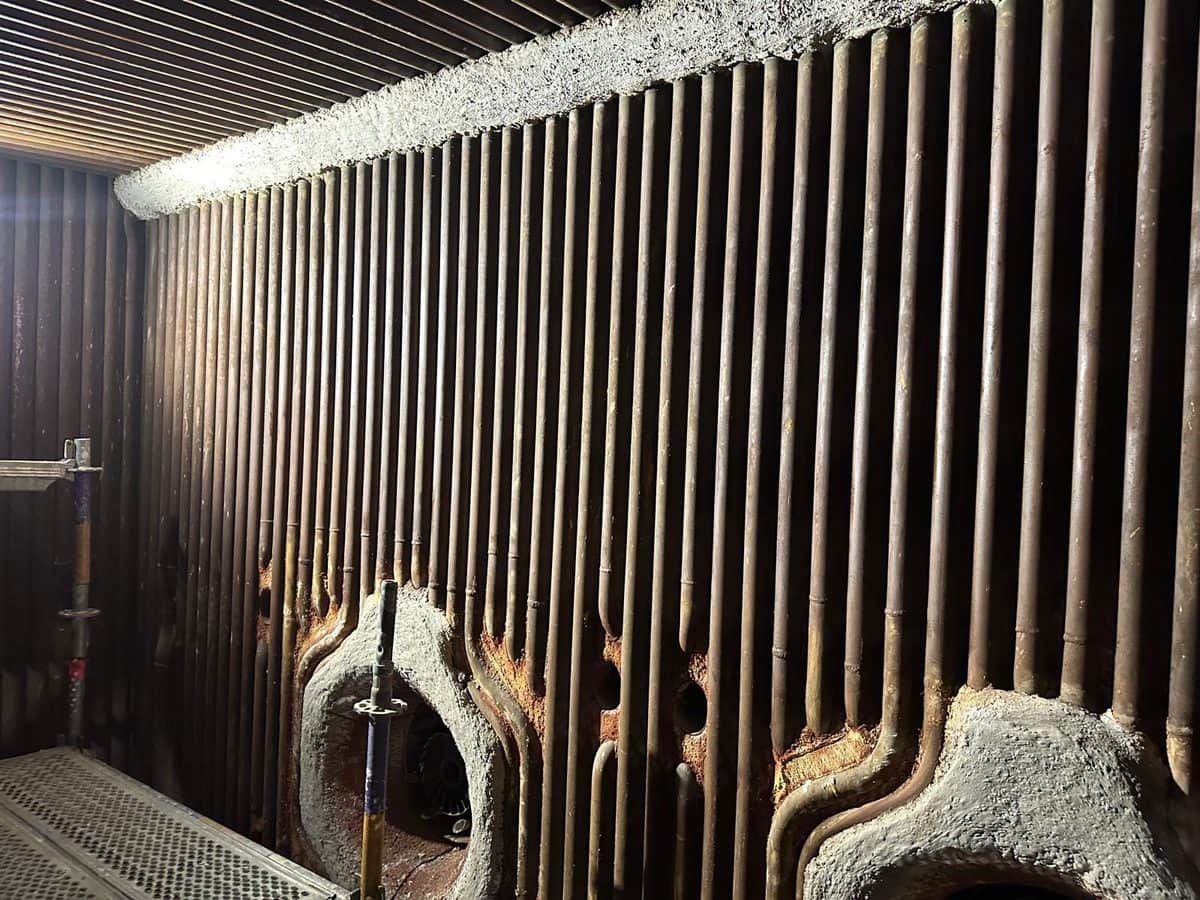
The lining of a tube wall has a task that differs from every other lining: it is meant to protect the tube without insulating it. Too little protection and the tube corrodes; too much insulation and the plant loses output at precisely the place where it is supposed to absorb heat.
This balancing act keeps the layer thin. And a thin layer forgives nothing.
Check point one: the studs
The material does not hold on the smooth tube but on studs or anchors welded onto it. They are the actual component. Where studs are missing, the material holds only by its own adhesion — that lasts one campaign, not three.
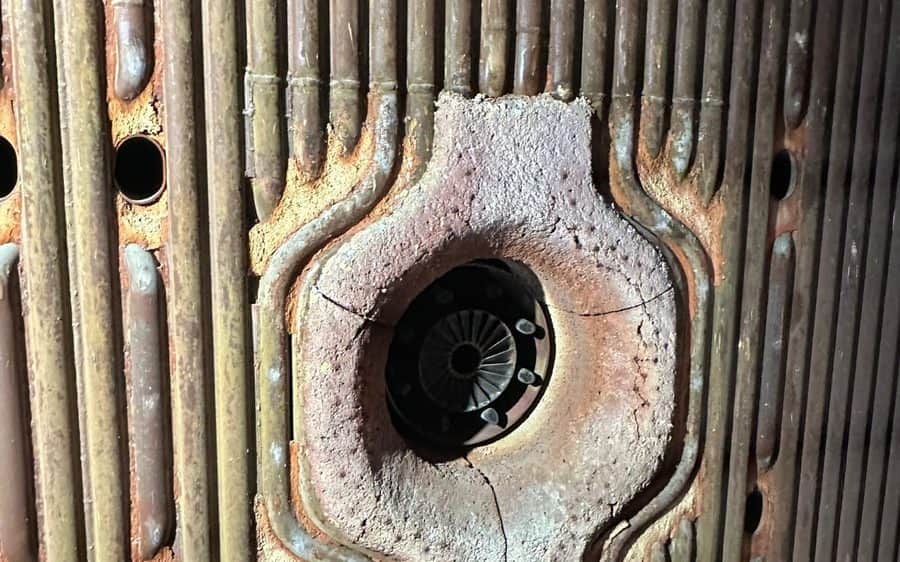
At the inspection, what counts is therefore not how the surface looks but what is happening where material is missing: if the stud stands free and bright, the layer was too thin or the bond was poor. If the stud has burnt off or is gone, the temperature there was higher than intended.
A burnt-off stud is not an installation fault. It is a temperature measurement — after the event, but unambiguous.
Check point two: layer thickness
Thickness here is not a comfort dimension but a design parameter. If a repair is applied more generously than the original, the heat transfer moves — and the area behind it receives less output than planned. In operation this does not show up as a refractory problem but as a drop in output.
That is why a repair at the tube wall needs the original thickness from the furnace file, not the judgement of the team on site.
Check point three: the edges
Every lined surface ends somewhere — at the transition to bare tube, at an opening, at a penetration. Everything attacks this edge at once: thermal shock, flow, the differing expansion of steel and material.
Check the edge for undercutting: if a gap has formed beneath the material, the area behind it is no longer protected, even if the surface looks intact.
Tap at the transition instead of looking. Hollow-sounding material sounds different and often still sits perfectly in the surface.
Photograph and number the edges. They are the points that will stand out first at the next overhaul.
The gap in responsibility
The tubes belong to the boiler maker, the material to the refractory contractor. The stud belongs to both — and is therefore regularly checked by nobody. Whoever plans the standstill should assign this point explicitly to one of the two. That is one line in the scope of work and saves the discussion after the damage.
We use cookies and similar technologies to ensure that our website functions properly and to analyse how our content is used. In the settings you can choose which cookies you wish to allow. Privacy policy

 PDFEnergy & Combustion