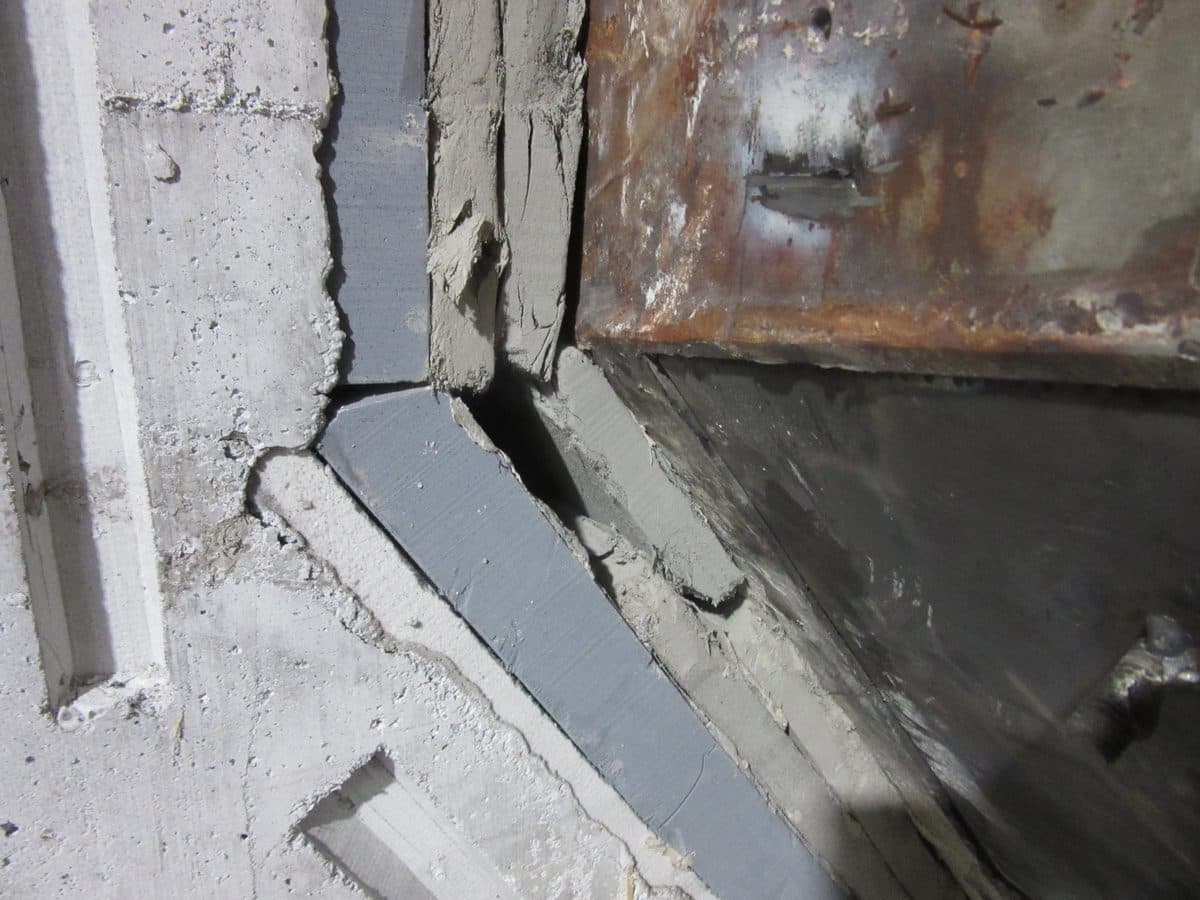
Once the furnace has been heated up, not a single joint can be seen and not a single anchor can be checked. The half hour before that is the only one in which a lining can still be assessed.
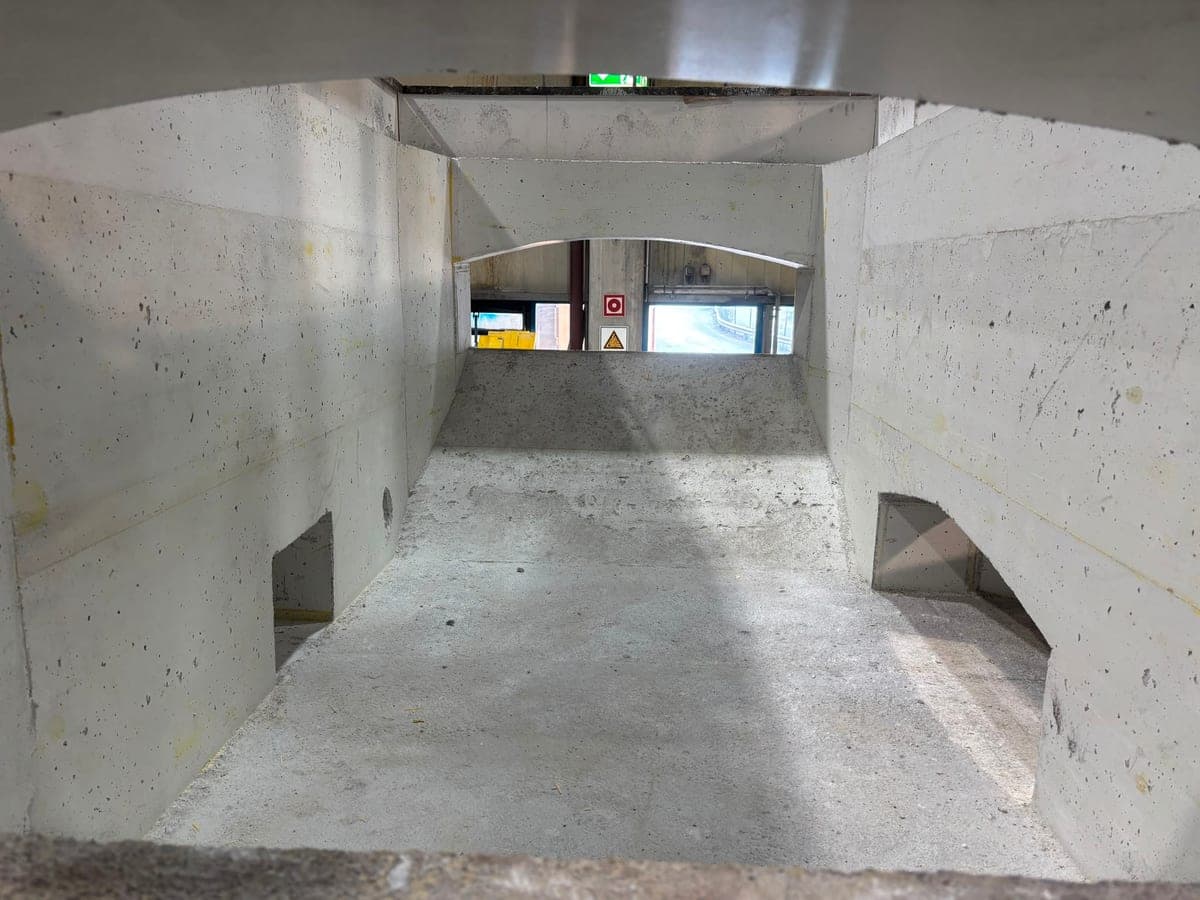
A lining is fully visible exactly once: in the hours between the last movement of the trowel and the first fire. After that everything disappears behind a surface that looks the same everywhere once the first cycle is over.
Even so, at many plants the acceptance inspection is a signing appointment. Someone walks through, nods, the record is signed off. Yet this is the only moment in which a fault can still be put right without a shutdown.
What can no longer be checked after heat-up
Joint width. Measurable cold, closed when hot. A joint that is too tight only shows up once expansion bursts it — and then as a crack, not as a dimension.
Anchor position. Visible as long as the working lining is not closed. After that you only know what is written in the furnace file.
The connection to the existing lining. The transition between new and retained material is an edge when cold and a weak point when hot.
Residual moisture. It determines the dry-out — and after the dry-out it is no longer a question but a finding.
Every point on this list costs minutes before heat-up. After heat-up it costs a shutdown.
The sequence that has proven itself
We work through the acceptance inspection from the outside in and from the bottom up — in the order in which it was built. That sounds like a formality, but there is a reason for it: faults in the build-up appear in the same order in which they were created.
First the shell: deformation, bulging plates, areas with temper colours from the last campaign. They tell you where the old lining was too thin — and where the new one will become thin first.
Then the openings: doors, sight glasses, burner ports, thermocouples. Every opening is a disturbance in the wall build-up, and every one is set by a different trade. This is the point where two installations meet.
The surface comes last. It is looked at most often and is least often the problem.
The dry-out curve is part of the acceptance inspection
Freshly placed castable contains water. If heating is too fast, that water expands as steam and bursts the material from the inside — faster in thin sections than in thick ones. That is why every lining needs a curve with holding times, matched to the material and the component thickness.
Who dries out, to which curve and with what measurement: that is not a detail for later but part of the acceptance inspection. Discussed for the first time on heat-up day, it will be improvised.
What belongs in the record
Photographs of the layers that will later be covered — insulation, anchors, layer boundaries. They are the only source for the next overhaul.
Material, batch and quantity per area. Without that, a wear pattern cannot be attributed two years later.
The dry-out curve actually run, not the one planned.
Open points with a date. A defect without a date is not a defect but a note.
These documents are not intended for the acceptance inspection but for the overhaul after next. Anyone who knows at the first inspection what lies behind the surface is spared breaking it open.
At a glance
once
That is how often a lining is fully visible
4
Points that can no longer be checked after heat-up
We use cookies and similar technologies to ensure that our website functions properly and to analyse how our content is used. In the settings you can choose which cookies you wish to allow. Privacy policy

 PDFAll furnace types