
Dry-Out, Heat-Up & Commissioning Support
Controlled dry-out and heat-up of freshly installed refractory linings – decisive for maximum service life and the avoidance of damage.
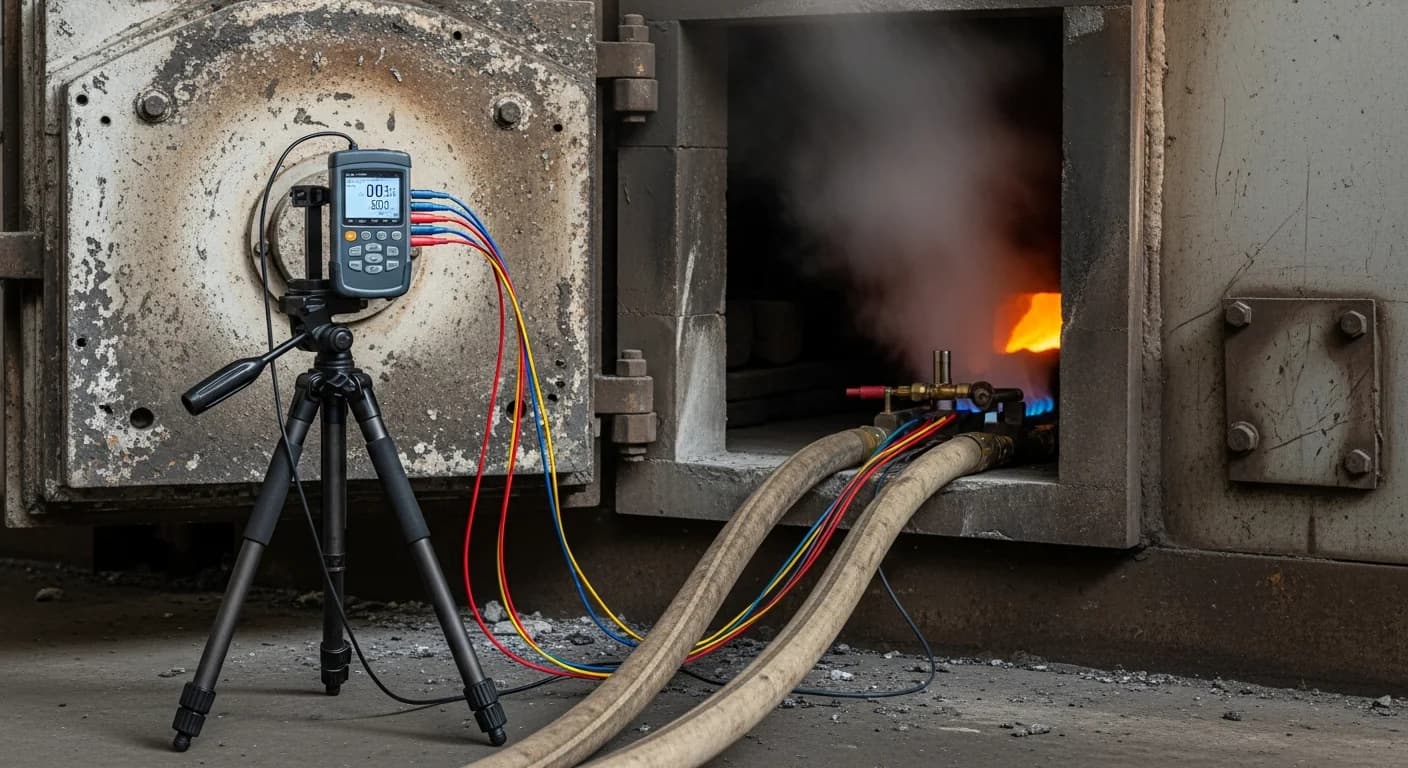
What does Dry-Out, involve?
The dry-out and heat-up of a freshly installed refractory lining are the most critical phases after any complete relining or major repair. Heating up too quickly can cause explosive spalling, cracking and premature failure – putting the entire investment at risk.
We prepare individual heat-up curves based on the material data sheets and the specific furnace geometry. Throughout the entire dry-out and heat-up process, our technicians monitor all relevant parameters: temperatures at multiple measuring points, heat-up rates, hold times and moisture release. Deviations are detected and corrected immediately.
With our commissioning support, we go beyond dry-out alone: we accompany the first production batches and monitor the behaviour of the new lining under operating conditions. In this way, we ensure that the lining is run in optimally and achieves its maximum service life.
At a glance
- Immediately after a complete relining or repair
- Observe the material manufacturer's heat-up curve
Step by step to the result
Structured, transparent and on schedule — this is how we work.
Planning
Preparing the heat-up curve to material specifications
We prepare the heat-up curve based on the material data sheets of all refractory products used. The furnace geometry, layer thicknesses and any special materials are taken into account. The curve precisely defines heat-up rates, hold temperatures and hold times.
Dry-out
Controlled removal of residual moisture
During the dry-out phase, residual moisture is driven out of the lining slowly and under controlled conditions. Temperature and humidity are continuously monitored. Drying too quickly generates steam pressure that can lead to spalling – which is why this phase is particularly critical.
Heat-up
Step-by-step heat-up following the curve
The step-by-step heat-up follows the planned curve exactly, with defined heat-up rates and hold times. Multiple thermocouples monitor the temperatures at various points in the lining. Our technicians are on site around the clock and respond immediately to any deviations.
Records
Complete documentation of all parameters
Throughout the entire process, all temperatures, times and observations are recorded without gaps. The dry-out and heat-up record forms part of the overall documentation and serves as evidence for warranty claims and quality assurance.
Your advantages at a glance
Controlled dry-out to the manufacturer's curve
We dry out and heat up exactly according to the material manufacturer's heat-up curve, monitor the process without gaps and document every deviation.
24/7 monitoring
Our technicians are on site around the clock – heat-up is never left unattended.
Individual heat-up curves
Every curve is prepared individually and takes into account all materials used and the furnace geometry.
Commissioning support
On request, we accompany the first production batches and monitor the behaviour of the new lining.
When does Dry-Out, make sense?
Typical situations in which this service is used.
After a complete relining
After major repairs
At initial commissioning
Frequently asked questions
Everything you need to know about Dry-Out, Heat-Up & Commissioning Support
Your question not listed?
Request personal adviceFurther reading
You may also be interested in
Planning a project?
Whether complete relining, repair or emergency — free initial consultation and a fast response.