
 PDFAll furnace types
Running heat-up curves correctly
Why the first days decide over years of service life.
Only in the PDFExample curves for ramming mix, castable and brick lining with hold points and ramp rates
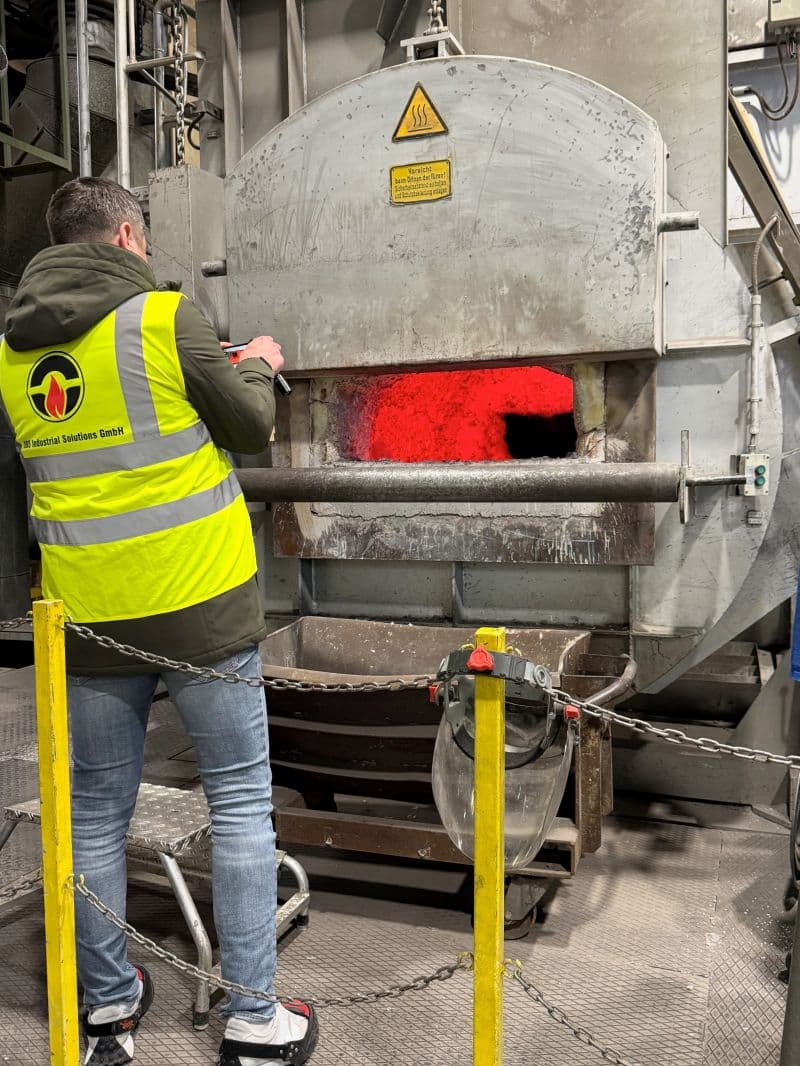
To the articleEveryone talks about heating up, hardly anyone about shutting down. Yet most cracks are not created on the way up but during rapid cooling ahead of an overhaul.
Every plant has a heat-up curve. It is posted, it is run, it is recorded. Hardly anyone asks about the shutdown — although the same physics applies, only with the opposite sign.
The reason is human: heating up stands at the beginning of a campaign, shutting down at the beginning of a standstill. And a standstill is meant to be short. Every hour the furnace needs to cool is an hour in which nobody can work.
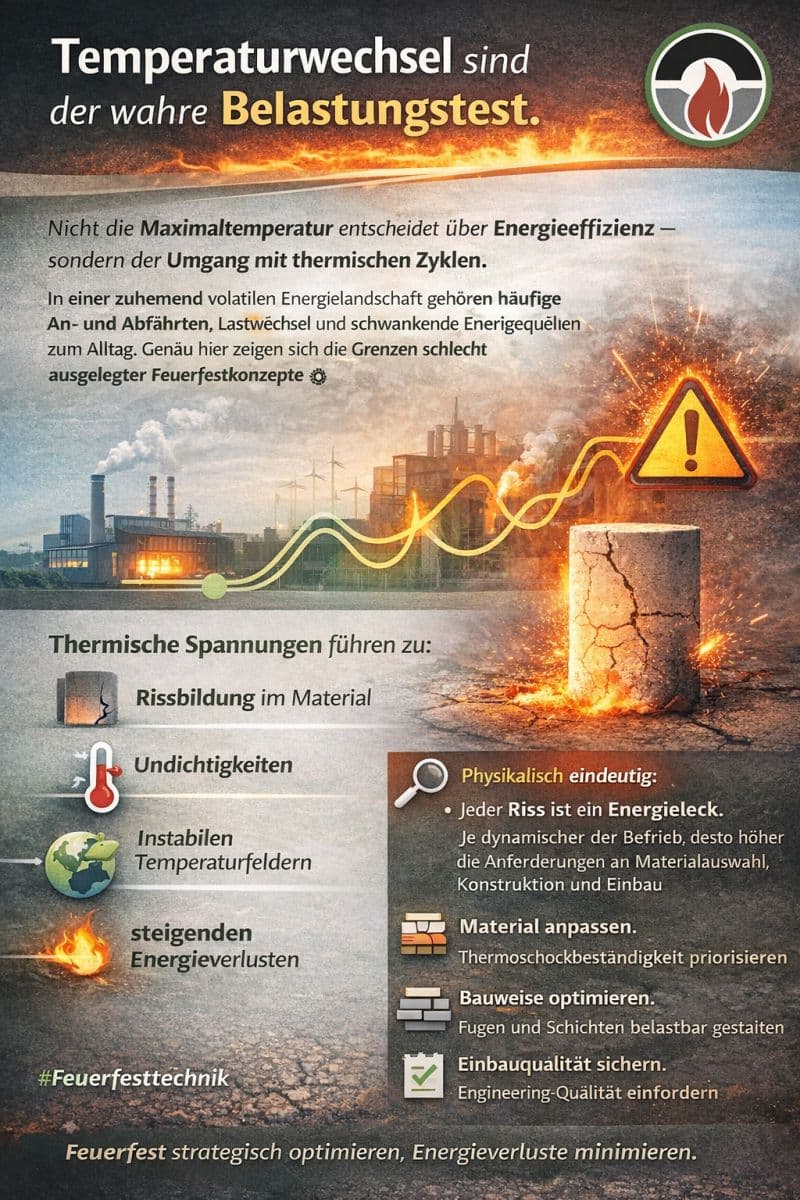
As it cools, the hot inner surface contracts while the layers behind it are still warm. That creates tensile stress at the surface — and refractory materials withstand compression far better than tension.
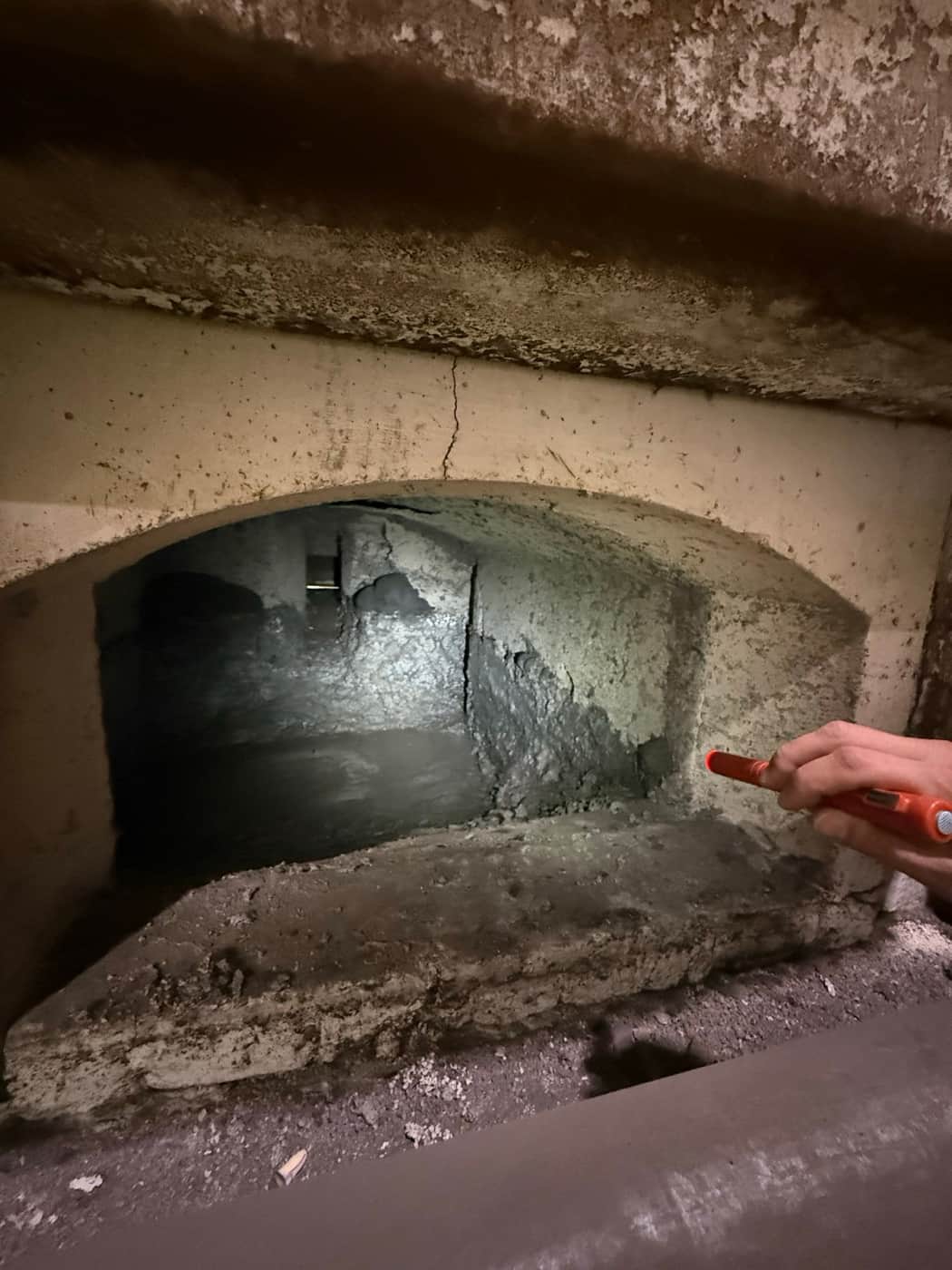
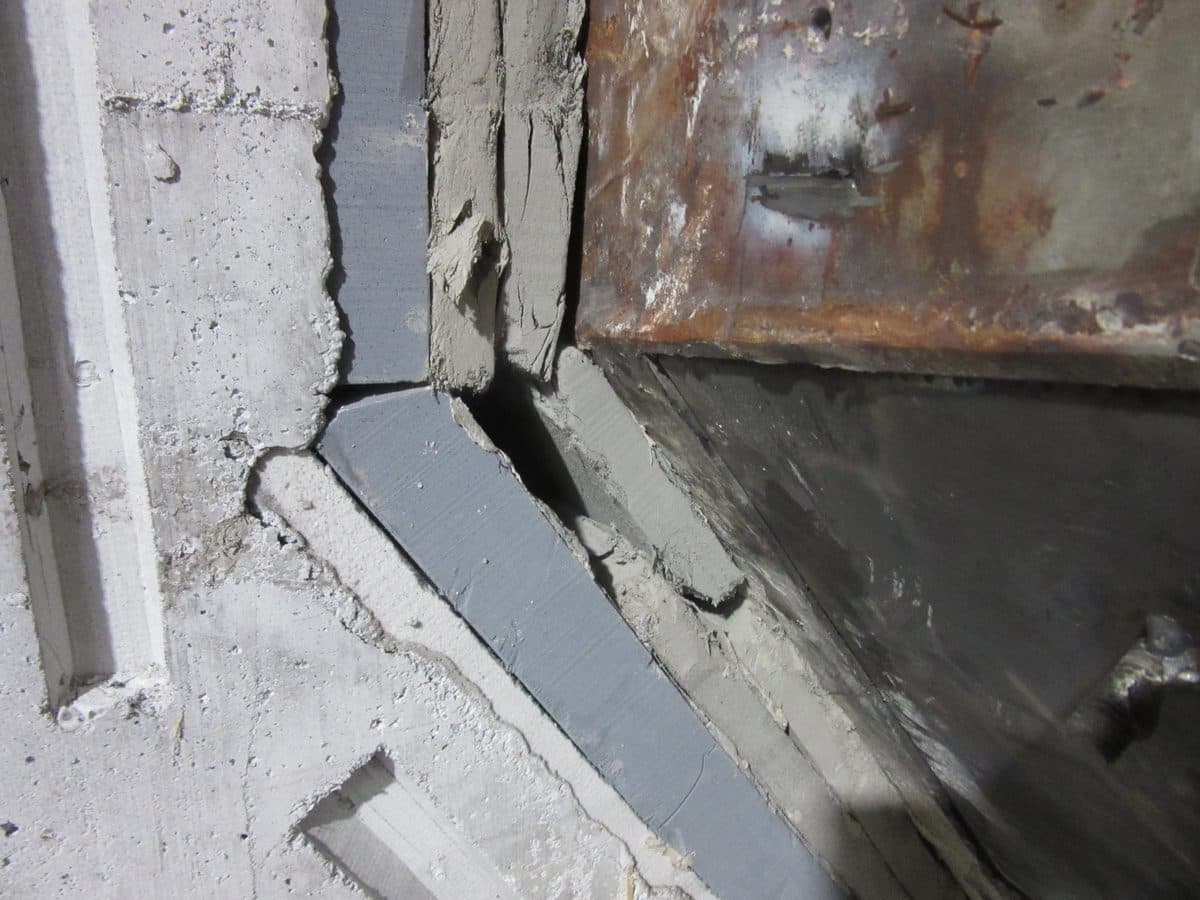
You see the result at the inspection: fine networks of cracks across whole areas that were not there before. They are often not deep, but they are entry paths. In the next campaign melt or gas works its way in, and the hairline crack becomes a break-out.
A furnace that is cold in twelve hours instead of forty saves a day of standstill — and pays for it with a crack pattern that costs the lining two campaigns later.
In practice it pays to write the cooling curve on the same sheet as the heat-up curve — with the same holding points, read backwards. Then there is no second document that nobody can find, and the shift crew has both directions in front of them.
The permissible rate depends on the material: dense, thick masses need more time than a fibre lining, which has practically no mass. Anyone who has both in one furnace goes by the slowest component, not by the average.
Cooling time is not a buffer but a work step with a duration. Plan it in and the standstill is realistic. Treat it as idle time and it will be cut short on shutdown day — and that is the decision nobody records and that is later attributed to nobody.
Professional dry-out and heat-up of new linings in accordance with manufacturer specifications.
Regular inspections and predictive maintenance for maximum furnace availability.
Technical design, calculations and complete project documentation.
All PDFs on this page are free, without sign-up. If you want to know when a new sheet is added: one e-mail a month, unsubscribe anytime.
PDFAll furnace typesWhy the first days decide over years of service life.
 PDFAll furnace types
Symptom, cause and required action side by side.
 PDFAll furnace types
When a targeted repair is enough, and the three findings where only a relining will hold.
More insights from our projects
New insights from the job site every week – damage patterns, relinings and practical refractory know-how.
Whether complete relining, repair or emergency — free initial consultation and a fast response.
Your privacy matters to us.
We use cookies and similar technologies to ensure that our website functions properly and to analyse how our content is used. In the settings you can choose which cookies you wish to allow. Privacy policy