Keep the steelwork, renew the lining: the furnace hood as a repair case
A worn furnace hood does not have to be built anew. How to tell whether the steel structure underneath will still carry a second lining.

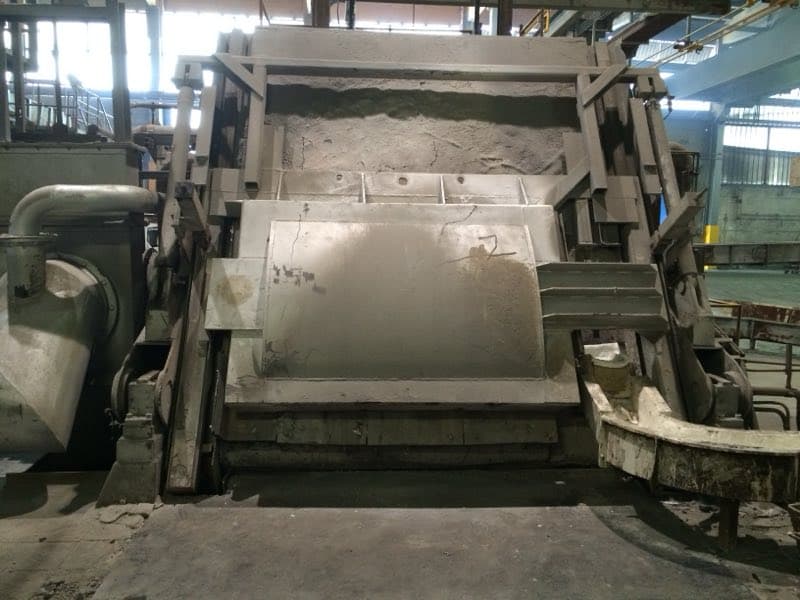
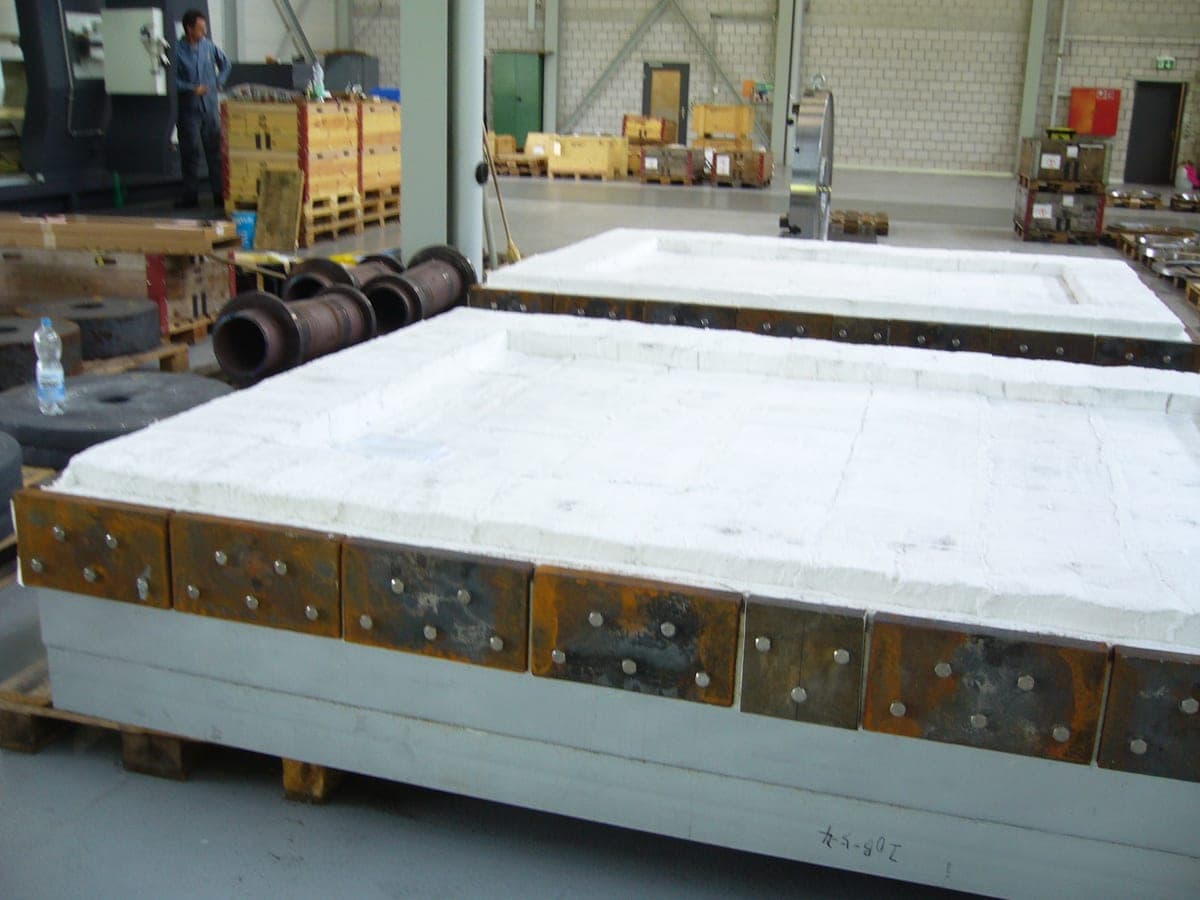
When the lining of a furnace hood has reached its end, talk quickly turns to a new build. That is rarely necessary. The hood consists of two parts with very different lifespans: a steel structure that lasts for decades, and a refractory lining that wears out considerably sooner. In one project we separated exactly those two — the steel structure stayed, only the lining was renewed.
What the decision hinges on
- Has the steel kept its dimensions? Distorted frames cannot be lined tightly — here a new build is the more honest answer.
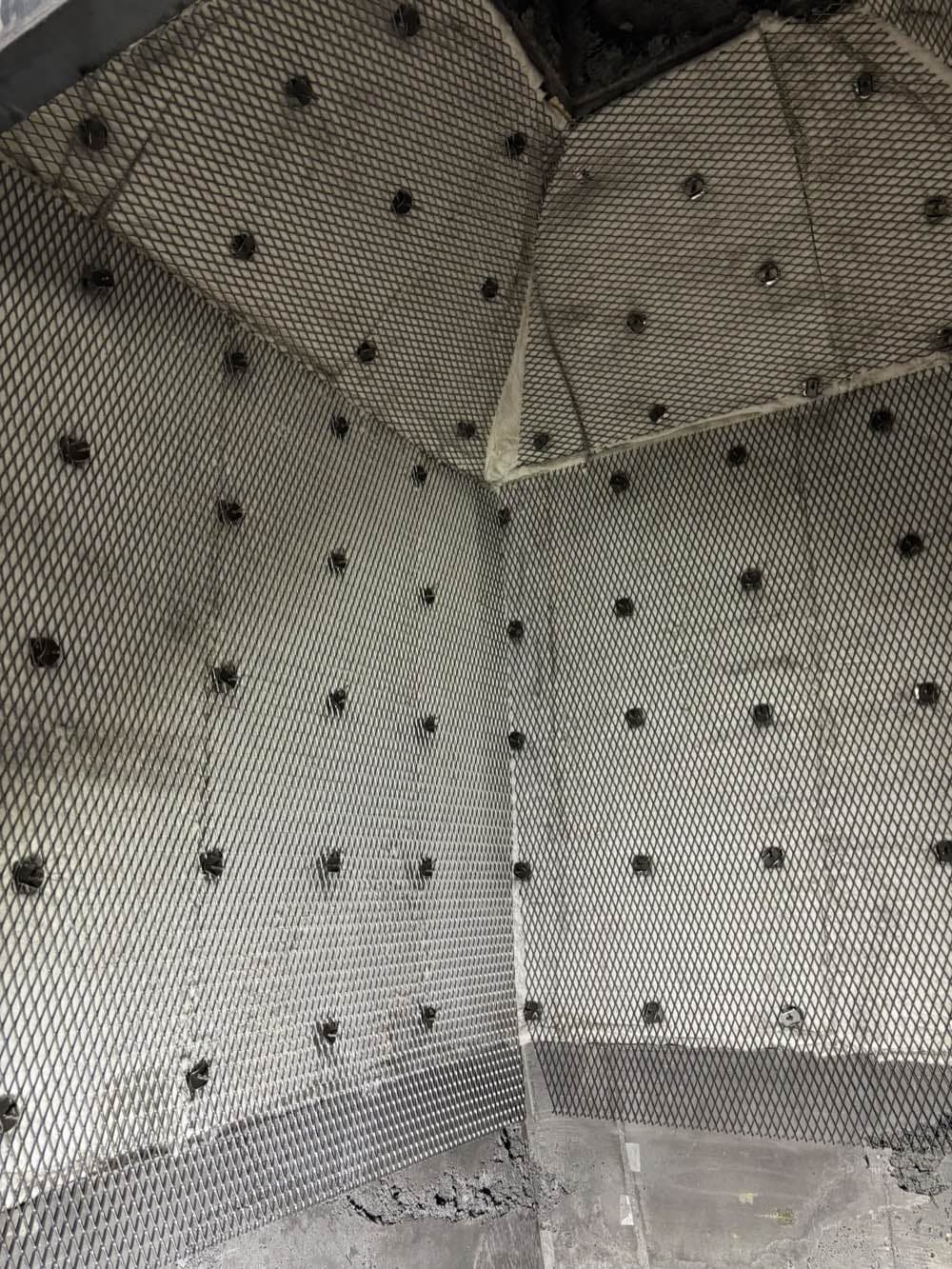
- What condition are the anchors in? They are the actual wearing element. Scaled or broken anchors are replaced; that is routine and not an exclusion criterion.
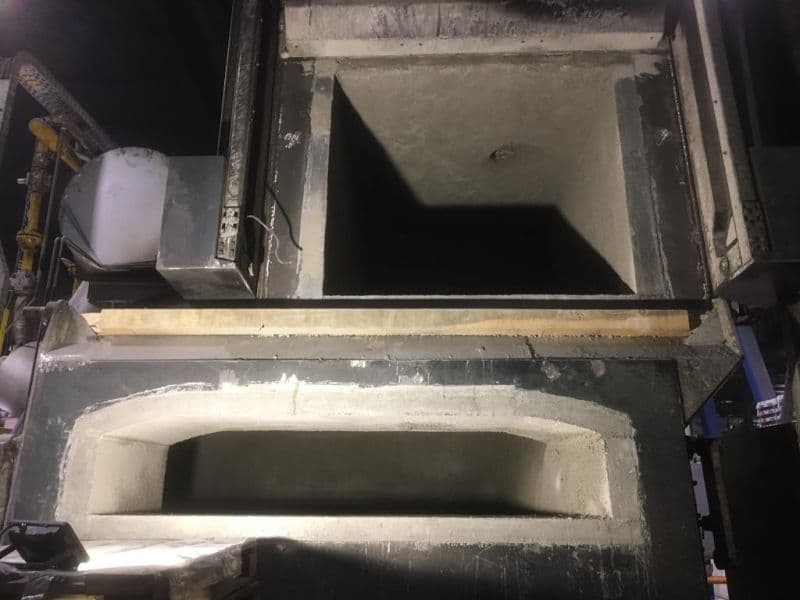
- Are the burner and extraction openings still in their proper place? Dimensional deviations at the openings mean rework on the steel, not on the refractory.
- How much longer is the plant meant to run? A renewed lining on sound steel delivers a full service life — at a fraction of the cost and without the delivery time of a new build.
The decision is not made on the condition of the lining — by definition that is worn out — but on the condition of the steel underneath. This check belongs at the start of the discussion, not at the end.
Related articles
Matching references

Overhauling a furnace hood instead of building a new one
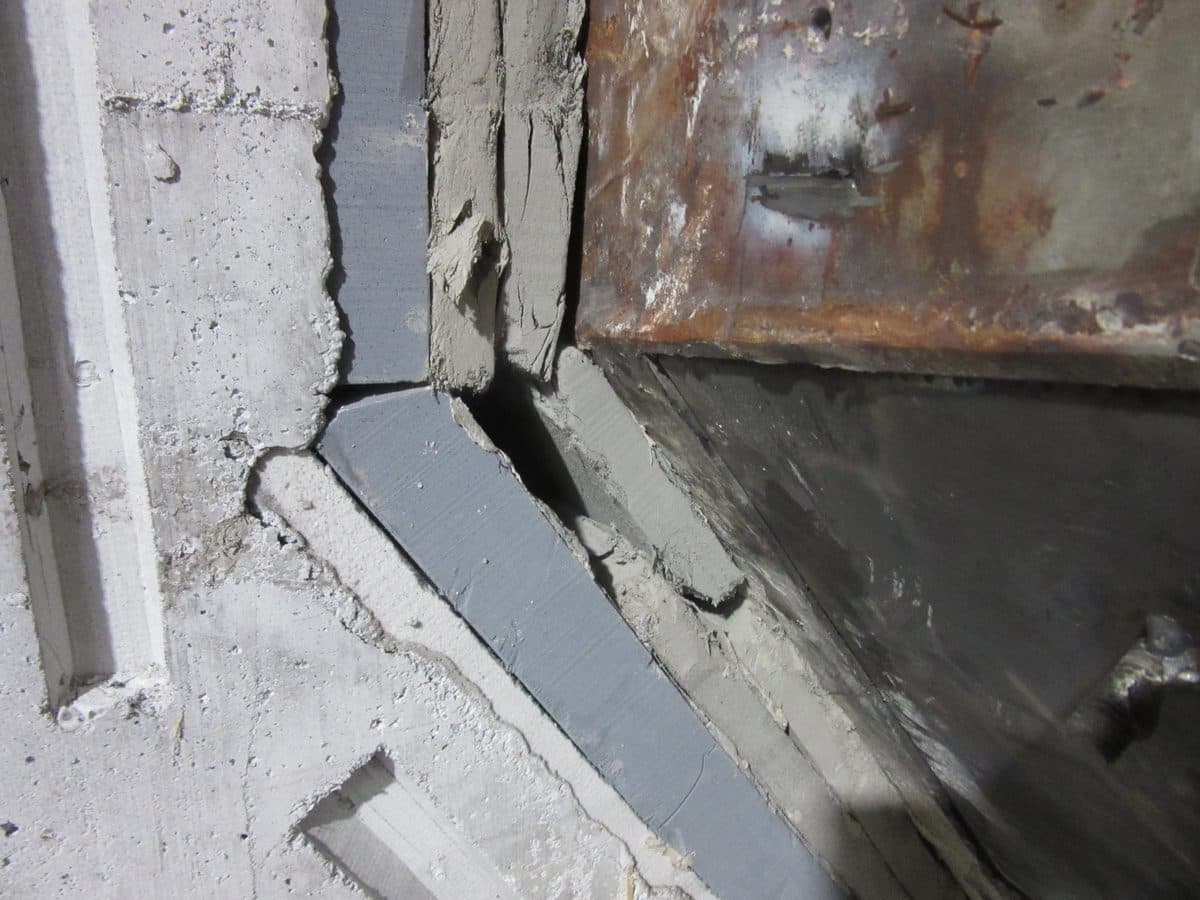
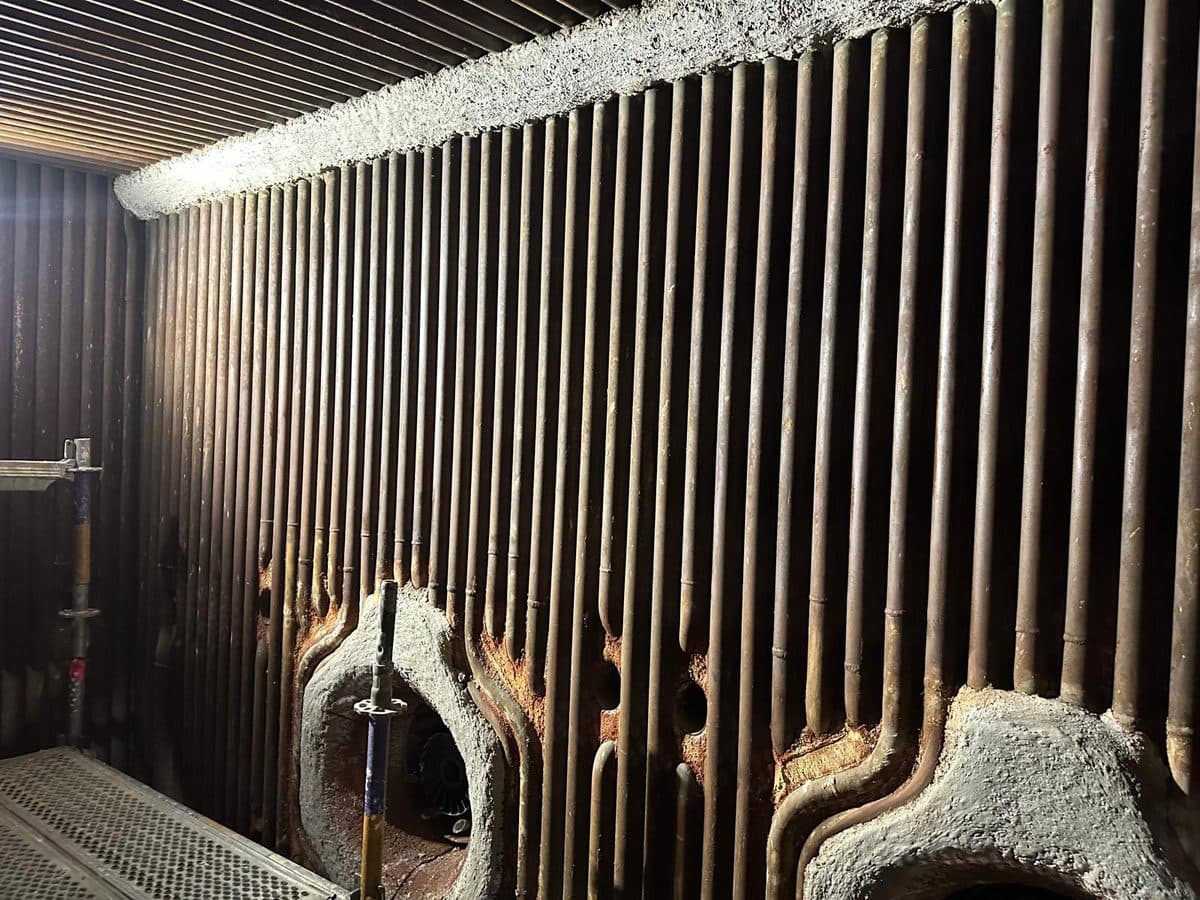
Worn hood of an aluminium melting furnace: the steel structure was retained and only the refractory lining selectively renewed – at a fraction of the cost of a new hood.

Hood lining on an aluminium melting furnace
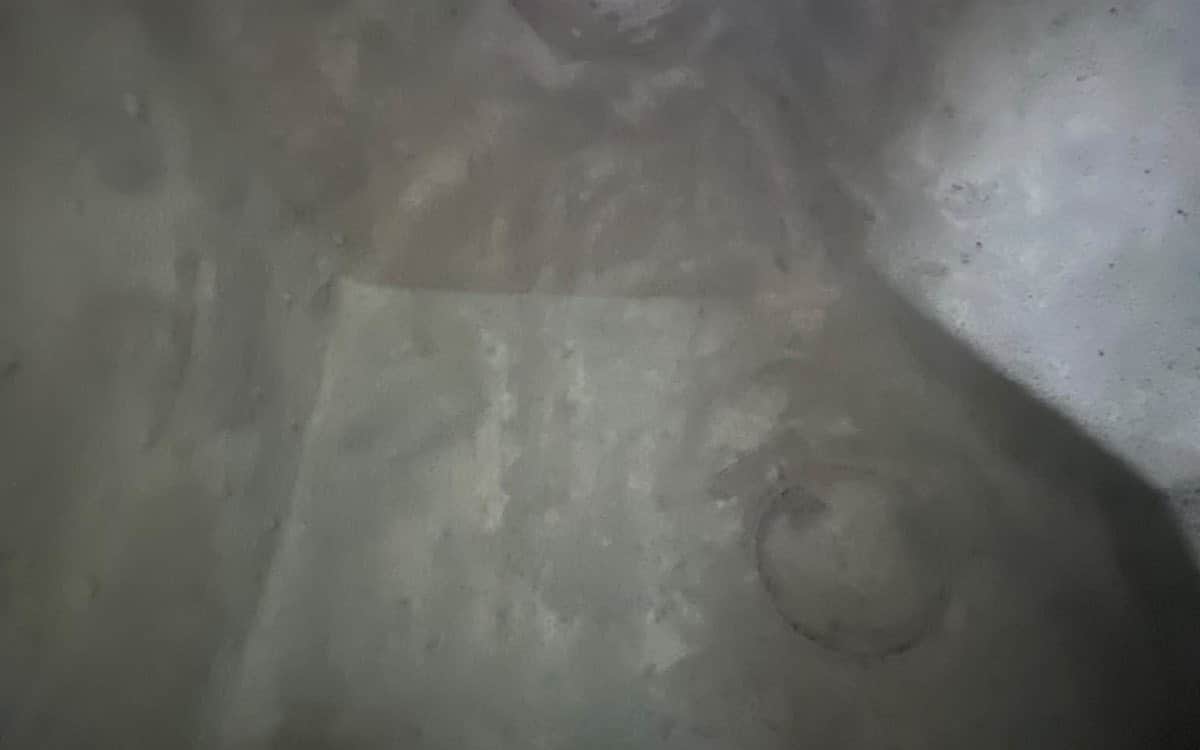
Complete refractory lining of the furnace hood on an aluminium melting furnace – executed monolithically for dense, dimensionally stable surfaces.
Planning a project?
Whether complete relining, repair or emergency — free initial consultation and a fast response.