
 PDFAll furnace types
Running heat-up curves correctly
Why the first days decide over years of service life.
Only in the PDFExample curves for ramming mix, castable and brick lining with hold points and ramp rates
To the articleWhen the old lining of a low-pressure die casting furnace no longer holds, patching will not help. This article shows how a complete relining in the workshop proceeds, from break-out through cast walls, insulation and floor to lid and heat-up curve, and how to recognise good workmanship.
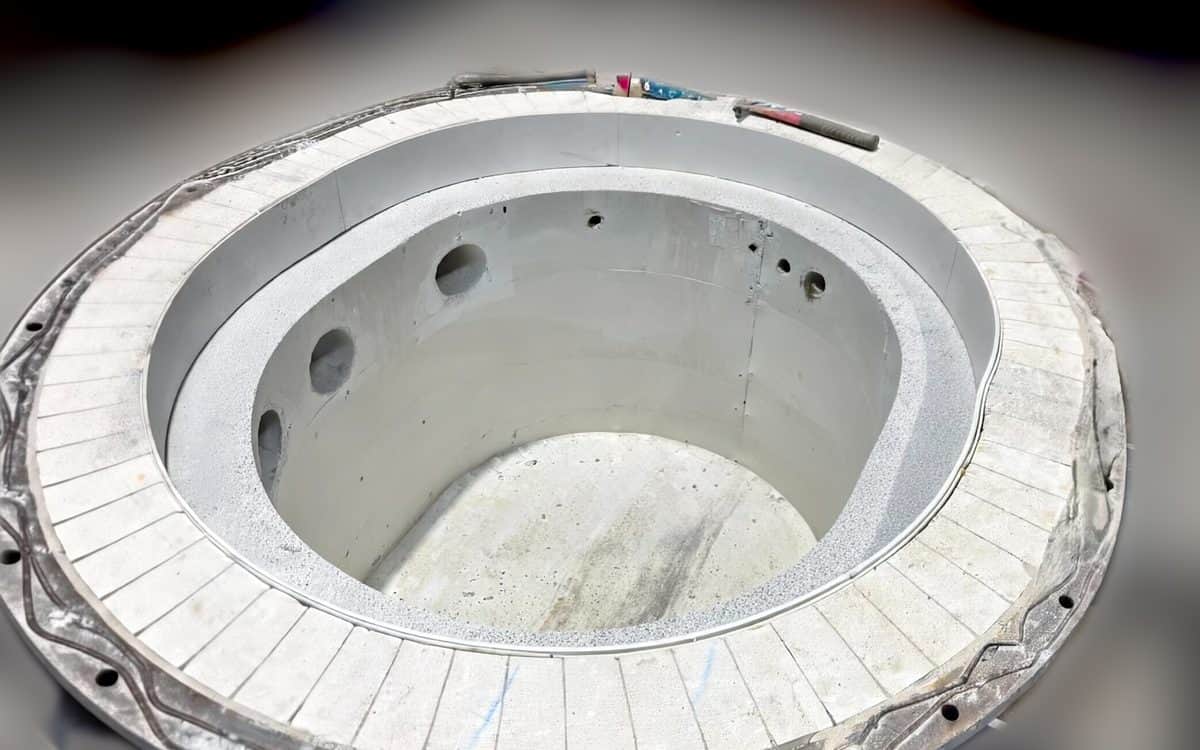
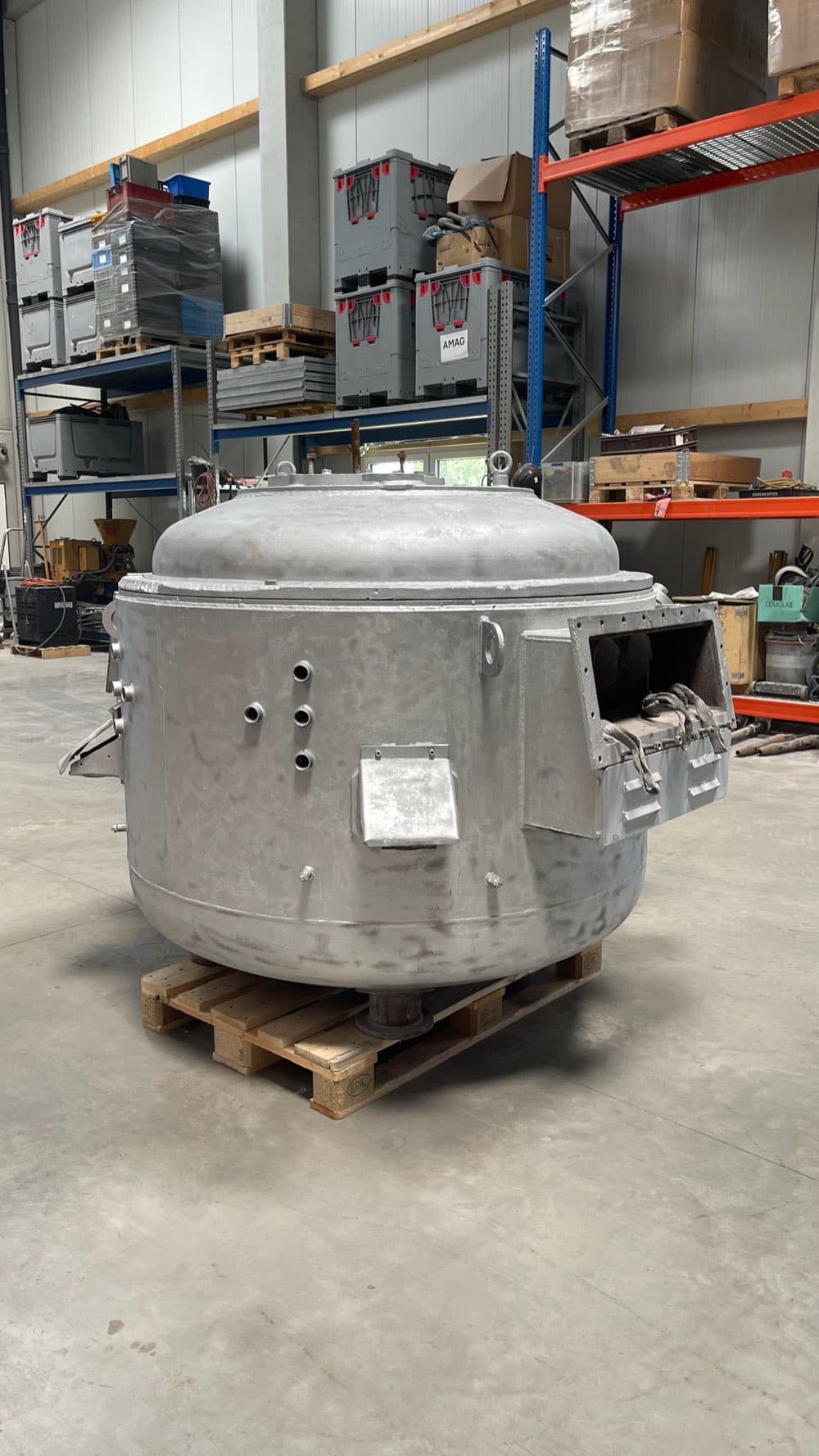
A low-pressure die casting furnace is not a melting furnace with a lid, but a closed furnace that works with gas pressure. A slight gas overpressure above the aluminium bath pushes the melt from below through the riser tube into the die. The refractory lining therefore has to do two things: withstand the melt and be part of a tight system. As long as it is worn only in individual places, a repair is often enough. But when the old lining has broken out in many places, aluminium has penetrated the wall and nobody can say any more what is still sound behind it, the only option left is a complete relining.
The procedure below is based on two low-pressure die casting furnaces that SBS Refractory Service overhauled in 2026: a general overhaul in the summer and a complete relining in November, for two different customers. It describes what has proven itself, and where most mistakes are made.
The first question is whether patching still makes sense. Three findings in particular speak against a partial repair: aluminium has penetrated deep into the working layer or right into the insulation, cracks run through the entire wall, or the insulation behind it has become crumbly and damp. In all three cases, new material would sit on a substrate that no longer holds. With a furnace that operates under pressure, there is a further point: every joint between old and new is a possible path for melt and gas.
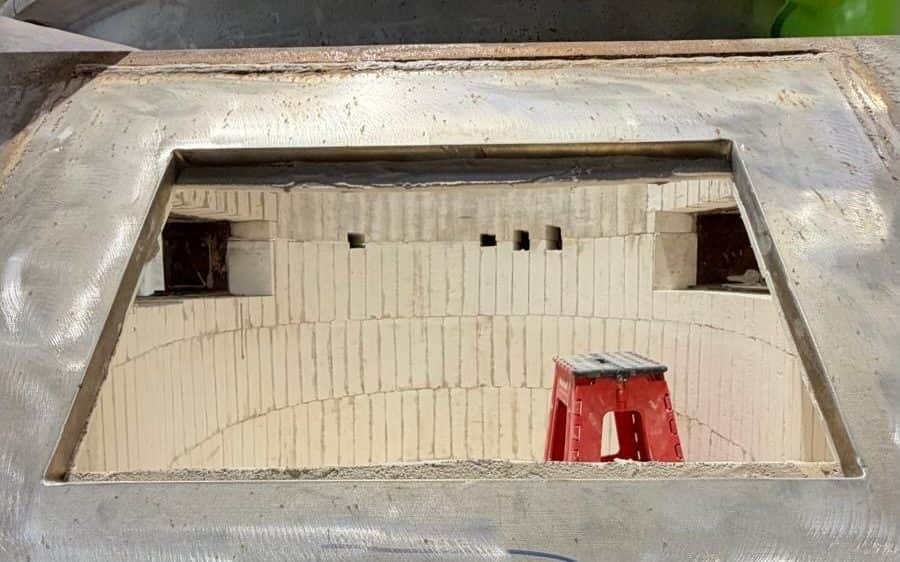
A complete relining starts with breaking out the lining entirely, down to the steel casing. Only then can the casing be assessed: is it distorted, are flanges and sealing faces flat, are welds cracked, has pitting corrosion formed? Anything overlooked here will later show up as a leak that the refractory lining cannot compensate for. The casing is cleaned and damage to the steel structure is repaired before the first layer is installed.
Behind the working layer lies the insulation; in the November project, insulating firebricks were used for it over the full wall height. It determines how much energy the furnace consumes in holding operation and how hot the casing becomes. The bricks are laid tightly butted with staggered joints, either dry or with a thin mortar joint depending on the system, so that no continuous thermal bridge is created. In the melt zone, the insulation must be completely covered by the working layer: insulating firebricks are light and porous and cannot withstand liquid aluminium.
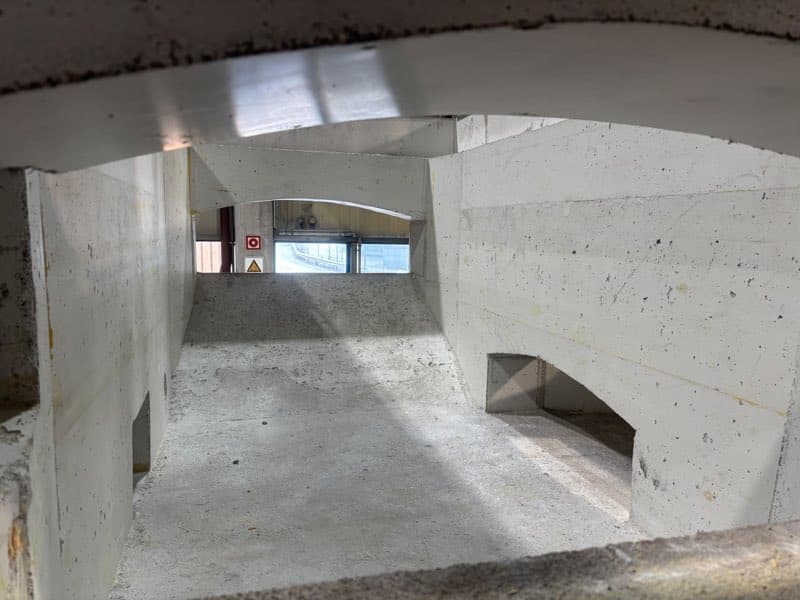
The monolithic construction method has proven itself for the walls of the bath chamber. The chamber is round and has openings and a charging opening; bricked, this would create many joints and cut-to-fit pieces, which are exactly the spots where aluminium attacks first. Casting is done in dimensionally accurate formwork, with the openings left out at the same time. In contact with the melt, materials should be used that are poorly wetted by aluminium and thus counteract infiltration and corundum formation.
For low-pressure and dosing furnaces, manufacturers also offer linings made of pre-fired precast shapes. Their advantage is the short drying time, because most of the water has already been driven out at the factory. On the other hand, a precast build-up has butt joints that have to be backfilled and sealed, and it only fits furnace bodies with known dimensions. For an older furnace with its own openings and a distorted casing, casting in formwork is usually the more adaptable solution, provided drying and heat-up are taken seriously.
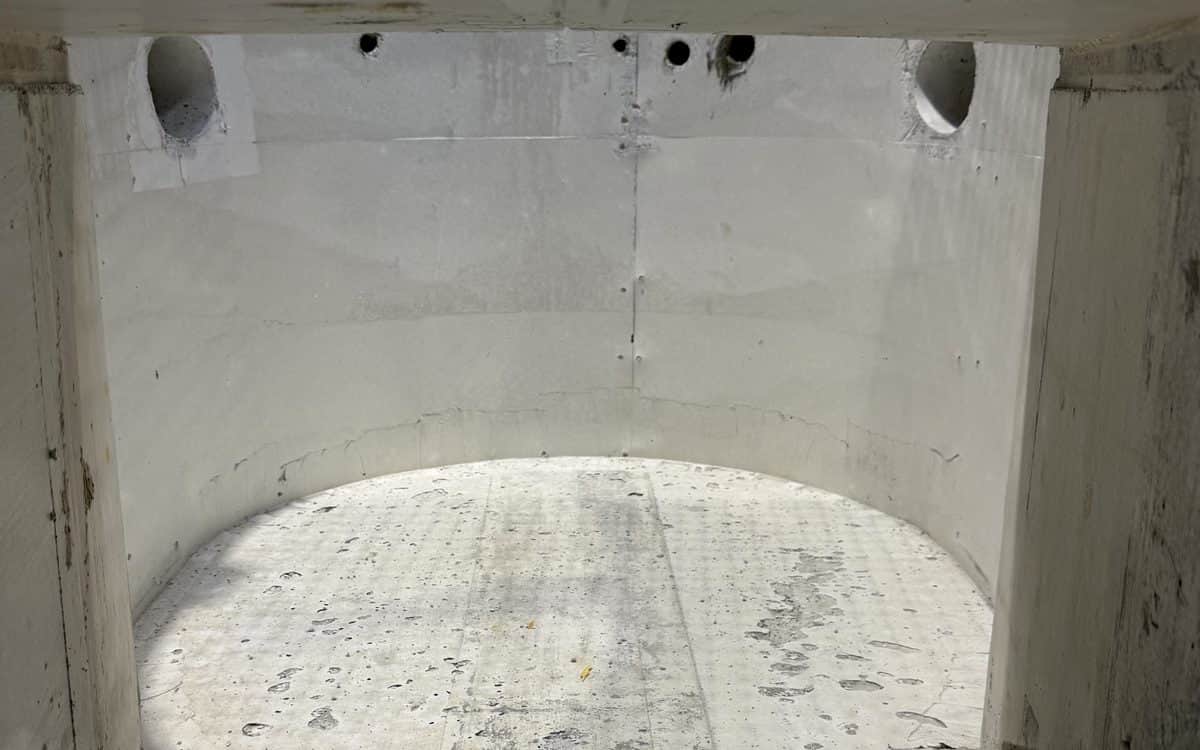
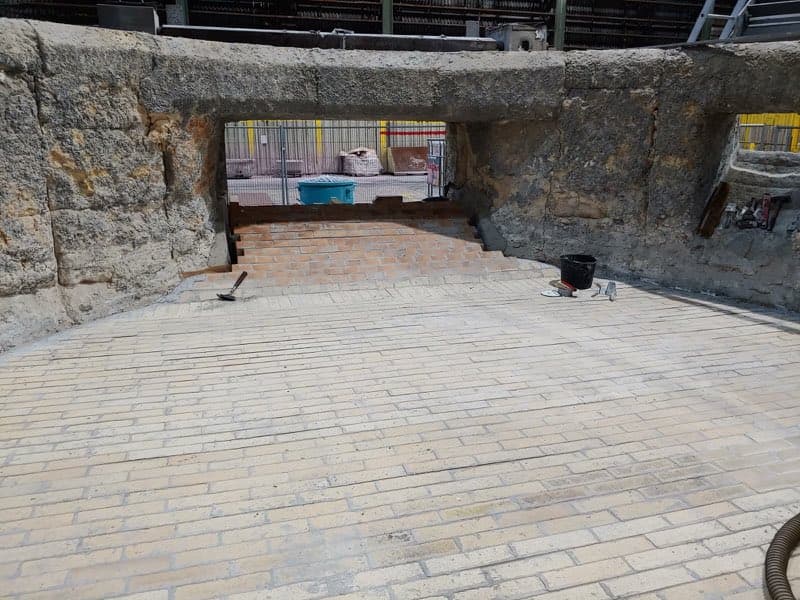
The floor carries the load of the bath, and it is scraped during cleaning. In the November project, it was cast with a special two-component castable. With such systems, the two components are supplied separately and only mixed immediately before installation. The mixing ratio is fixed and the working time is limited. That is why it is planned in advance how much can be installed in what time, and the material is only mixed once the substrate and tools are ready.
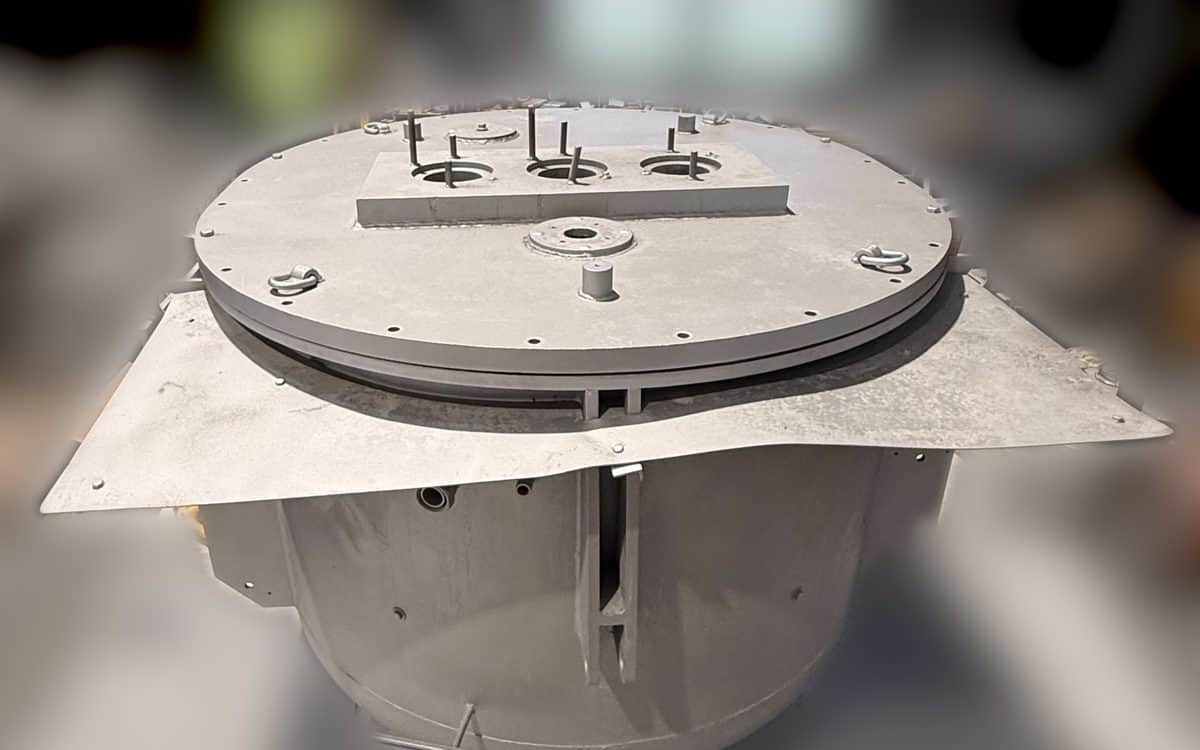
In the end, the furnace has to close tightly again. The lid, penetrations and sealing faces are refurbished, and the riser tube seat is made dimensionally accurate and tight. The riser tube is one of the most heavily loaded components of the furnace, and any leak at the lid disturbs the pressure control and thus the mould filling. This work is part of the relining, even though it is not refractory work in the narrower sense. Before commissioning, the tightness of the closed furnace body must be tested and the result recorded, because tightness cannot be judged by eye. Who carries out the test is agreed beforehand; in the November project, the customer tested it itself.
Freshly cast refractory castable contains water that has to come out during the first heat-up. If this happens too quickly, steam pressure builds up in the structure and the lining can spall. The initial heat-up therefore follows a curve with holding stages that depends on the materials used and the wall thickness. It is agreed with the operator and belongs in the furnace documentation, as do materials, batches and dimensions.
The most important decision is made at the start: a complete relining pays off when it is done consistently. Breaking out completely, inspecting the casing and casting the bath chamber without brick joints gives you a furnace whose condition you know, instead of a patchwork whose weak points only show up in operation.
All PDFs on this page are free, without sign-up. If you want to know when a new sheet is added: one e-mail a month, unsubscribe anytime.
PDFAll furnace typesWhy the first days decide over years of service life.
 PDFAll furnace types
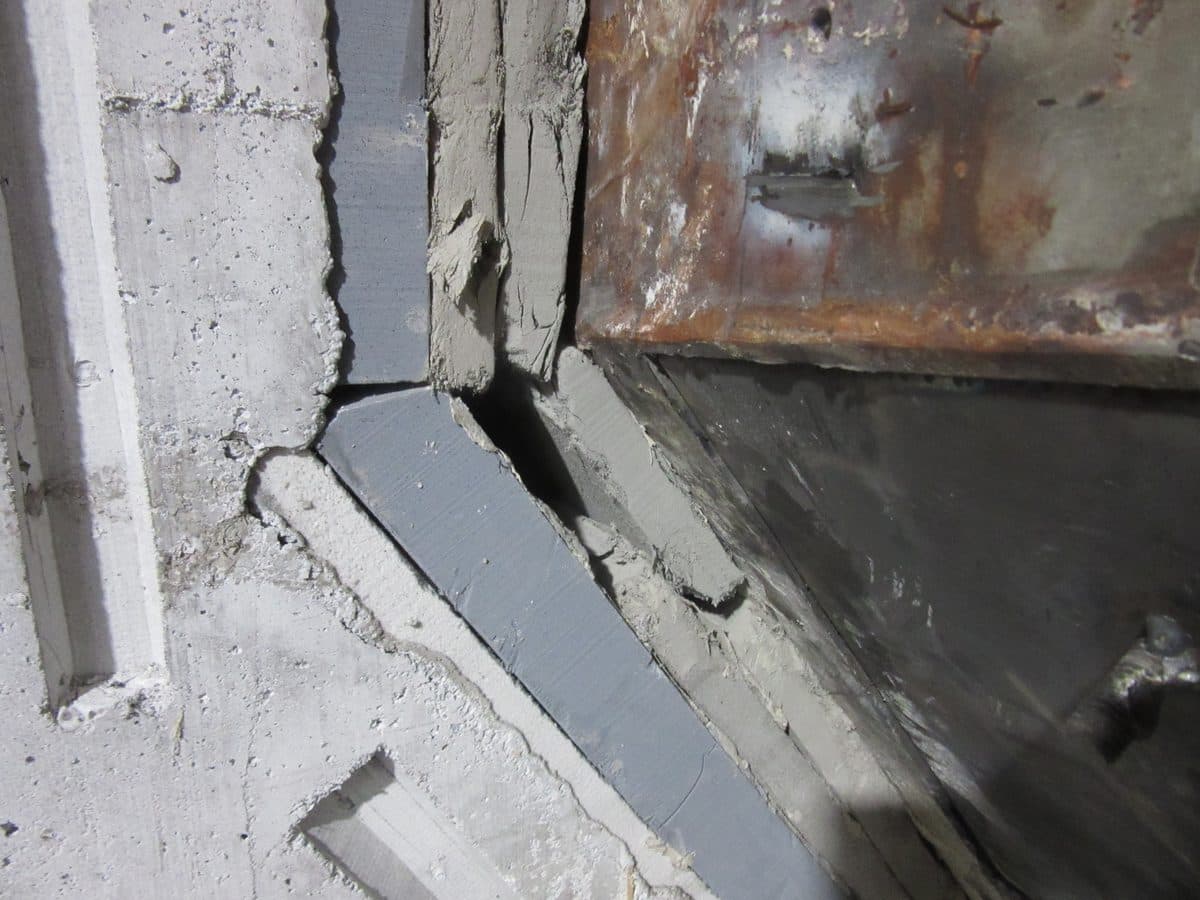
When a targeted repair is enough, and the three findings where only a relining will hold.
 PDFEnergy & Combustion
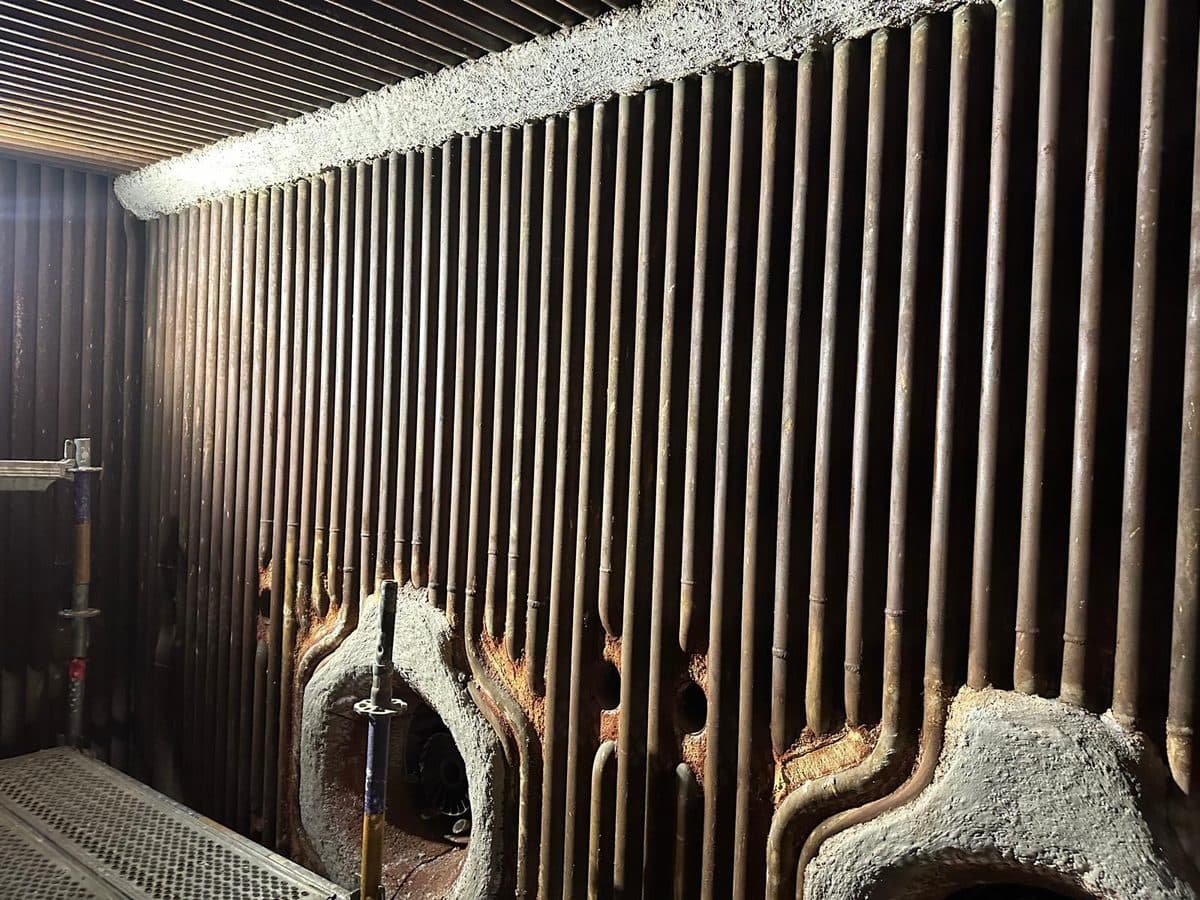
Protecting without blocking the heat: what matters when lining a boiler tube wall.
More insights from our projects
New insights from the job site every week – damage patterns, relinings and practical refractory know-how.
Then let's talk about your furnace: inspection, lining or maintenance during operation. Free initial consultation, quick reply.
Your privacy matters to us.
We use cookies and similar technologies to ensure that our website functions properly and to analyse how our content is used. In the settings you can choose which cookies you wish to allow. Privacy policy