Casting instead of bricking: when a monolithic lining beats brickwork
Brickwork or monolithic castable? When lining an aluminium furnace, this question often decides years of service life — usually in the joints.

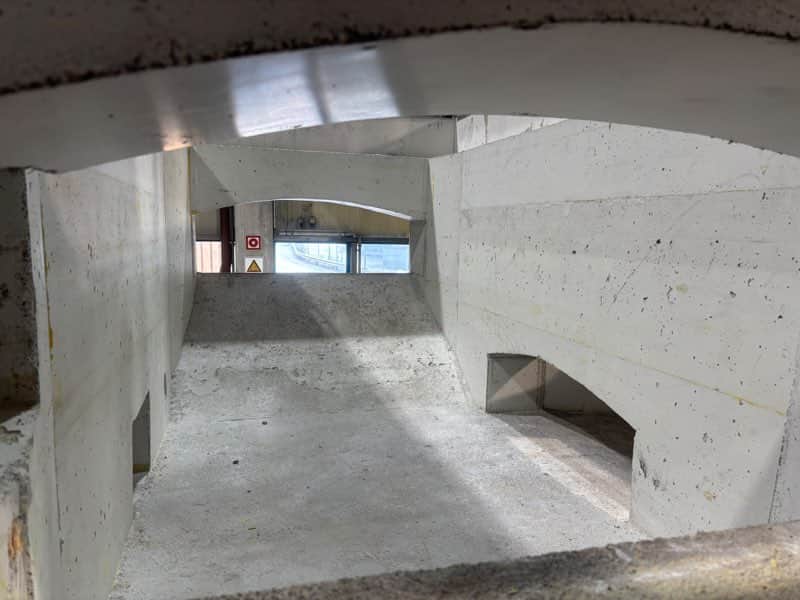
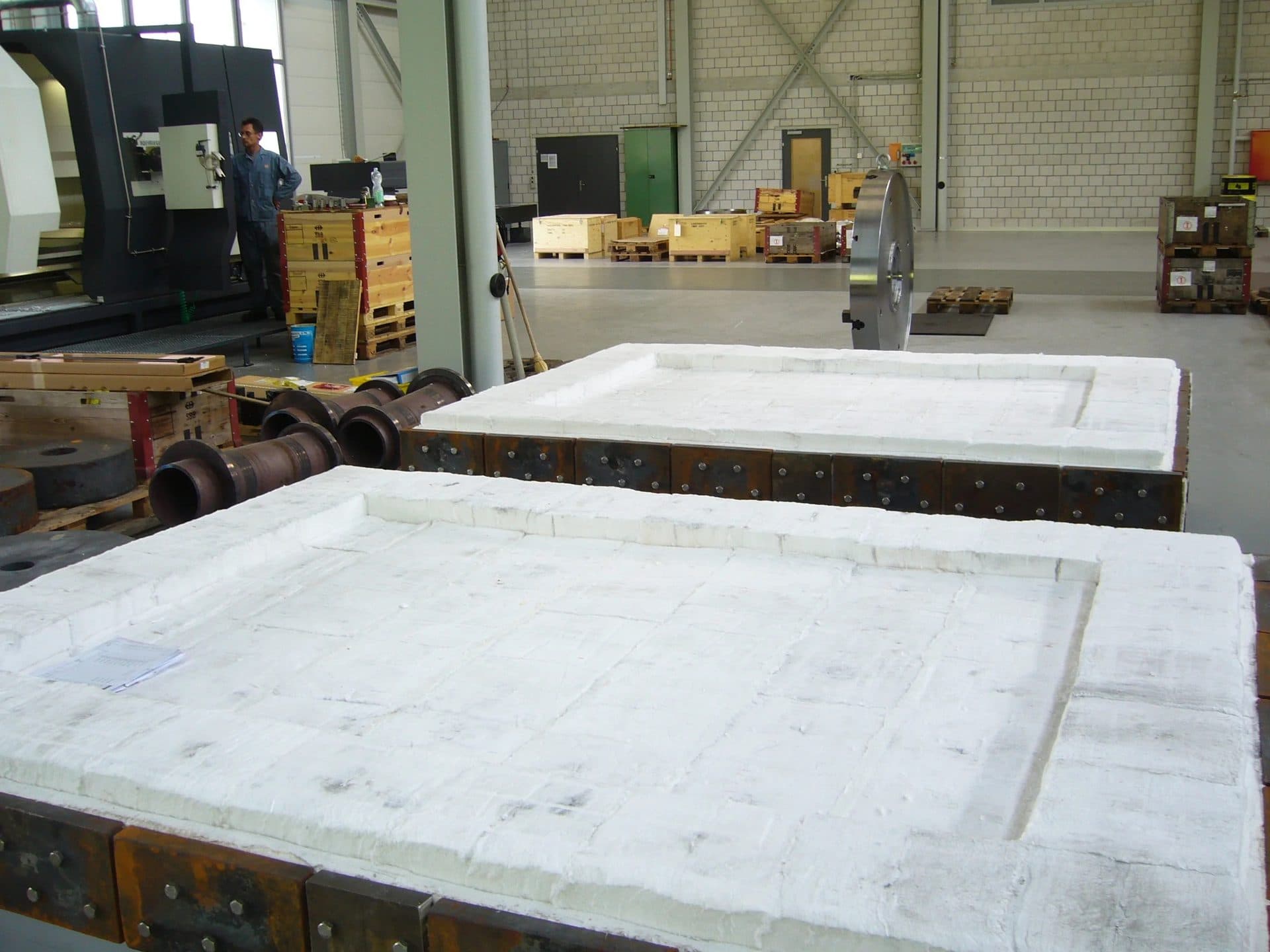
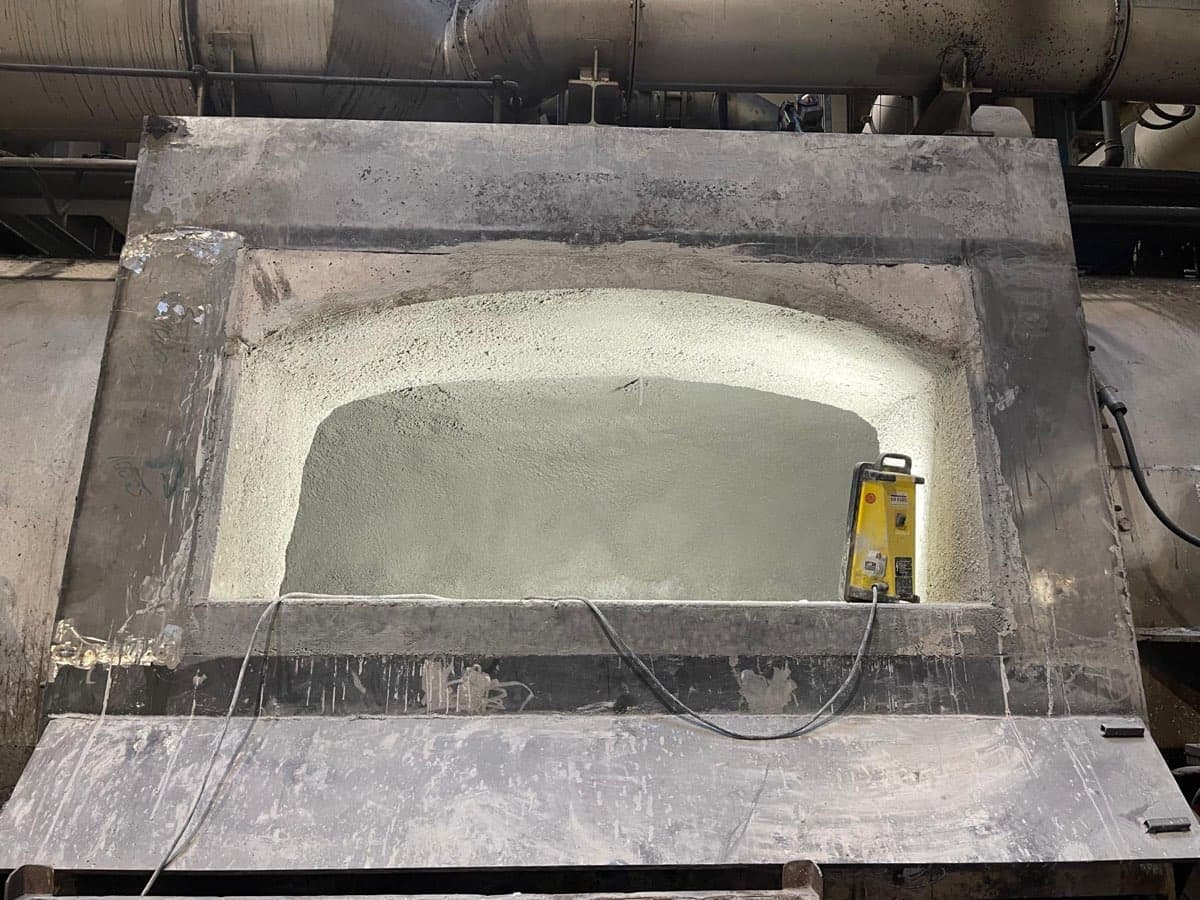
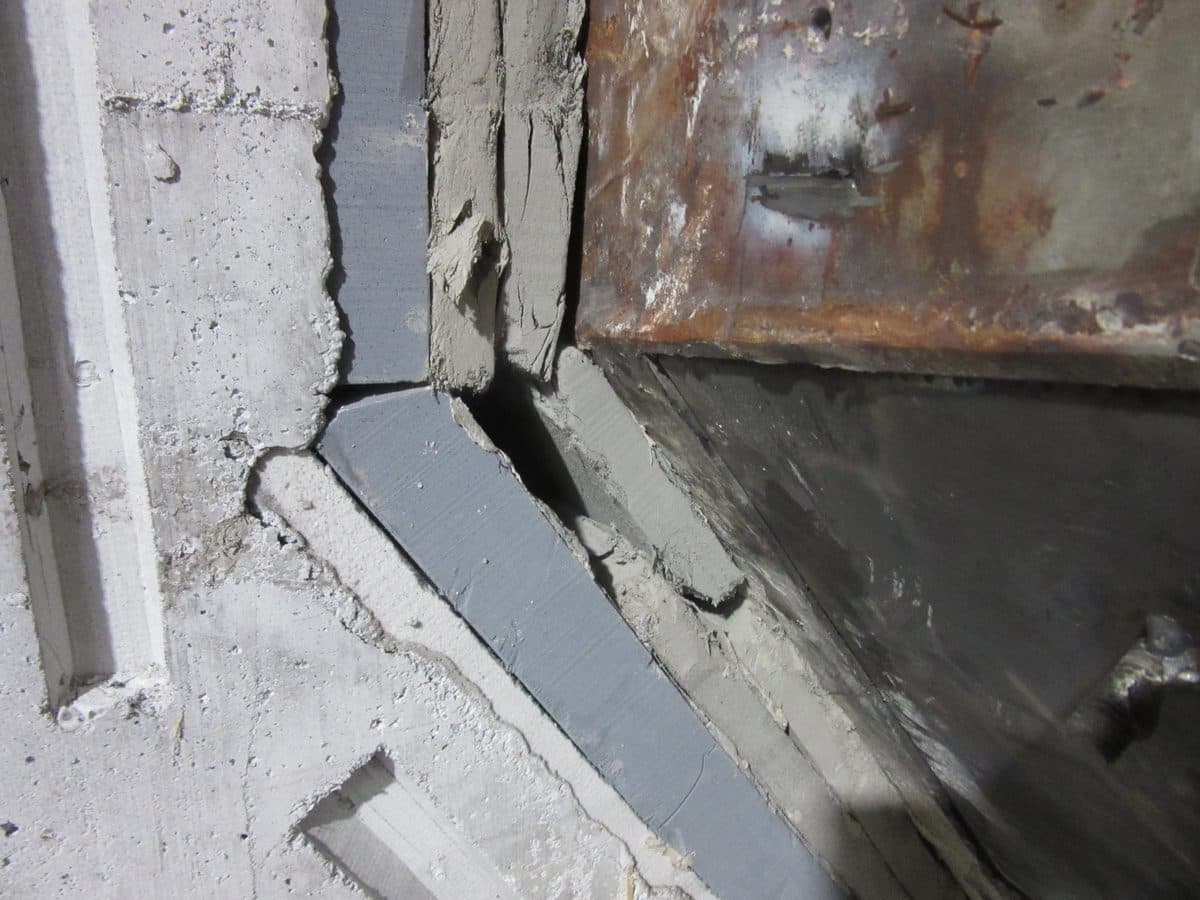
Brickwork or monolithic castable? When lining an aluminium furnace, this question often decides years of service life. In a recent project we lined a melting area whose old fireclay brickwork had failed exactly where it was predictable: in the joints. A metre of bricked wall quickly has 20 to 30 joints — each one a possible route for infiltrated aluminium and growing corundum.
Three points that decide the construction method
- The joint is the weak point, not the brick. A monolithically cast lining is jointless — no continuous infiltration route across several metres.
- Casting is not a given: it calls for anchoring matched to the loads, exact formwork and a controlled first heat-up over two to five days.
- The construction method is chosen zone by zone: jointless castable in the zones with direct melt contact, shaped bricks where dimensional accuracy or a later partial replacement is the priority.
In the end it is not the construction method as such that counts, but a dense surface that gives the aluminium little to attack — planned, executed and documented from a single source.
Related articles
Matching references
Planning a project?
Whether complete relining, repair or emergency — free initial consultation and a fast response.