
 PDFAll furnace types
Running heat-up curves correctly
Why the first days decide over years of service life.
Only in the PDFExample curves for ramming mix, castable and brick lining with hold points and ramp rates
To the articleMany overhauls fall in the cold season, and refractory castable is sensitive to temperature. Below about 10 °C it sets more slowly, below 5 °C setting can stall, and if it freezes before drying it loses a considerable amount of strength. What has to stay warm before, during and after casting, and how to plan for it.
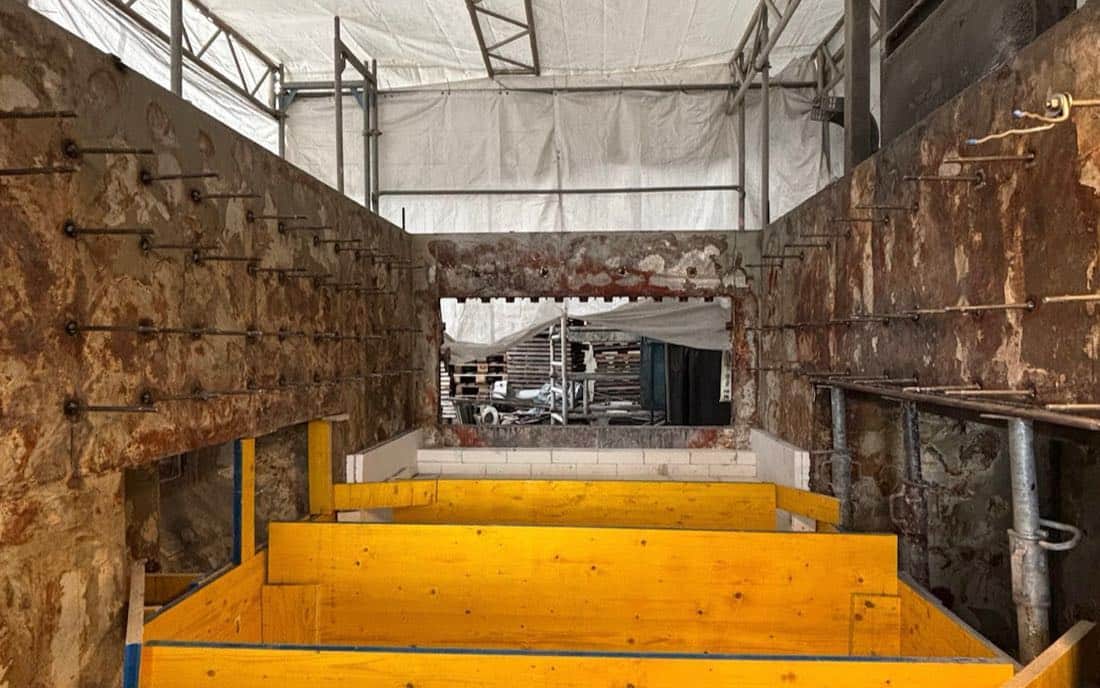
Overhauls are scheduled when production allows, and that is often in winter: the Christmas shutdown, the turn of the year, the quiet weeks in January. Cement-bonded refractory castable is a hydraulically setting material: it needs water and warmth for the cement to react, and it is unforgiving of cold. The consequences often only become visible during heat-up, when the lining spalls although material and installation appeared to be in order.
Most castables are bonded with high-alumina cement (calcium aluminate cement). How quickly it reacts, and which hydrates it forms, depends strongly on temperature. In the cold, hydration runs more slowly, setting is delayed and the formwork can only be stripped later. The colder it is, the more of the hydrate CAH10 forms. It binds a great deal of water, is less dense and later converts into denser phases, releasing water and leaving the structure more porous. This water has to come out again during drying. Manufacturers point out that a lining that has set in the cold is more prone to spalling during heat-up.
Manufacturers' installation guidelines differ in detail, but they all point the same way: material, mixing water and mix should ideally be between about 10 and 25 °C. Many guidelines give 5 °C as the lower limit for material and water; some also require at least 10 °C for the surroundings and the steel shell. For gunning mixes used with an accelerator, the lower limit applies to the accelerator as well. The data sheet of the product used is always decisive; where it is stricter than a general rule, the data sheet applies.
Cool means slow; frozen means damaged. As long as the castable has not dried, there is free water in its pores. If that water freezes, it expands and loosens the young structure. Strength drops considerably, and the surface gives no sign of it. During the later heat-up, the same weakened structure has to withstand the steam pressure. Manufacturers therefore all specify that the lining must not freeze during installation and setting, and that it must remain frost-free until drying begins. Anyone planning a pause of a few days between casting and heat-up, over the holidays for example, has to heat the furnace on those days too.
Frost protection applies not just to the first few hours but until drying begins. A furnace left standing cold over the weekend after casting is just as much at risk during that time as on the day of casting.
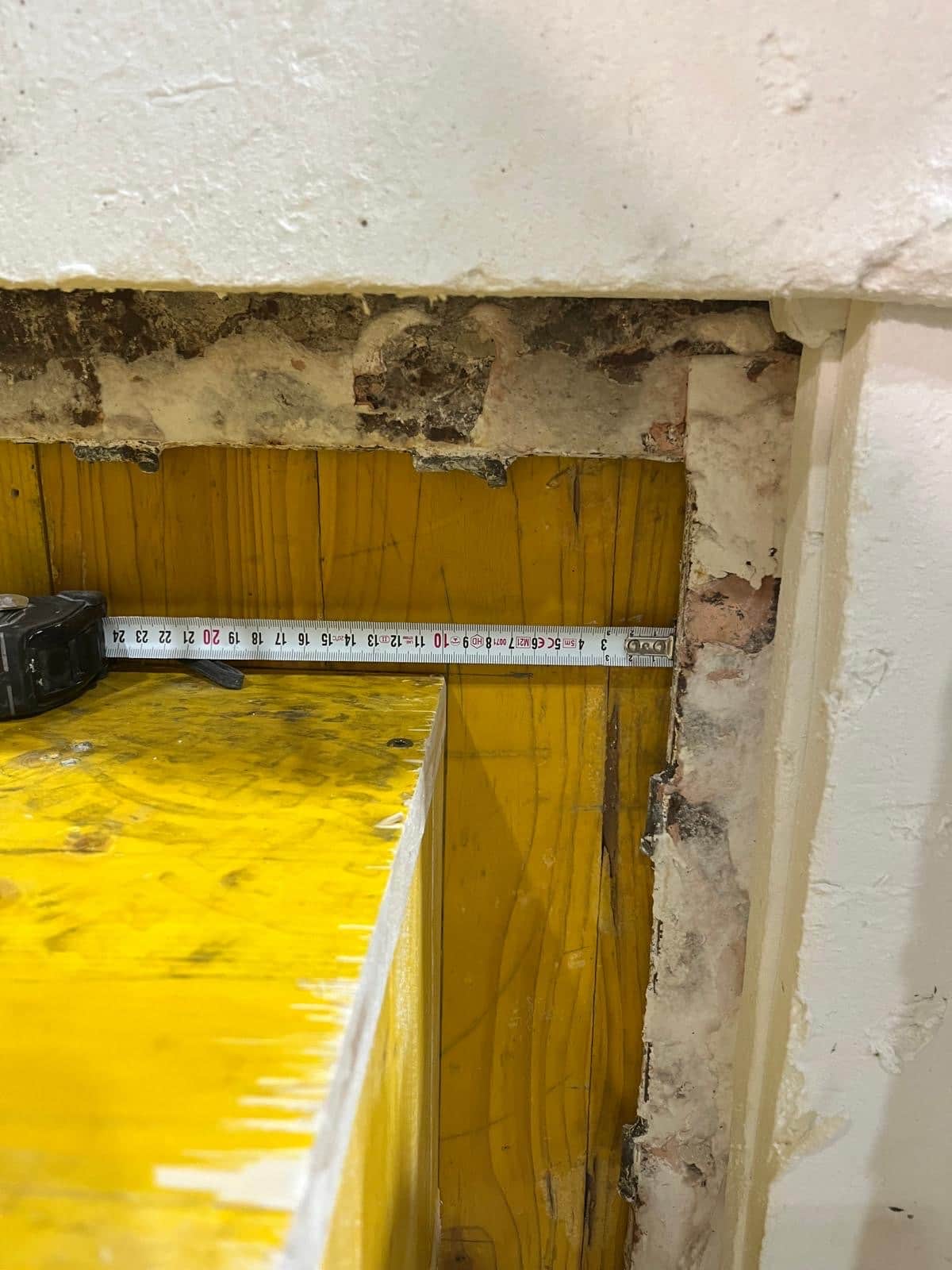
With outside temperatures close to or below freezing, there is no way round an enclosure: the furnace chamber closed off, openings sealed with tarpaulins or insulating mats and, if necessary, a tent outside around the mixing area and access. Heating runs continuously through installation and setting until drying. Position heaters so that they warm the air in the chamber rather than blowing directly onto the fresh surface. Otherwise the skin dries too quickly while the interior is still cold.
The mixing area and the furnace are often at different points in the hall. On the way, the mix cools down, especially with long delivery lines or when skips are carried through an open door. Set up the mixing area as close as possible and inside the heated zone.
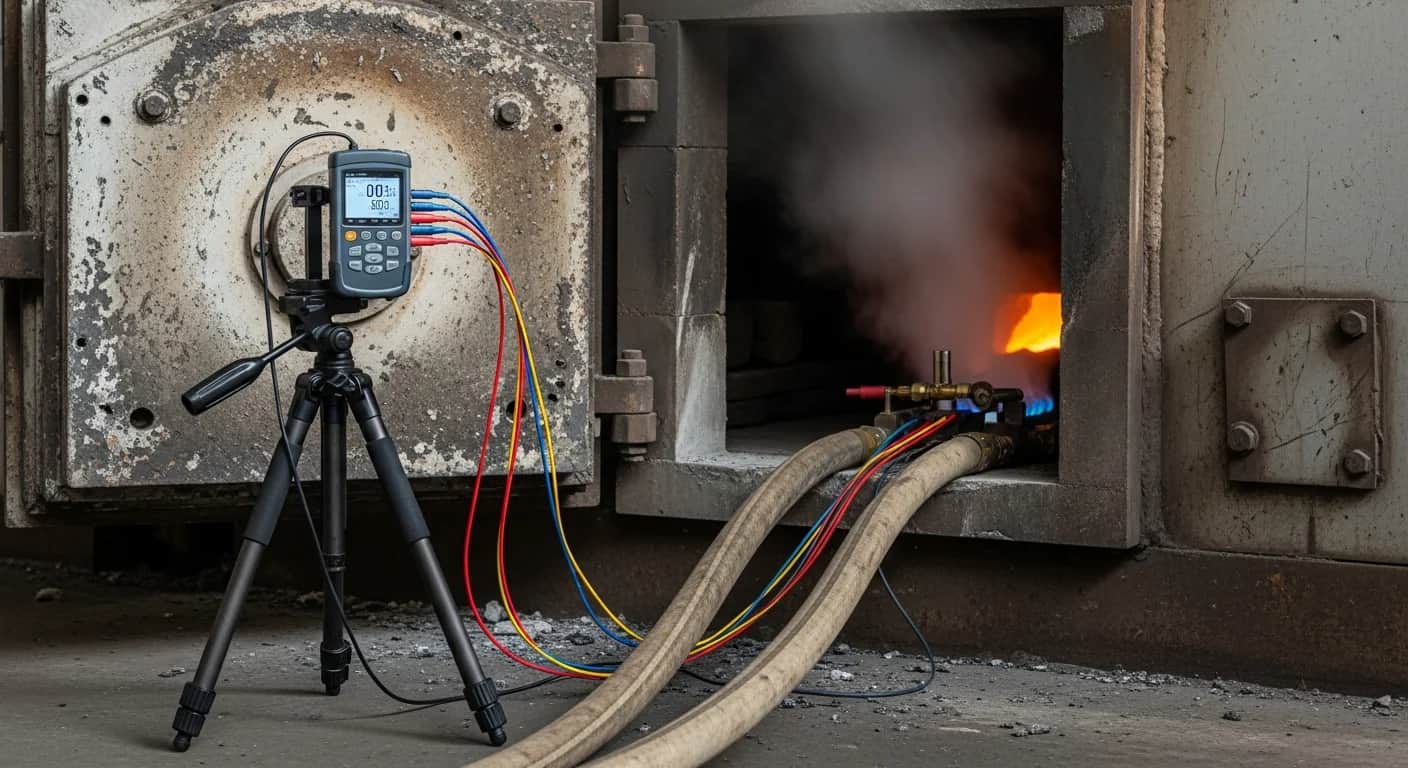
Cold can be planned for. A tent, two heaters and a thermometer cost a fraction of a lining that spalls at the first heat-up. What matters is that the heat is in the schedule and the budget before the first bag is opened.
All PDFs on this page are free, without sign-up. If you want to know when a new sheet is added: one e-mail a month, unsubscribe anytime.
PDFAll furnace typesWhy the first days decide over years of service life.
 PDFAll furnace types
When a targeted repair is enough, and the three findings where only a relining will hold.
 PDFEnergy & Combustion
Protecting without blocking the heat: what matters when lining a boiler tube wall.
More insights from our projects
New insights from the job site every week – damage patterns, relinings and practical refractory know-how.
Then let's talk about your furnace: inspection, lining or maintenance during operation. Free initial consultation, quick reply.
Your privacy matters to us.
We use cookies and similar technologies to ensure that our website functions properly and to analyse how our content is used. In the settings you can choose which cookies you wish to allow. Privacy policy