The furnace floor: the wear zone nobody talks about
Every other zone warns you first. The floor does not — it carries the load, takes the impact when charging, and collects everything that runs down from above. What destroys it, how to see the damage in time, and why a joint in the floor costs more than one in the wall.
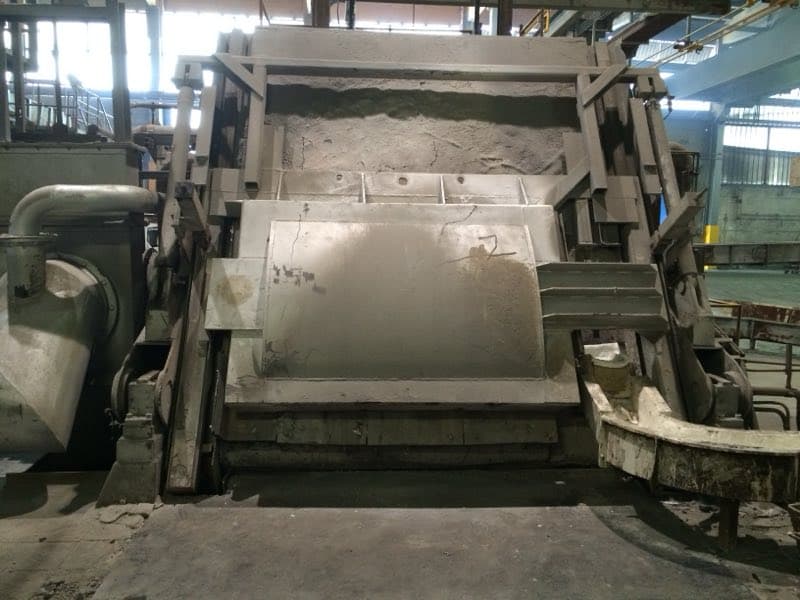
People talk about the bath line, the roof, the door arch. Rarely about the floor — and there is a simple reason: you cannot see it. In operation it lies under melt, slag or charge; during a walk-through you are standing on it. It is the only zone you are in the way of when you want to look at it.
That is inconvenient, because the floor has the least forgiving damage curve of all. A wall warns you early: cracks widen, the shell temperature rises, you see it from outside. The floor warns you late, and then clearly.
Four loads that meet only here
None of them is remarkable on its own. The combination is.
Mechanical impact. When charging, material drops from height onto the surface — spread out with swarf, concentrated with ingots or scrap. A wall takes glancing blows; the floor takes the full impact.
Static load. The floor permanently carries the weight of melt and lining, at temperature. Materials that bear load when cold will creep when hot under sustained weight.
Thermal shock from above. Cold charge on a hot floor produces the steepest temperature step exactly where the material has least room to move — below it, everything is solid.
Chemical attack with gravity on its side. Whatever turns liquid above runs down. Metal, slag and alkalis collect on the floor and stand there longer than on any vertical surface.
This is why the floor often carries the same material as the bath line although it is a different zone — not out of convenience, but because the attack is comparable and the load comes on top of it.
A joint in the floor costs more than one in the wall
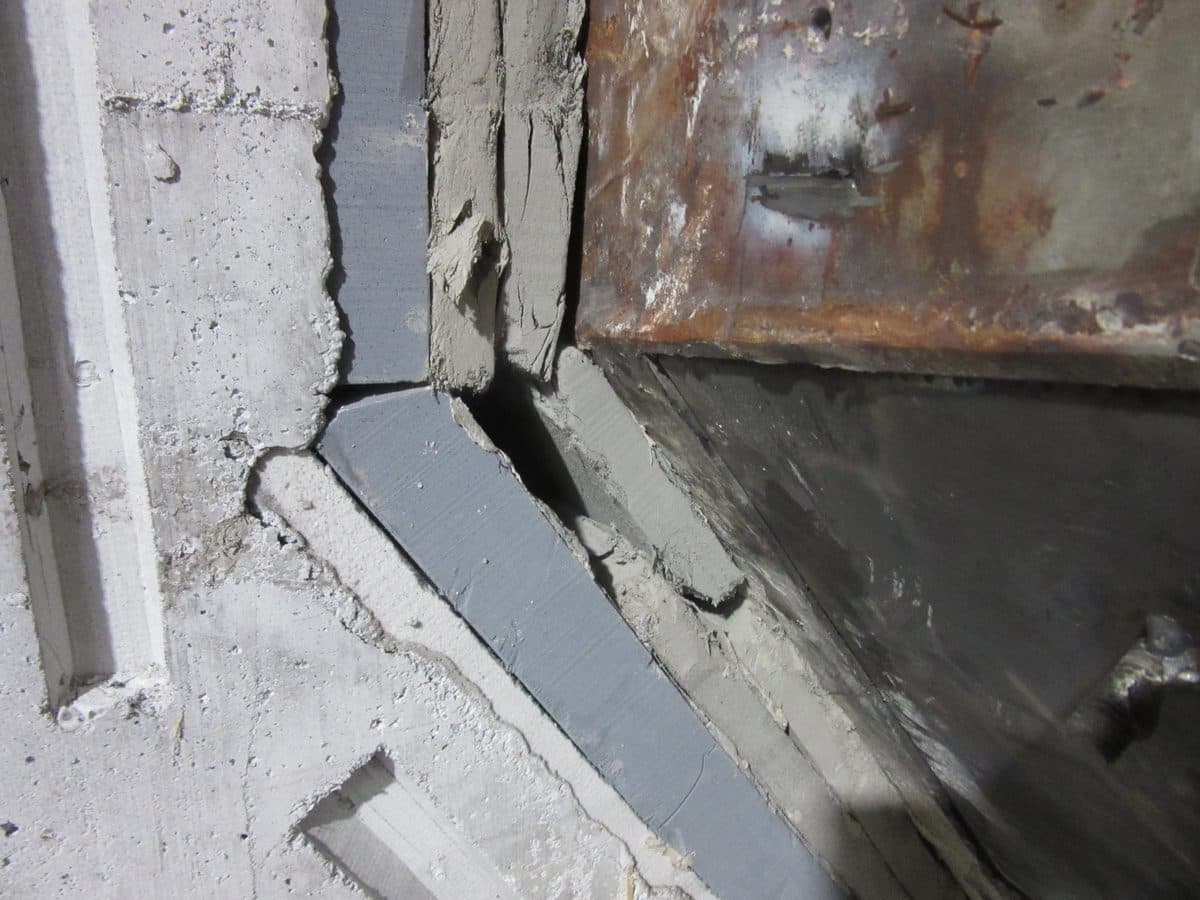
On a vertical surface a joint is a weak point. On the floor it is a collecting basin. Liquid metal follows gravity, finds the gap and stands there until it solidifies. At the next heat-up it expands differently from its surroundings and works the joint open further. What progresses over years on a wall progresses over campaigns on the floor.
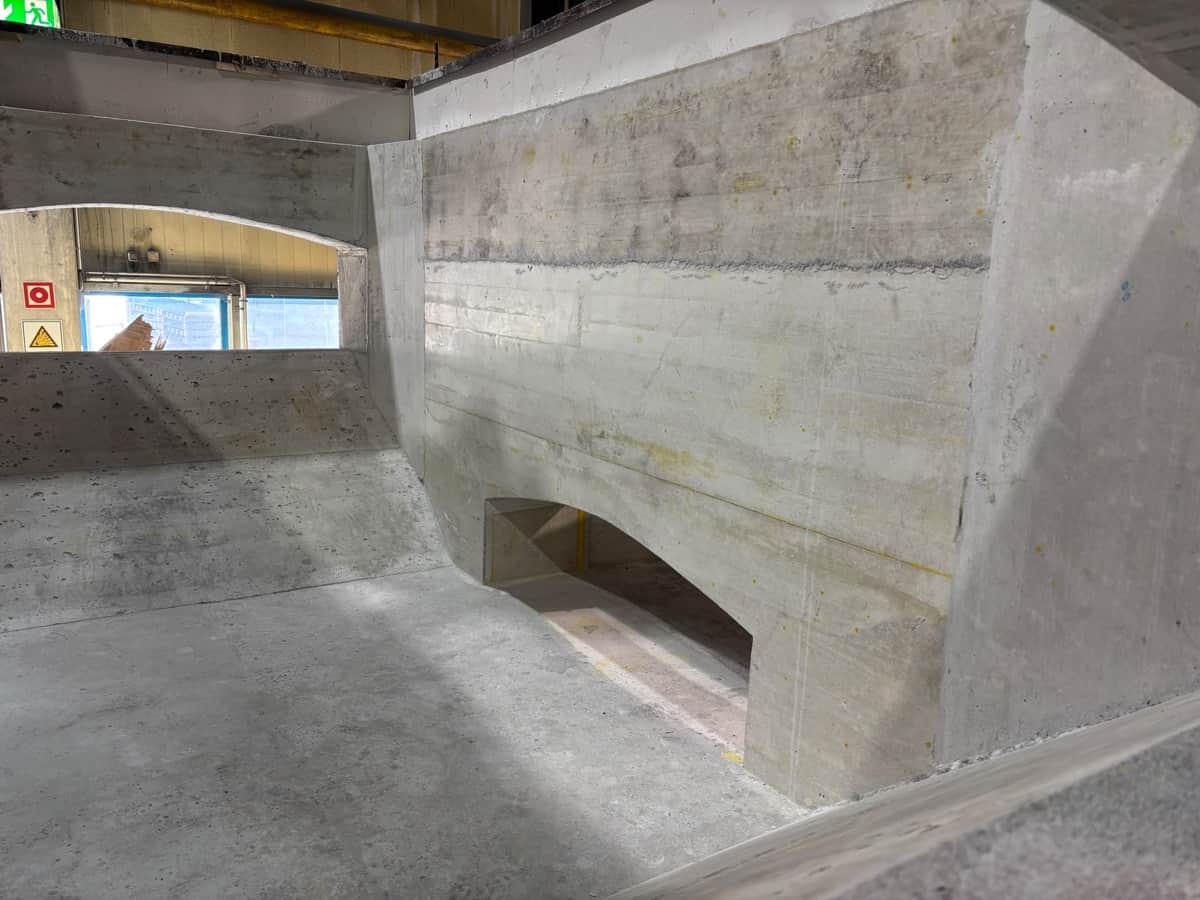
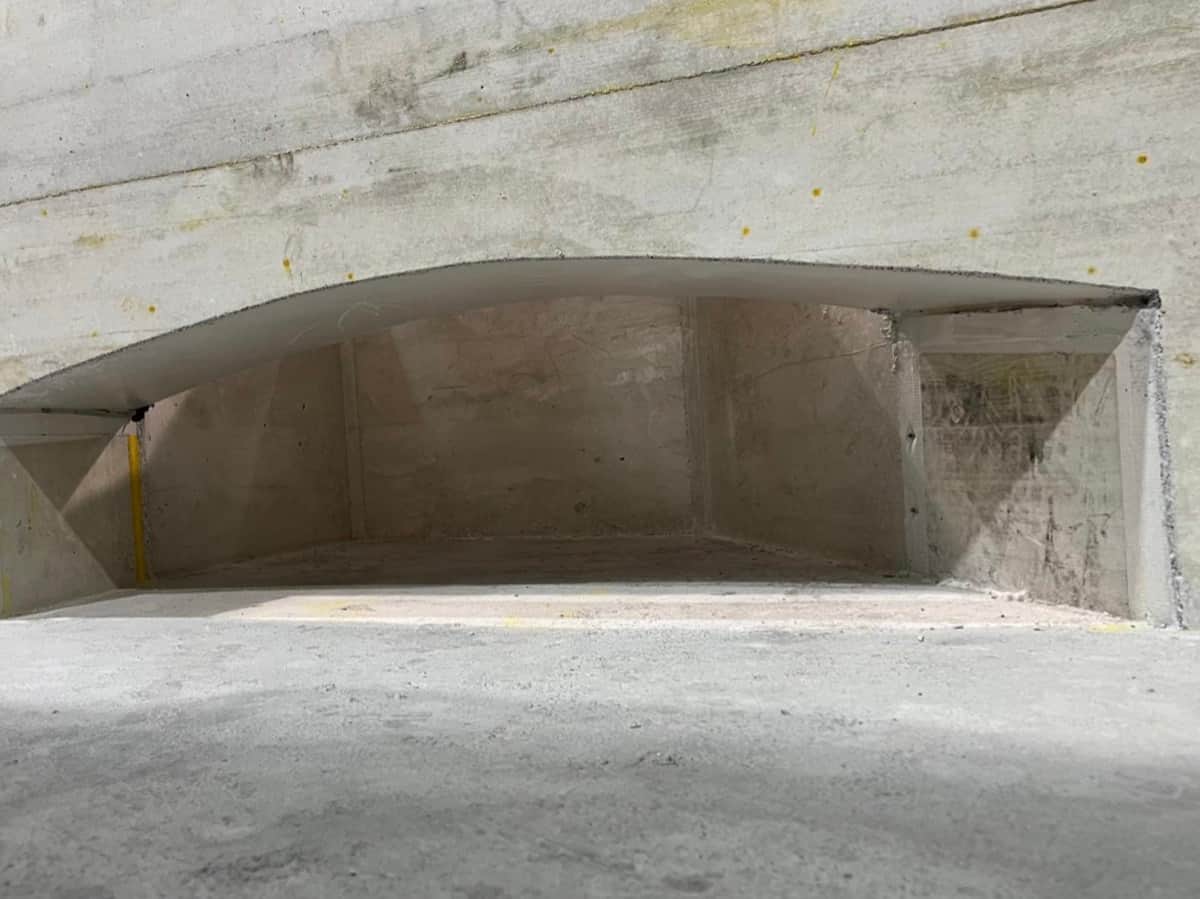
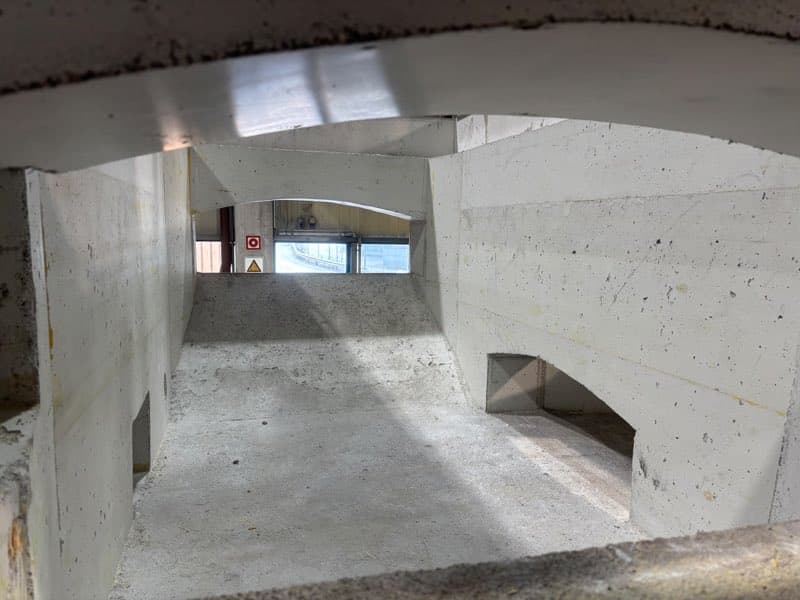
The construction follows from that: the floor is poured in one go wherever possible, and where a construction joint is unavoidable it is placed deliberately outside the zone under heaviest attack — not where the formwork happens to end. That is extra effort in preparation and repair saved in operation.
What lies beneath the floor decides too
On the floor, gravity works for the lining for once: it presses the material onto the substrate instead of away from it. That tempts people to treat the substrate as uncritical. It is the opposite.
A floor lining is only as level as what it rests on. Remnants of the old lining, distorted plate or an uneven insulating layer produce varying thickness — and with it varying expansion and varying load-bearing capacity across the area. This is why the old lining comes out completely and the anchoring is exposed and checked before the first formwork goes up.
Patchwork on the floor lasts until the next campaign, rarely longer. The reason is not the quality of the repair mix but the joint you inevitably build in with it — precisely in the zone where liquids collect.
Four things you can see during a walk-through
Bulging. The floor stands higher in one place than around it. That is usually not added material but metal or oxide that has lodged beneath the surface and is pushing.
Loss of height at the same spot over time. A measurement taken downwards from the door sill or a fixed edge, at the same point on every walk-through, turns an impression into a series of readings.
Bright metallic lines. Solidified metal in a joint or a crack — proof that the gap reaches into the depth and is not merely surface.
A hollow sound. Tapped with a hammer handle, a load-bearing area sounds different from one where the lining has already come away from the substrate.
Repair or replace
On the floor the decision comes earlier than elsewhere. As long as the damage is confined to the surface and the area sounds solid, a local repair is defensible. As soon as metal stands in the depth or the lining has come away from the substrate, a repair merely lengthens the road to the same outcome.
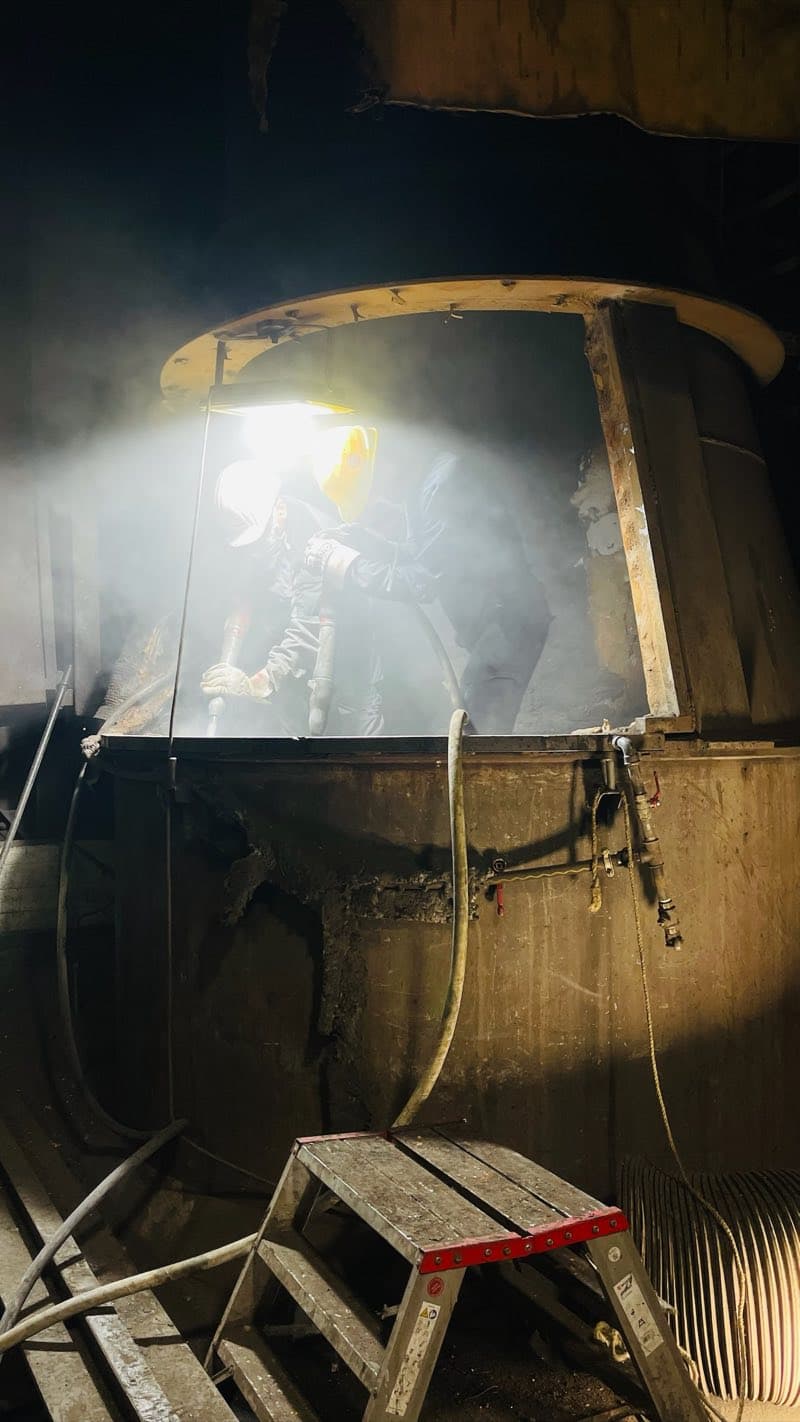
The practical yardstick is not the condition alone but the shutdown window: renewing a floor needs demolition, substrate inspection, formwork, pouring and controlled heat-up. Anyone who wants to fit that into a window has to know beforehand — and only someone who has looked at the floor regularly does.
The awkward property of the floor remains: you stand on it. Anyone who wants to assess it has to clear the area and walk it systematically — not just the path they would take anyway.
At a glance
4 loads
impact, sustained weight, shock, chemistry — at once
We use cookies and similar technologies to ensure that our website functions properly and to analyse how our content is used. In the settings you can choose which cookies you wish to allow. Privacy policy

 PDFAll furnace types