SBS Refractory Service
Repair or renew3 min

Strip-out by excavator or by hand: criteria for the demolition method

Mechanical strip-out is faster — but not possible everywhere. Four questions decide which method suits the plant and the shutdown window.

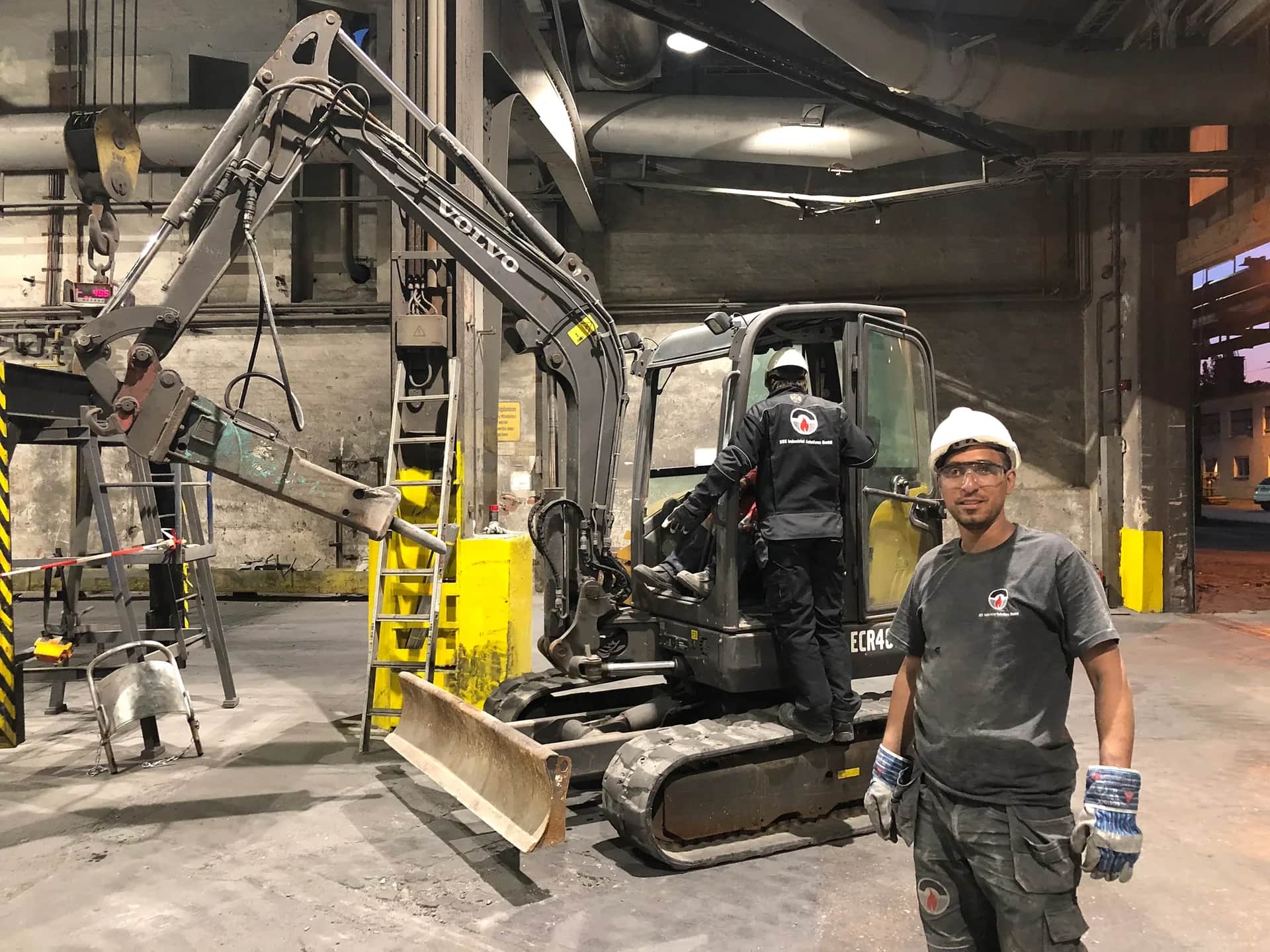
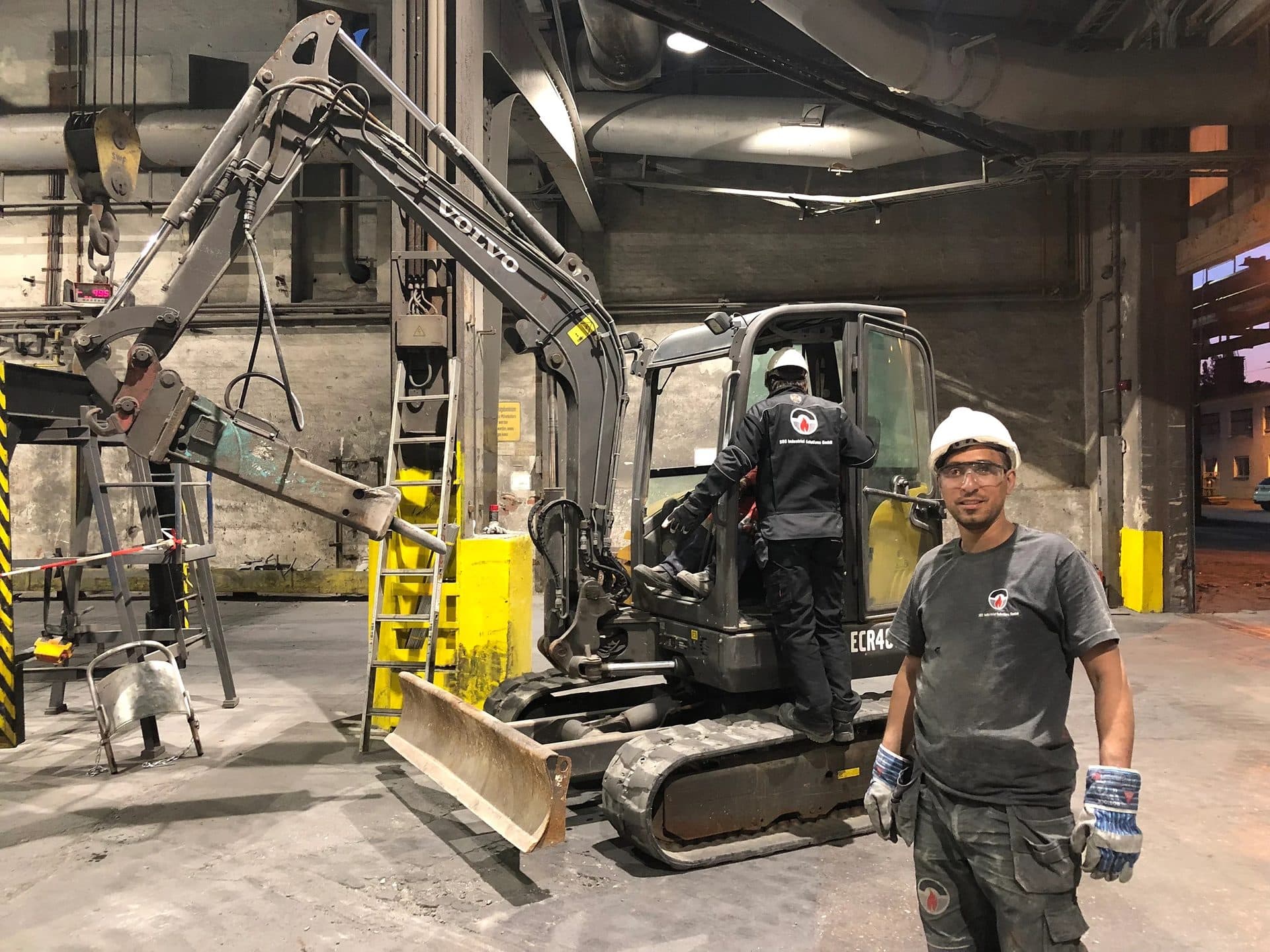
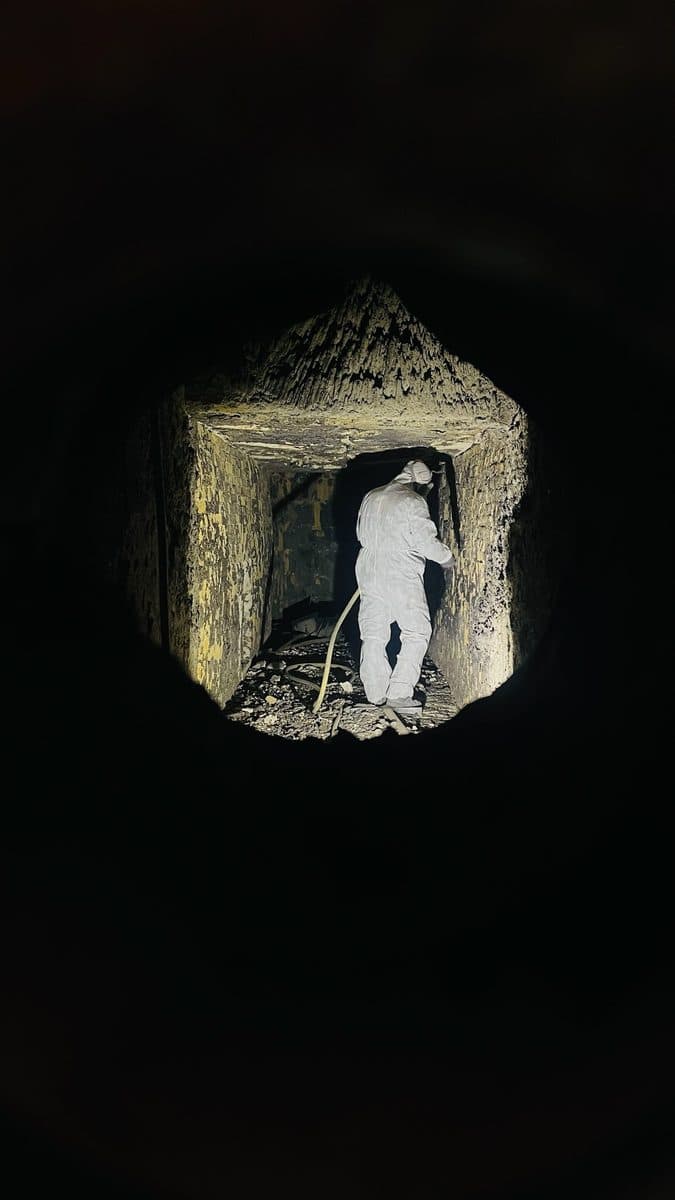
Mechanical strip-out of an old lining with an excavator

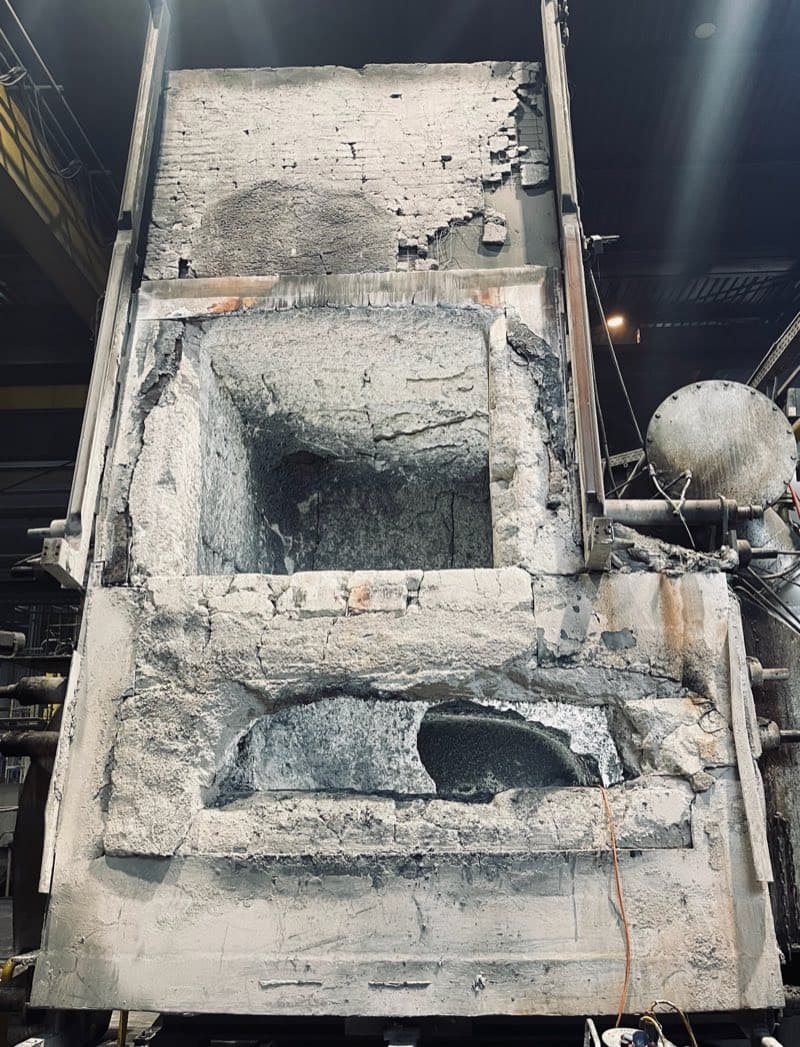
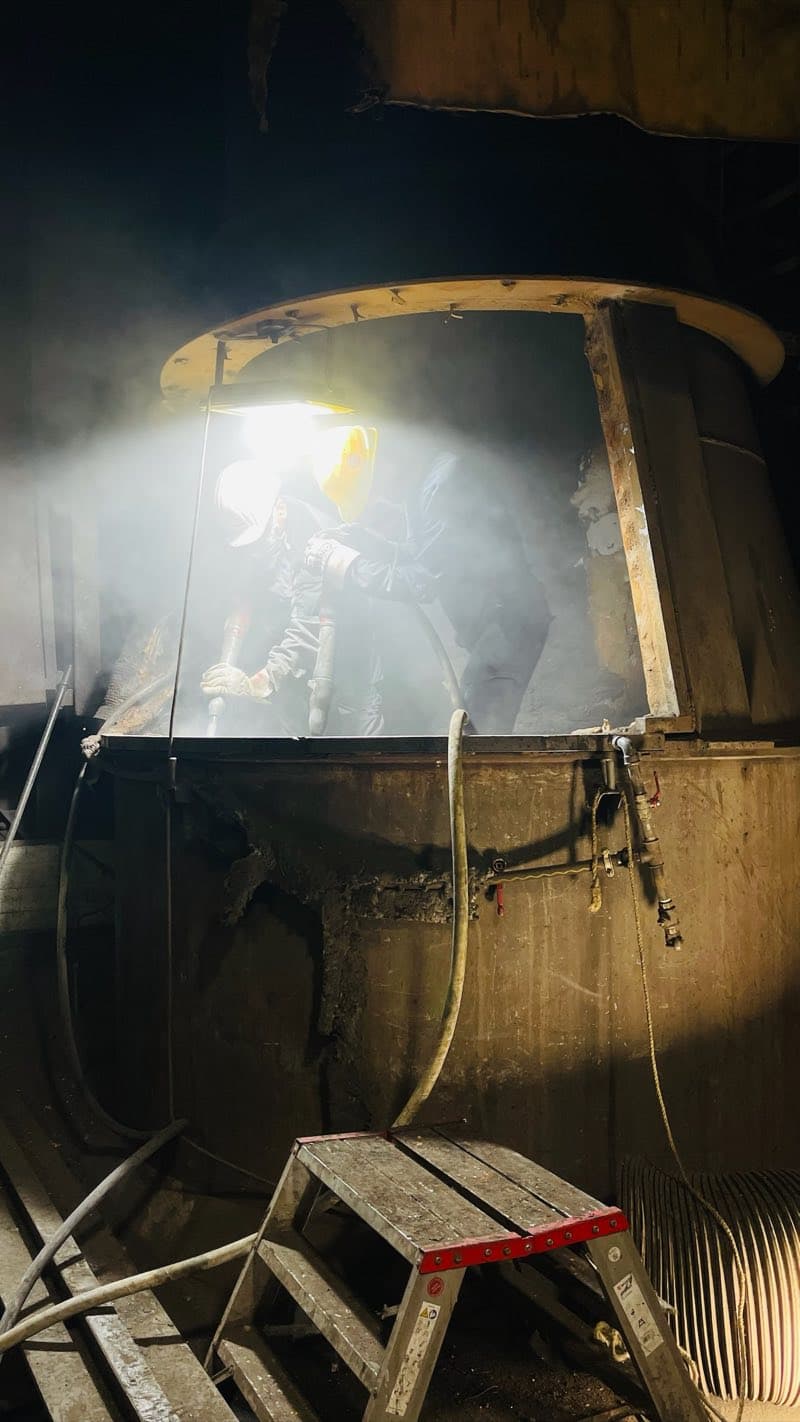
Stripping out the old lining is the least spectacular part of a complete relining — and the part that decides the schedule. Done too cautiously, it eats up the overhaul window. Done too roughly, it damages the furnace structure and creates rework that only becomes visible during relining. We have stripped out old linings both mechanically with an excavator and by hand — the choice is not made by preference, but by four criteria.

Four questions before the first blow

  • What is the accessibility like? An excavator needs an access route and working space. On a cupola furnace in cramped conditions it is ruled out, no matter how much faster it would be.
  • What will the structure carry? The shell and the load-bearing components have to absorb the forces introduced. Where that is unclear, the first step is to check, not to demolish.
  • How many cubic metres are involved? With large volumes, deploying machinery pays for itself quickly. For individual zones, the set-up time is greater than the time saved.
  • Do materials have to be separated by type? If materials are to be collected separately for disposal or recovery, the hand works more precisely than the bucket.

The most expensive option is always the one where, during relining, damage to the furnace structure caused by the strip-out comes to light. That rework appears in no quotation.

At a glance
4 criteria
access, structural capacity, volume, separation by type
Before demolition
check the load-bearing structure

Practice sheets on this topic

Technical newsletter

Get new practice sheets automatically

All PDFs on this page are free, without sign-up. If you want to know when a new sheet is added: one e-mail a month, unsubscribe anytime.

Repair or reline? The three findings
PDFAll furnace types

Repair or reline? The three findings

When a targeted repair is enough, and the three findings where only a relining will hold.

Only in the PDFDecision table with 6 findings, the 3 typical wrong decisions, 2 photos from a relining
To the article
Refractory on the tube wall: The inspection points
PDFEnergy & Combustion

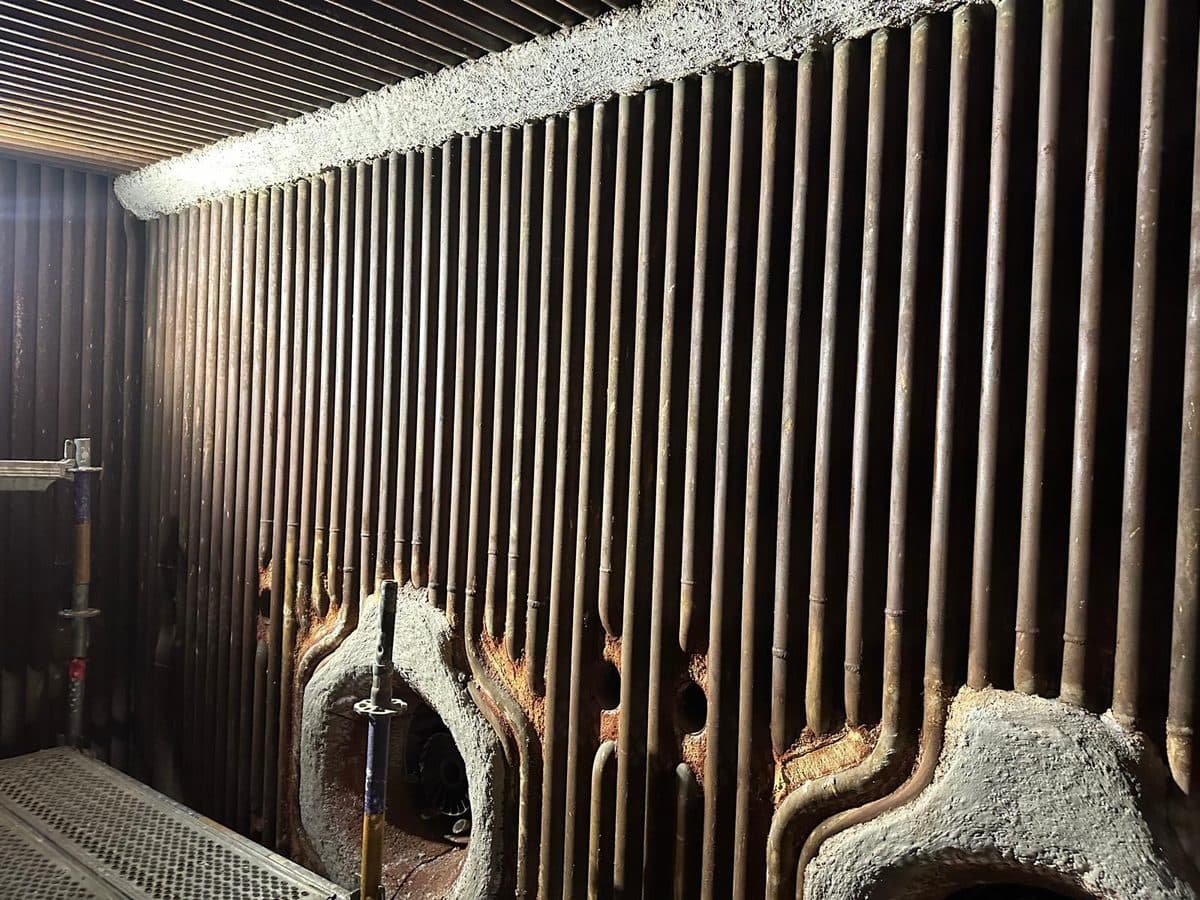
Refractory on the tube wall: The inspection points

Protecting without blocking the heat: what matters when lining a boiler tube wall.

Only in the PDF7-point checklist for tube walls, the 3 typical mistakes, 2 photos from the boiler
To the article
Working in confined spaces: Before we go in
PDFAll plants

Working in confined spaces: Before we go in

Access, supervision, light and air: what is settled before anyone enters a furnace or boiler.

Only in the PDF7-point pre-entry checklist, the 3 typical omissions, 2 photos
To the article

More insights from our projects

New insights from the job site every week – damage patterns, relinings and practical refractory know-how.

Share this article on LinkedIn

Planning a project?

Whether complete relining, repair or emergency — free initial consultation and a fast response.

CallSend enquiry

Your privacy matters to us.

We use cookies and similar technologies to ensure that our website functions properly and to analyse how our content is used. In the settings you can choose which cookies you wish to allow. Privacy policy