85 per cent of aluminium plants report a scrap shortage, and anyone who has to buy takes what is on offer: more paint, more moisture, more fines. For the lining that means four zones that need inspecting more often.
For the first quarter of 2026 the trade association Aluminium Deutschland reported what many remelters see every day: recycling output fell by three per cent, remelters lost four per cent, and 85 per cent of plants report a scrap shortage. At the same time, new recycling units are going up in Gelsenkirchen, Hamm and Neuss, because the CBAM carbon border adjustment has favoured secondary aluminium over imports since January. More furnaces want the same scrap. Anyone who needs it takes what the market offers — and that is often not the scrap the lining was designed for.
What is in the poorer scrap
Clean, dry, bare scrap of a single grade has become the exception. What arrives instead has four properties, each of which does its own work in the furnace: coatings and plastic content, meaning paint, foil, seals and composites; moisture from outdoor storage and from cutting fluids; more fines from swarf and shredder fractions; and more foreign metal, above all iron and magnesium. None of these properties is new. What is new is that they come together, and for good.
Corundum grows where oxygen and movement meet
Organic matter burns in the furnace chamber and increases oxidation of the melt. More oxide means more dross, and dross is skimmed off — with tools, along the wall. At the bath line and on the ramp, corundum forms, grows into the joints and pores of the lining, lifts bricks and takes the lining away piece by piece with every skim. Anyone skimming more dross today than a year ago also has more attack at the bath line than a year ago, even if the furnace temperature has stayed the same.
Salt and chlorine in the joint
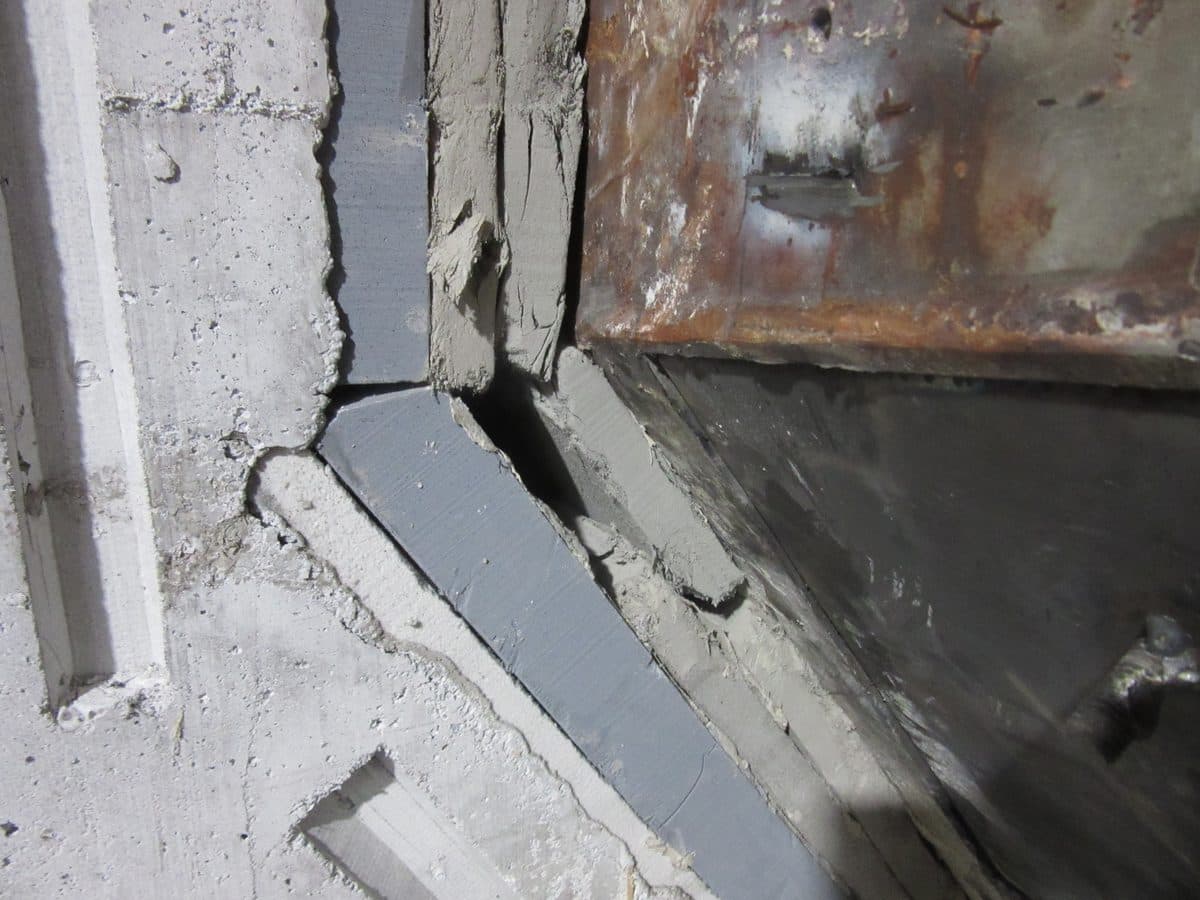
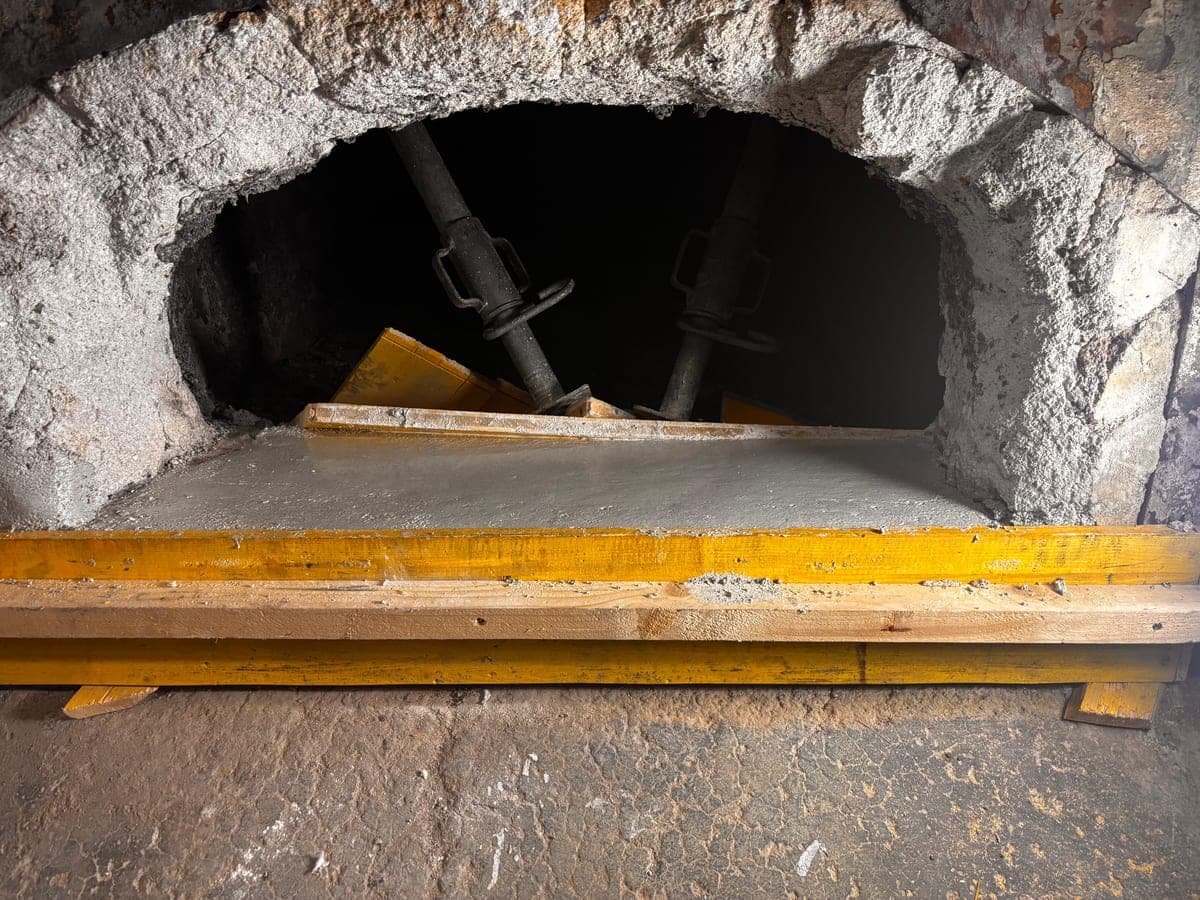
Contaminated scrap needs more salt flux, and plastics such as PVC bring chlorine with them. Both find the joint: molten salts infiltrate open joints and pores, chlorides attack the binder phases, and during every shutdown the residues draw moisture from the air. The damage does not show on the hot face but behind it: loose bricks, heaving joints, layers spalling off after restart. With the scrap mix, therefore, what to look for in a shutdown inspection changes too.
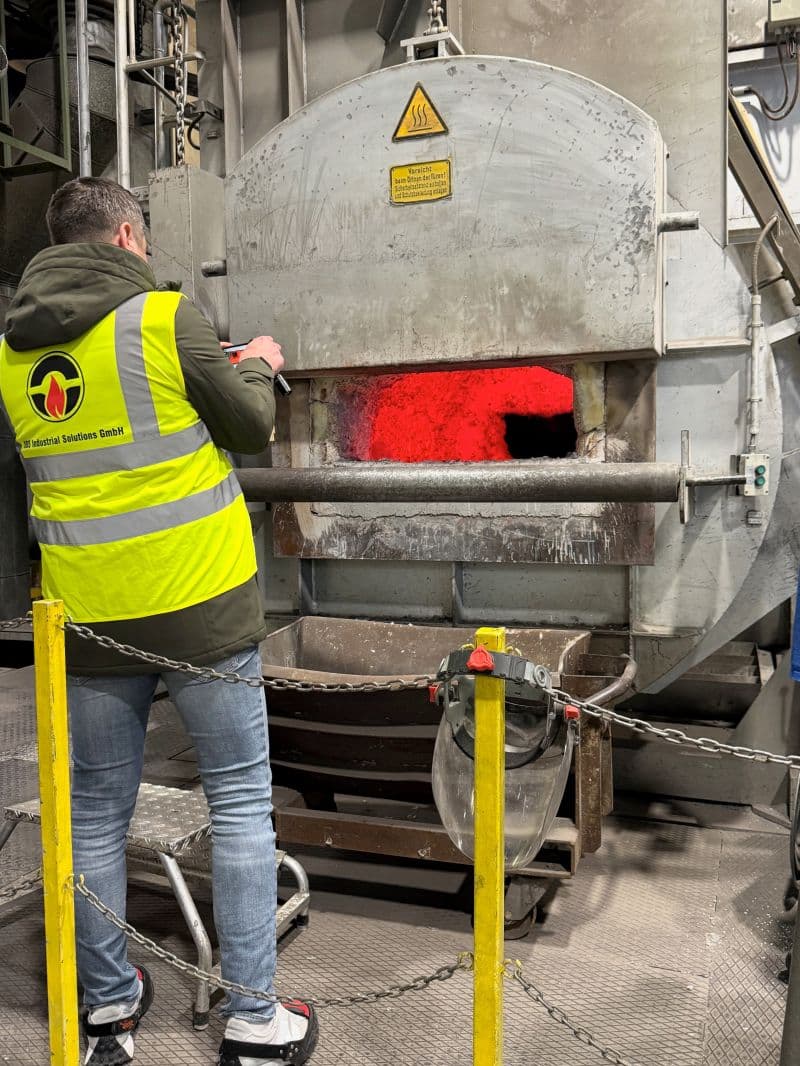
The charging edge is the first to receive the scrap — with a damp, fine mix more often than before
Damp charges: thermal shock for the lining, risk for the crew
Wet scrap is first of all a safety issue: moisture under the melt vaporises instantly. For the lining there is a second effect on top. Every damp charge draws heat out of the charging edge and the floor, and quickly. Temperature changes are the load case refractory material tolerates worst. Where one large charge used to come, fines and shredder material bring several small ones, each with its own cycle. Preheating the scrap protects both, the crew and the brickwork.
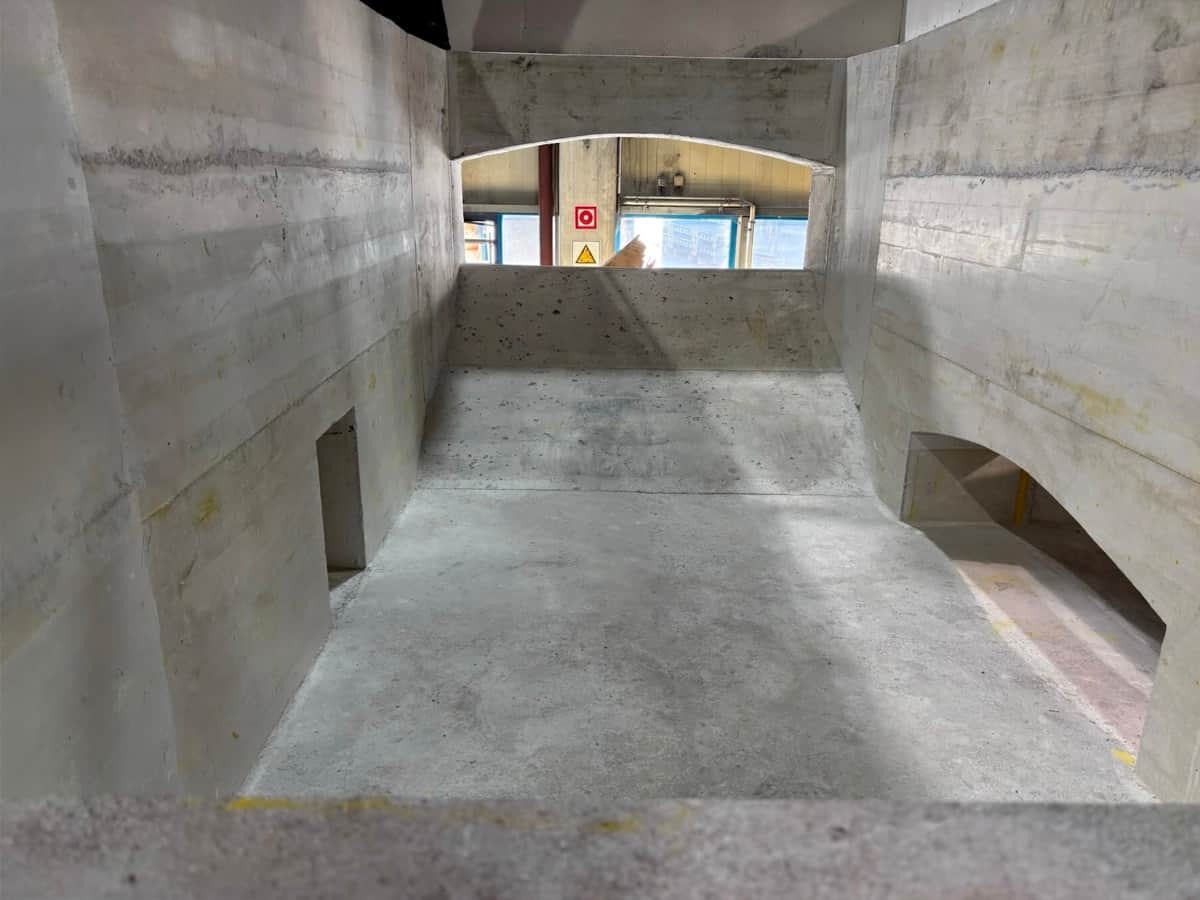
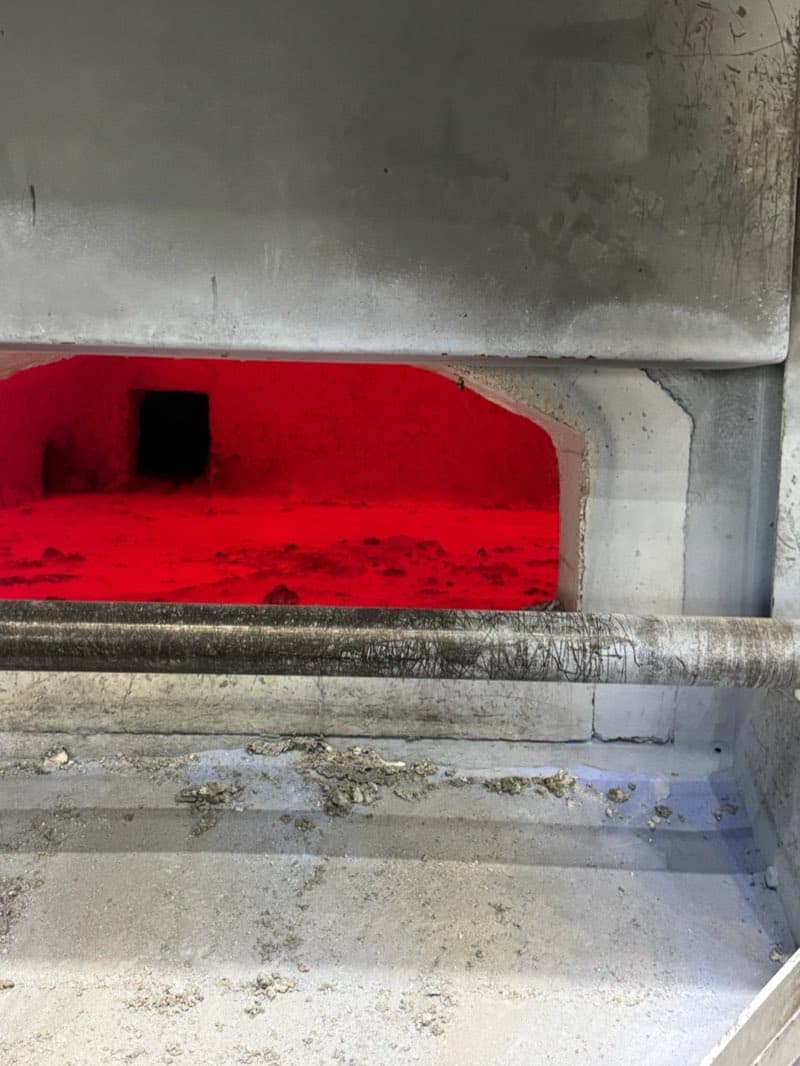
Ramp and charging edge: mechanical wear from tools and fines, broken edges, open joints.
Floor beneath the charging zone: thermal shock cracks, infiltration beneath the working lining.
Joints and insulation: traces of salt and chloride, moisture after the shutdown, heaving layers.
What can be settled before the next turnaround
Two material questions belong on the table before the next lining is ordered. First: at the bath line and on the ramp, castables with low wettability by aluminium pay off, because they keep corundum out of the pores. Second: the anchoring at the bath line has to withstand the leverage forces of skimming, not just the temperature. Both cost little at relining and extend service life exactly where the poorer scrap attacks hardest. And the scrap mix belongs in the furnace file, with a date — otherwise, in two years, nobody will be able to say why the furnace wears differently from its predecessor.
The scrap has changed; the lining mostly has not. Anyone skimming more dross, charging damper material and needing more salt should inspect the bath line, ramp and charging edge, floor and joints more often than before — and design the next relining for the scrap the furnace actually gets, not the scrap it would like to get.
At a glance
85%
of aluminium plants report a scrap shortage (Aluminium Deutschland, first quarter 2026)
−4%
remelters' output in the first quarter of 2026 — while furnace capacity grows
4 zones
bath line, ramp and charging edge, floor, joints: inspect more often when the scrap mix changes
We use cookies and similar technologies to ensure that our website functions properly and to analyse how our content is used. In the settings you can choose which cookies you wish to allow. Privacy policy

 PDFAluminium & non-ferrous metals