Throttle back, relocate, wait and see: more and more furnaces are standing idle “until further notice”. For the lining that is the worst possible state — cold, open, damp, with no plan. Three cases, two checklists and the question of when the honest answer is decommissioning.
According to Aluminium Deutschland, three per cent of plants have begun closures, 13 per cent are considering relocating abroad, and 57 per cent expect no improvement before the end of the year. In practice that rarely means “furnace off, plant gone”. It means: furnace off, decision later. A unit then stands for months, sometimes longer, and nobody has laid down in what state. That state is exactly what decides whether the furnace still has a lining when it is restarted, or is a building site.
Three states, three risks
Holding warm on a low setting keeps the lining above the dew point; it costs energy but hardly any substance. A planned cold shutdown with preservation is the state a furnace is brought into deliberately: empty, dry, sealed, documented. Idling without a date is the opposite: the furnace is switched off just as it happens to be running, with residual melt, dross and open doors. The first case is an operating decision, the second a project, the third a damage event on a delay.
What the cold does not do, the moisture does
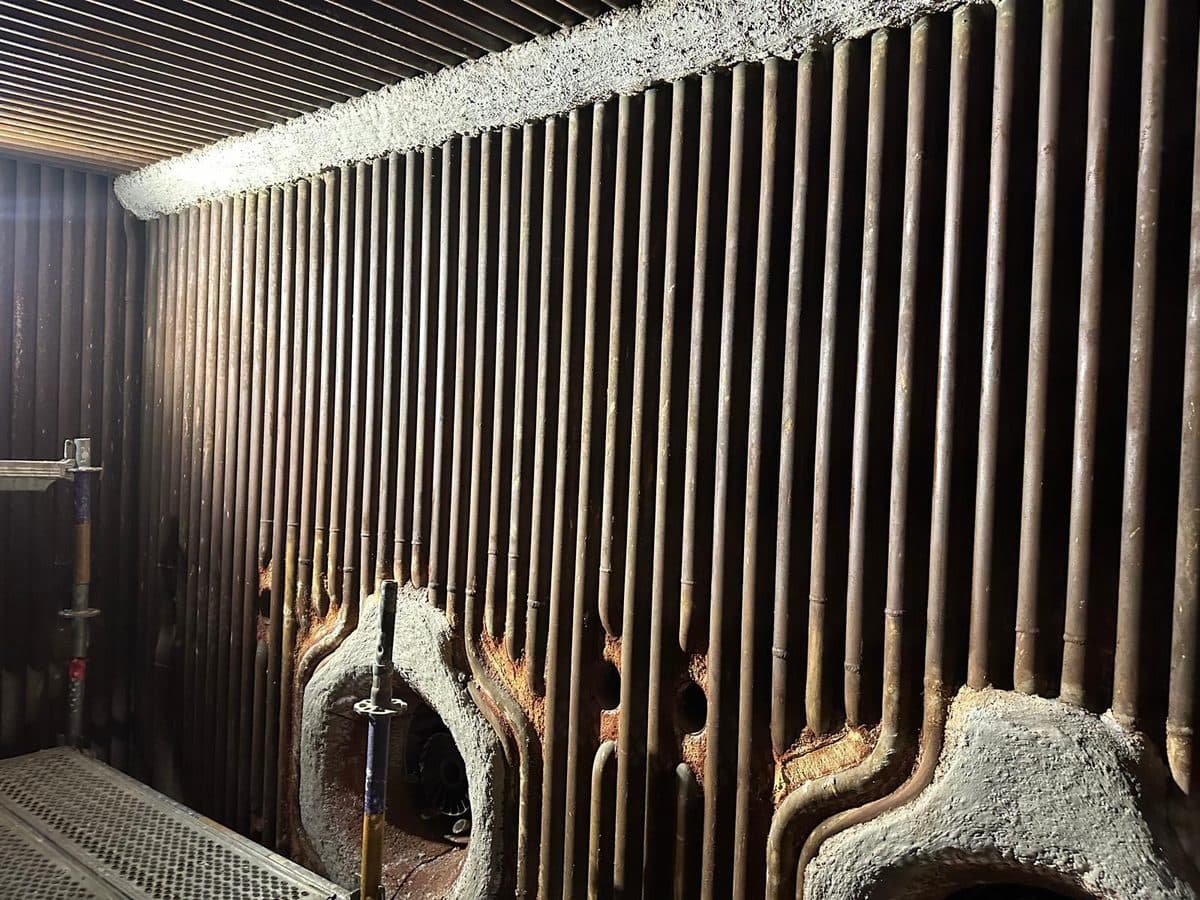
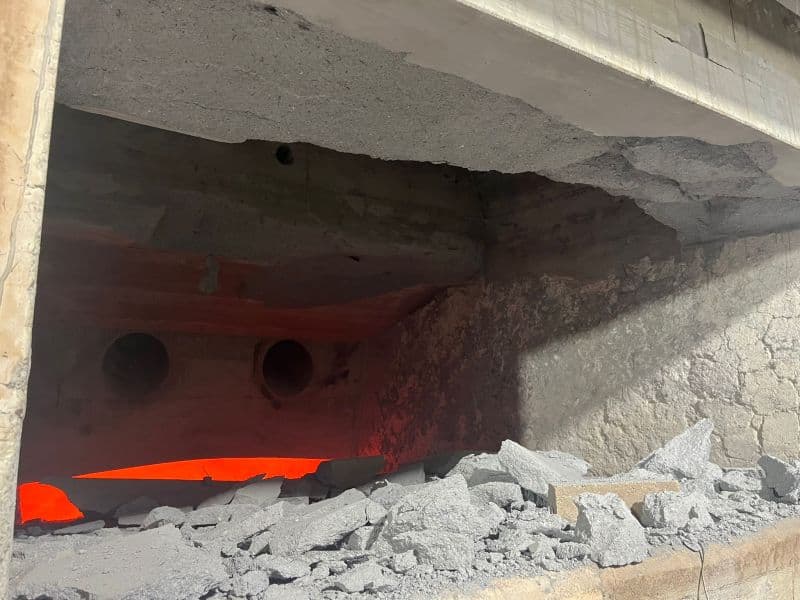
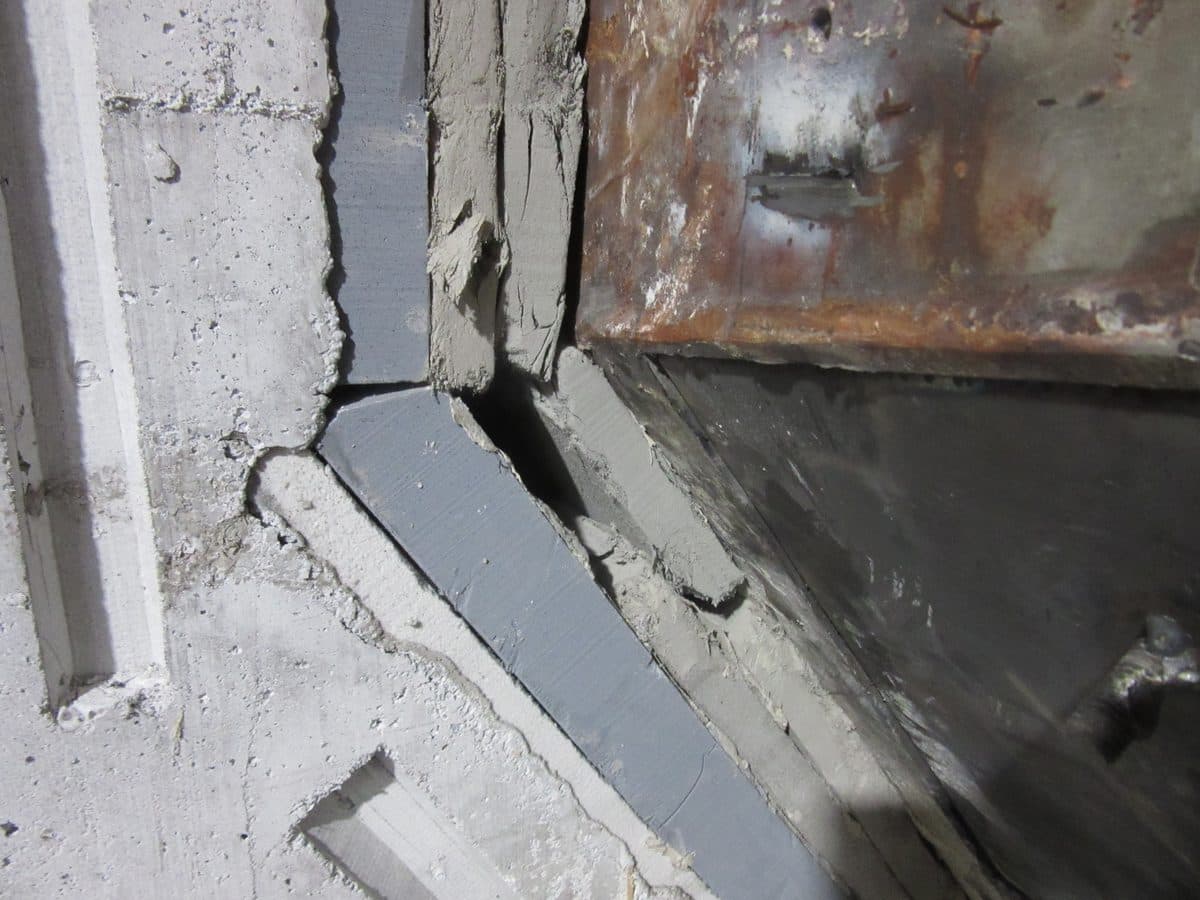
Refractory material itself copes well with a cold shutdown. What wears it down is water. Humidity condenses on the cold walls of an open furnace, the insulation behind them — lightweight bricks, calcium silicate boards, fibre — soaks it up like a sponge, and salt residues from flux and dross draw further moisture into the joints. The aluminosilicate monolithics and bricks of an aluminium furnace do, admittedly, barely hydrate. But a bath line that has taken up metal and oxide over the years is no longer the material that was installed: embedded nitrides and carbides decompose in damp air, the brick heaves, turns friable and trickles out of the joint as powder at the first demolition. And the moisture in the insulation turns to steam on heat-up and blasts the working lining off from behind. Anyone who wants to avoid that does not need heat, but dryness.
Holding warm is cheaper than it looks
A burner on a low setting or electric trace heating that keeps the lining permanently above the dew point costs money continuously — and at restart it saves the drying, the moisture damage and a walk-through with an uncertain outcome. For furnaces whose restart is counted in months, holding warm is almost always the cheaper calculation. Anyone who cannot or will not afford it has to go the second way in full.
Cold but dry: how a furnace is preserved
Run it empty: tap off the residual melt, remove dross and salt residues completely — they draw moisture.
Cool down along the curve, not to the end of the shift: temperature changes on the way down crack the lining just as they do on heat-up.
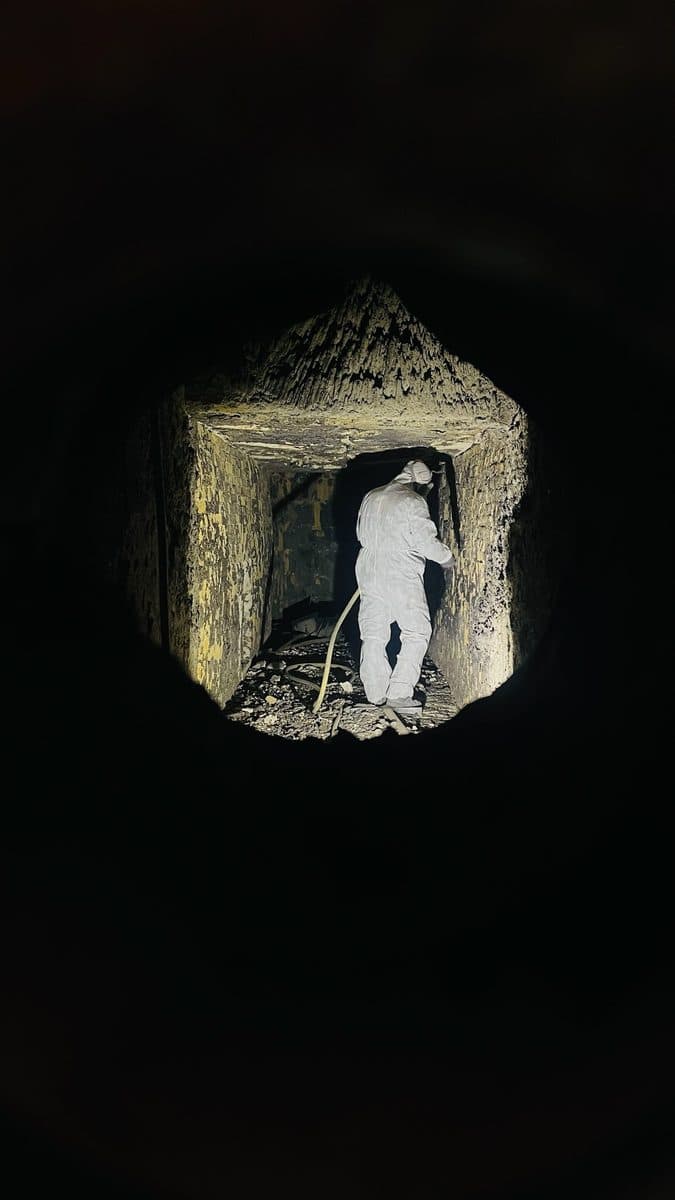
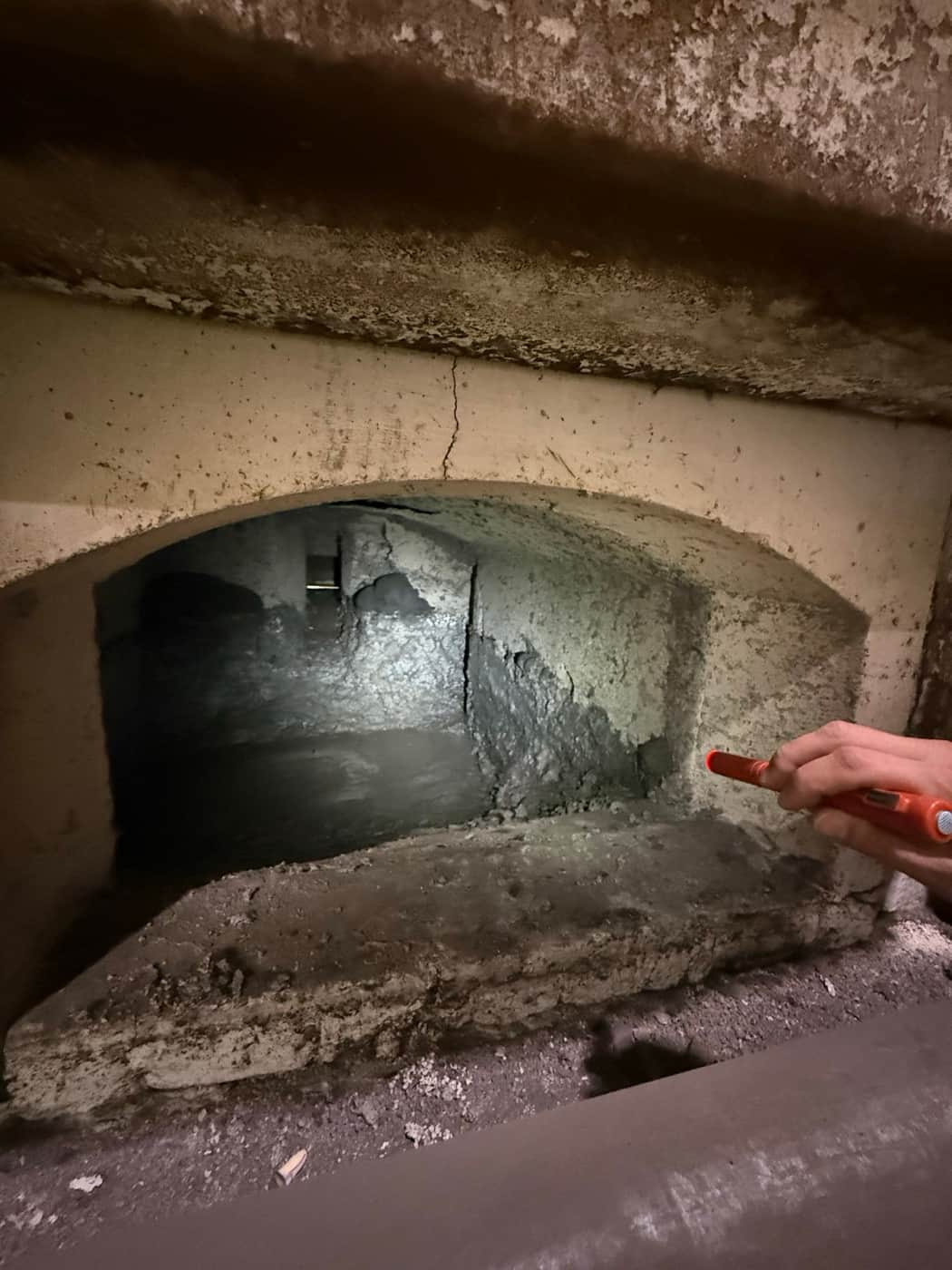
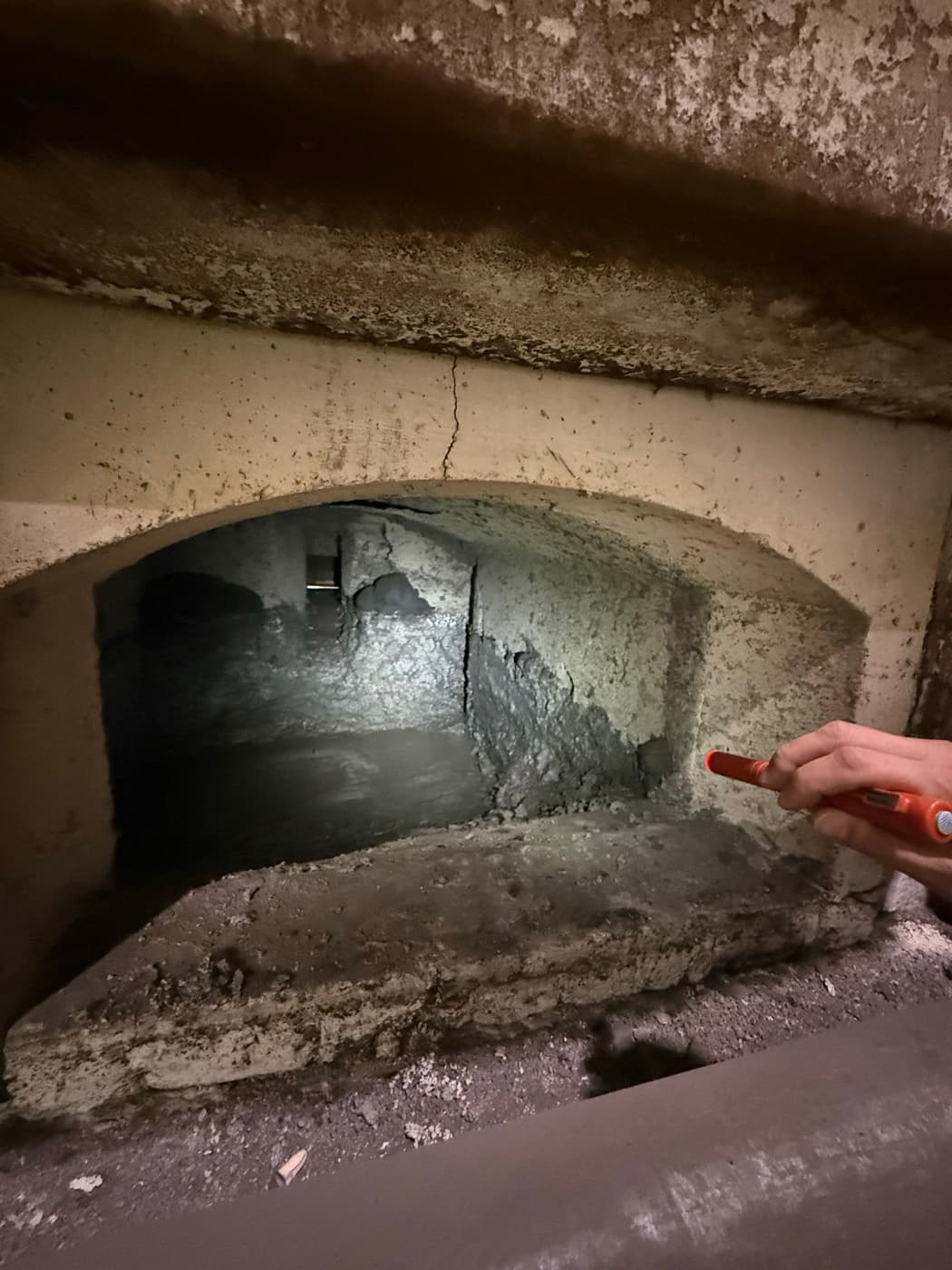
Walk-through and photo documentation while the furnace is still hand-warm: residual wall thickness, joints, anchoring, hotspots from the last campaign.
Seal the openings, check the shell for leaks, shut off the flue gas path — the furnace should not breathe.
Keep it dry: dry air, a dehumidifier or desiccant in the furnace chamber, checked every few weeks.
Close the furnace file: condition, date, photos, open findings. At restart it is the only source.
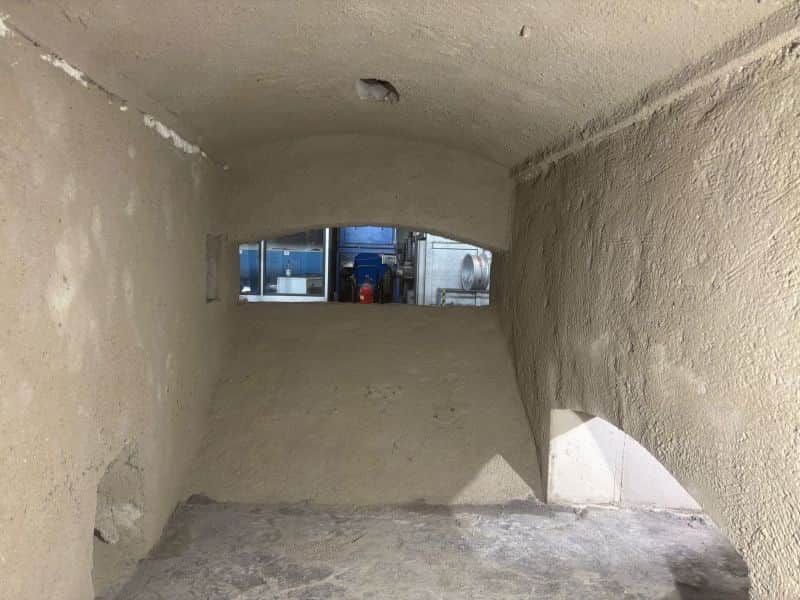
Empty, dry and documented — in this state a lining survives even a long shutdown
Restart like a first commissioning
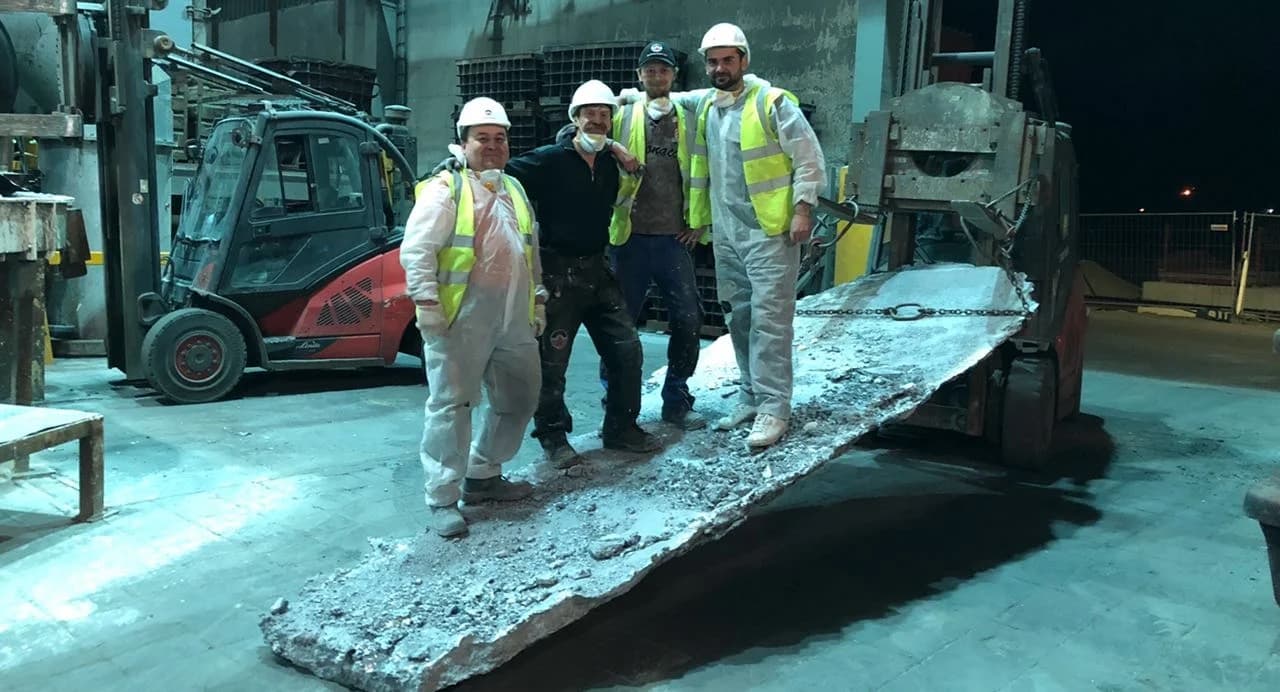
A preserved furnace is not simply lit again. Before the first fire comes a walk-through with a tap test and a look at surfaces and joints: efflorescence, cracks, a hollow ring. Then follows a heat-up curve with holding stages in the range around 100 to 150 degrees, so that moisture can escape from the working lining and insulation before it turns to steam. Thermography on the shell in the first days shows whether the insulation is still doing what it did before the shutdown. And if the walk-through reveals moisture damage, spalling layers or heaving joints, the honest answer is not a restart but demolition and relining — or, if the decision has gone against the site, an orderly decommissioning.
Before restarting
Walk-through with tap test, photos checked against the furnace file.
Check for moisture: efflorescence, dark patches, soft surfaces, powder in the joint.
Heat-up curve with holding stages to drive out water, no shortcuts.
Thermography on the shell in the first week.
With heaving or loose layers: do not start up, but decide — repair, reline or decommission.
A furnace standing idle “until further notice” does not lose its lining to the cold, but to moisture and the absence of a decision. Hold it warm or preserve it properly — either is cheaper than the surprise at restart.
At a glance
13%
of aluminium plants are considering relocation — many furnaces stand idle without anyone having laid down their state
Dew point
the threshold above which holding warm protects the lining
100–150 °C
holding stages at restart so that moisture escapes before it turns to steam
We use cookies and similar technologies to ensure that our website functions properly and to analyse how our content is used. In the settings you can choose which cookies you wish to allow. Privacy policy

 PDFAll furnace types