
SBS Refractory Service
Damage and causes3 min

The three zones in the induction crucible: what the break-out reveals about the lining

In foundries one crucible lasts 300 heats and the next only 80. The reason is written in the lining that is being broken out right now — provided someone looks before it ends up in the container.

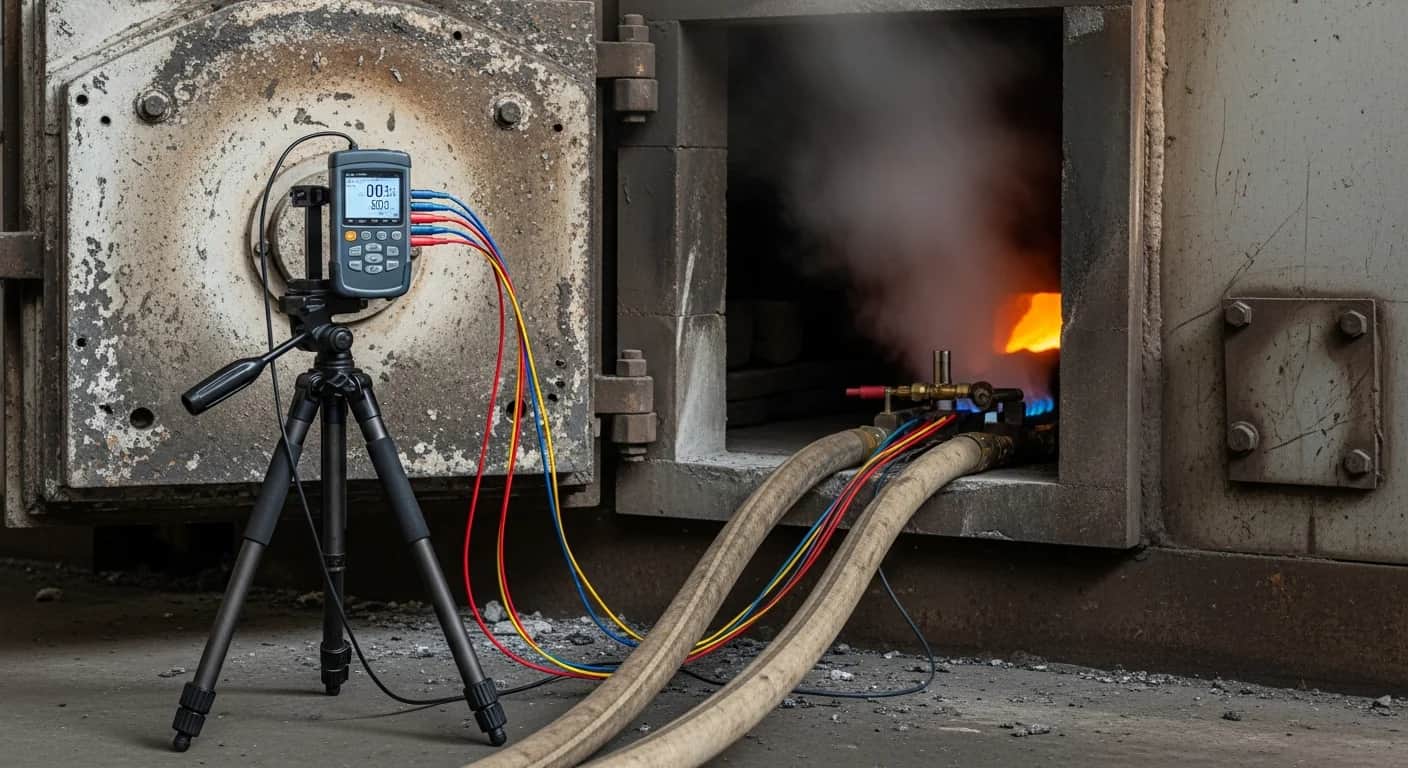
Controlled heat-up of a freshly installed refractory lining

Four things decide how long a crucible lining lasts: the mix, the compaction during ramming, the sintering curve during the first firing and the mode of operation. If a crucible manages only 80 heats instead of 300, one of these four was the cause — and you can see which one on the broken-out lining. Afterwards you cannot.

What sintering creates

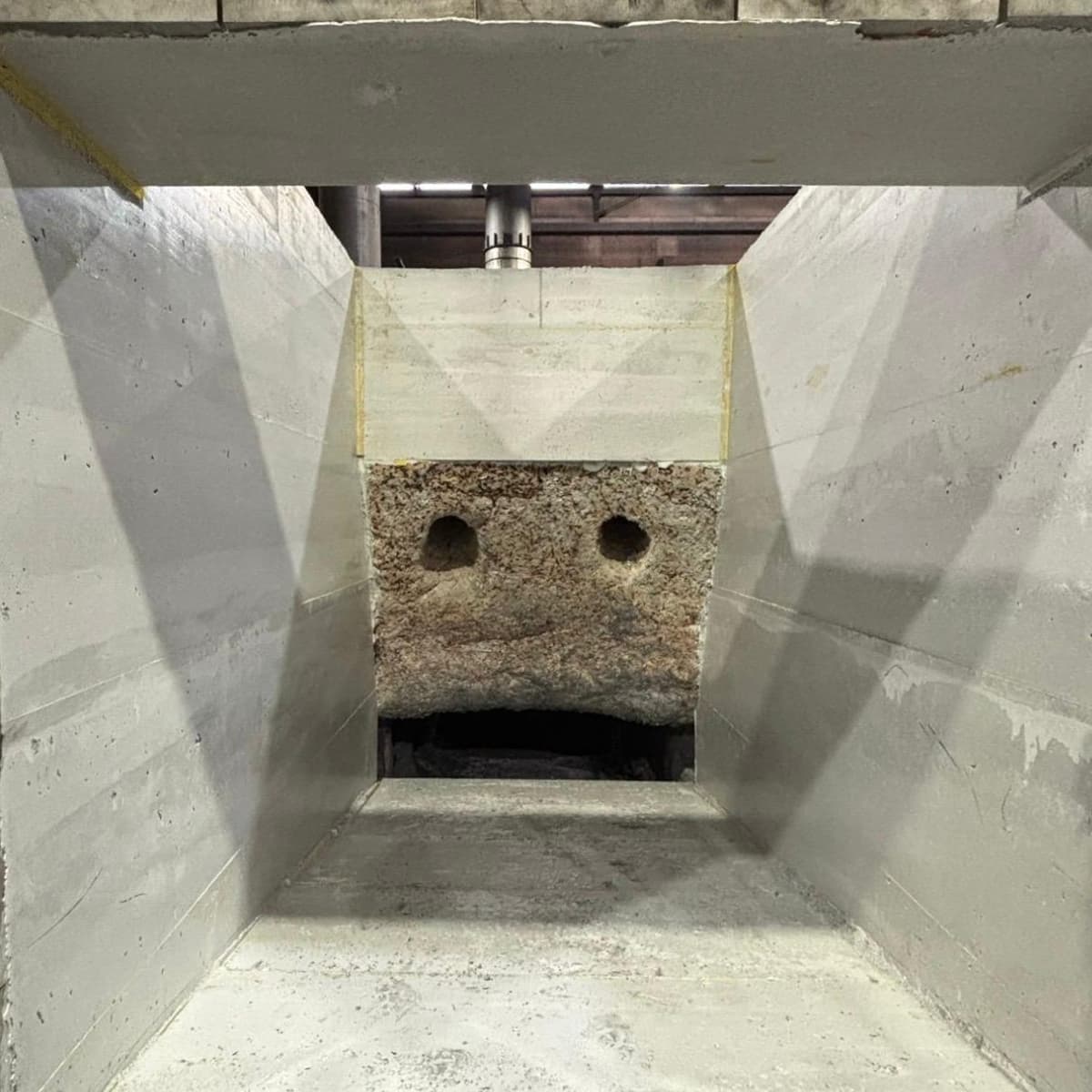
A rammed mix is the same everywhere once it has been installed. During the first heat-up it forms three layers, because the temperature falls from the inside outwards: on the inside the sintered layer, dense and firm, standing in the metal. Behind it a transition layer, partly sintered but not yet bonded through. And on the outside, at the coil, a layer that stays powdery.

This outer layer is not a defect, it is intended. It allows the lining to be broken out at the changeover without damaging the coil, and it slows a crack coming from the inside. A crucible that has sintered all the way through no longer has this reserve.

What the proportions reveal

  • Sintered layer too thick, loose layer almost gone: operated too hot or for too long. The lining can barely be broken out any more, and a crack runs right through to the coil instead of petering out in the loose layer.
  • Sintered layer too thin: the curve ran too fast or held too low. Wear then starts not after fifty heats, but after the first.
  • The layers are uneven around the circumference: usually charging always takes place at the same spot, or the cooling does not work evenly all round. That is not a material problem but an operating problem.
  • The layers are uneven over the height: thinner at the top than at the bottom points to a bath line held too low, or to overheating during the melting phase.
  • Holes or loose nests in the sintered layer: the compaction during ramming was not clean there. That is the only one of the four factors that was already fixed at installation.

Twenty minutes during the break-out

No more than that is needed: photograph the fracture face, measure the three layer thicknesses at three heights, note down the number of heats. After three campaigns there is a comparison, and the question “material or operation?” is no longer a matter of opinion. Without these twenty minutes it stays one — and is usually decided in favour of whoever argues more loudly.

The answer to a service life that is too short lies in the broken-out lining. It only lies there, though, until the container is collected.

At a glance
300–800
heats per crucible in cast iron
up to 50 %
loss of service life due to a faulty sintering curve

Practice sheets on this topic

Technical newsletter

Get new practice sheets automatically

All PDFs on this page are free, without sign-up. If you want to know when a new sheet is added: one e-mail a month, unsubscribe anytime.

Sign-off before the first heat-up: The inspection points
PDFAll furnace types

Sign-off before the first heat-up: The inspection points

What gets checked before the first firing — afterwards nothing can be reworked.

Only in the PDF7-point sign-off checklist, the 3 typical omissions, 2 photos from the job
To the article
Running heat-up curves correctly
PDFAll furnace types

Running heat-up curves correctly

Why the first days decide over years of service life.

Only in the PDFExample curves for ramming mix, castable and brick lining with hold points and ramp rates
To the article
Reading crack patterns: The comparison chart
PDFAll furnace types

Reading crack patterns: The comparison chart

Symptom, cause and required action side by side.

Only in the PDFSix damage patterns from real furnace inspections with classification: observe, plan or act immediately
To the article

More insights from our projects

New insights from the job site every week – damage patterns, relinings and practical refractory know-how.

Share this article on LinkedIn

Planning a project?

Whether complete relining, repair or emergency — free initial consultation and a fast response.

CallSend enquiry

Your privacy matters to us.

We use cookies and similar technologies to ensure that our website functions properly and to analyse how our content is used. In the settings you can choose which cookies you wish to allow. Privacy policy