Bio-soluble fibre or ceramic fibre: which layer where
Alumino-silicate wool is classified as carcinogenic; bio-soluble alkaline earth silicate wool (AES) is not. Operators have to assess where they can substitute. The answer is not the same for the whole furnace but is decided layer by layer, by the temperature at the fibre, the atmosphere and the removal of the old wool.
High-temperature insulation wool is found in almost every industrial furnace: as modules in the roof, as blanket behind the castable, as board in the door, as paper in the seal. For a long time this was almost always alumino-silicate wool, commonly called ceramic fibre (ASW, also known as RCF). In the EU it is classified as a category 1B carcinogen. The alternative is alkaline earth silicate wool (AES), which dissolves quickly in lung tissue and is therefore not classified as carcinogenic. TRGS 619, the German Technical Rule for Hazardous Substances on substitution, requires operators to assess where ASW can be replaced and to document the result. So the practical question is not “ASW or AES?” but: which layer can be bio-soluble, and which cannot?
The difference in three points
Chemistry: ASW consists of alumina and silica, AES of silica with calcium and magnesium oxide. Accordingly, the data sheet states Al₂O₃/SiO₂ or SiO₂/CaO/MgO.
Classification: ASW is a category 1B carcinogen, is on the REACH Candidate List and is subject to an EU limit value of 0.3 fibres per millilitre. AES falls under Note Q of the CLP Regulation and is not classified as carcinogenic if its low biopersistence has been demonstrated.
Temperature: AES is generally used up to 1200 °C, while ASW grades go higher. For both, however, the number in the product name is the classification temperature, not the continuous service temperature.
Classification temperature is not a service limit
Under DIN EN 1094, the classification temperature is the temperature at which linear shrinkage after 24 hours does not exceed a limit value: 4 % for blankets, 2 % for boards and shaped parts. Over months and years the fibre continues to shrink, and it ages faster in a reducing or contaminated atmosphere. The continuous service temperature is therefore lower. Anyone laying a 1200 °C blanket directly in a hot zone at 1200 °C is building in gaps and shrinkage cracks. What counts for the decision is the temperature actually present at each layer.
Deciding layer by layer
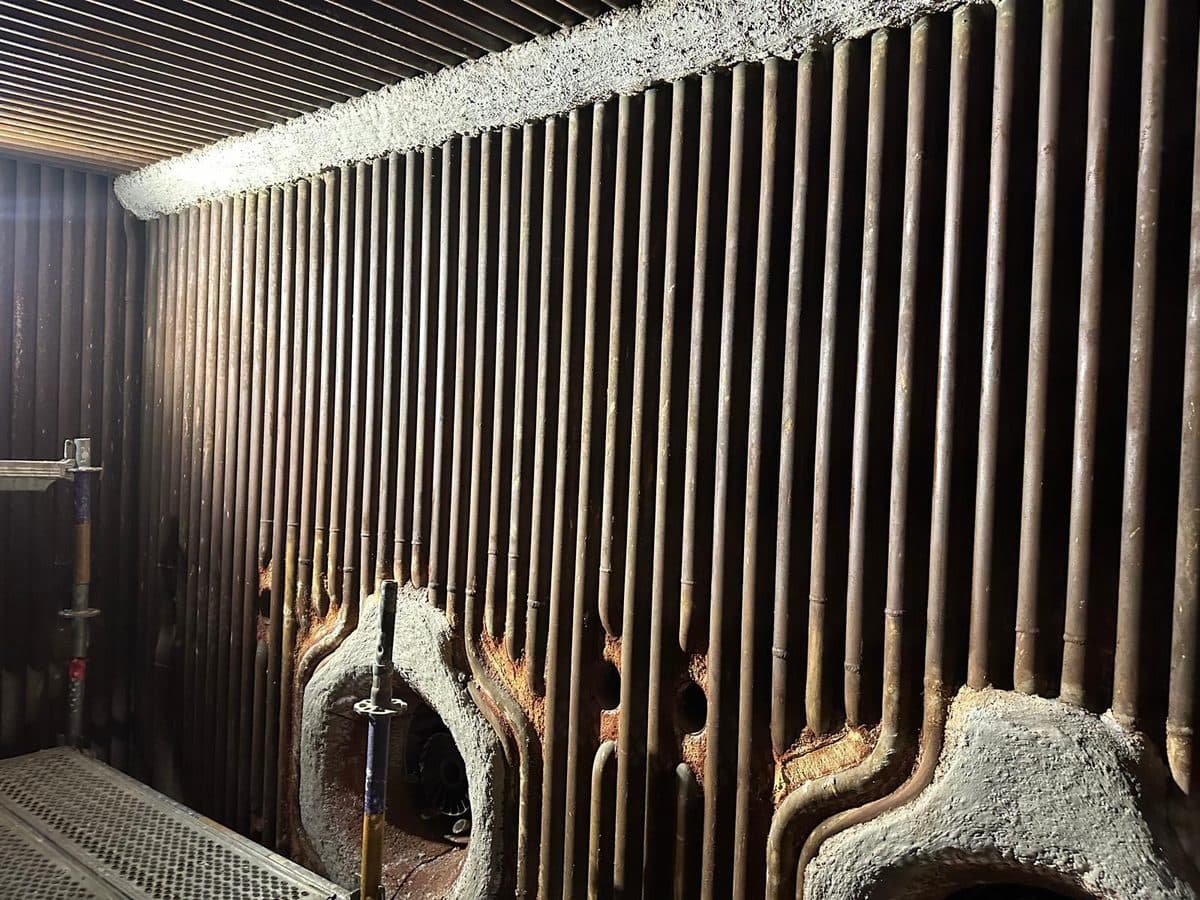
Back-up insulation behind brick, castable or fibre modules: here the temperature at the fibre is well below that of the hot face. This is the classic application for AES blankets and boards, and it usually accounts for the largest share of the wool installed.
Hot-face fibre lining with temperatures within the AES range and a clean, oxidising atmosphere: AES is possible if the temperature profile, burner arrangement and furnace atmosphere fit together. We check this individually for each plant.
Hot face above the AES range, such as fibre modules in hot zones of this kind, ladle lids or reformer radiant sections: ASW or polycrystalline wool remain technically necessary. Here, the outcome of the substitution assessment is the documented justification in the risk assessment.
Chemical attack: AES is resistant to most chemicals, but not to hydrofluoric acid, phosphoric acid and strong alkalis. Where alkaline fluxes, salt vapours or slag contact are involved, clarify beforehand whether AES will last.
Doors, seals, interlayers: bio-soluble variants are available for fibre paper and seals. Here in particular, where fitters often cut and adapt parts, the switch is straightforward.
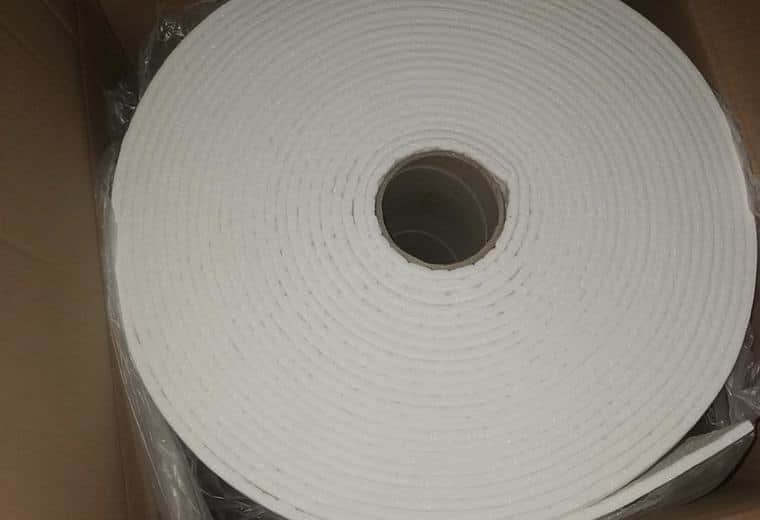
Bio-soluble fibre blanket (AES) on a roll: the typical material for back-up insulation behind the working layer.
Rule of thumb from practice: the further the fibre sits behind the hot face, the better AES fits. This often allows a large part of the wool to be bio-soluble, even if the hot face stays with ASW.
When the old lining comes out
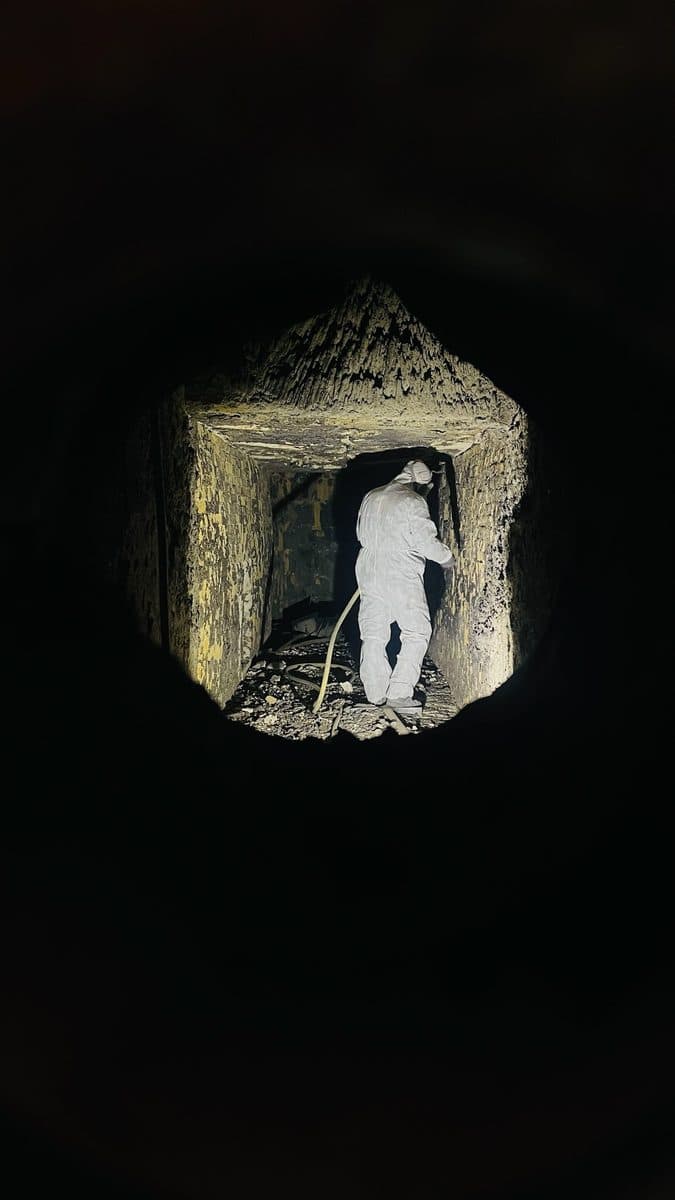
The natural time to switch is the next relining. The old wool has to come out anyway, and the rules for ASW apply to that removal: work under TRGS 558 with exposure categories, extraction and respiratory protection. Wool that has been exposed to more than 900 °C can contain cristobalite; TRGS 559 then also applies. This affects used ASW and used AES alike. Unused ASW waste carries waste code 17 06 03*; used wool is classified case by case.
TRGS 558 does not apply to installing the new AES. The basic duties of the Hazardous Substances Ordinance remain: risk assessment, instruction, avoiding dust, extraction instead of sweeping, suitable protective equipment. Fibre dust mechanically irritates the skin, eyes and respiratory tract, even when it is bio-soluble.
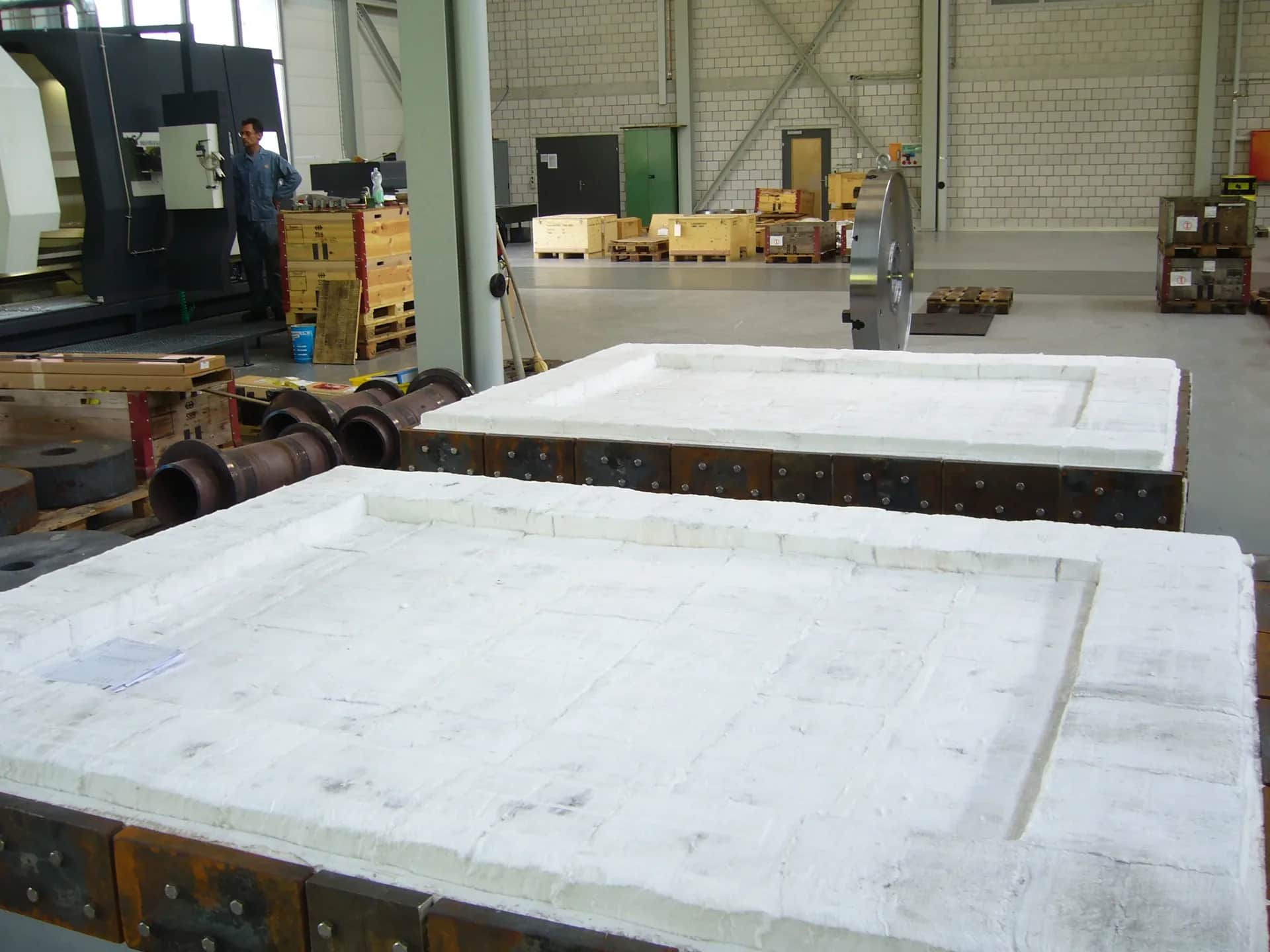
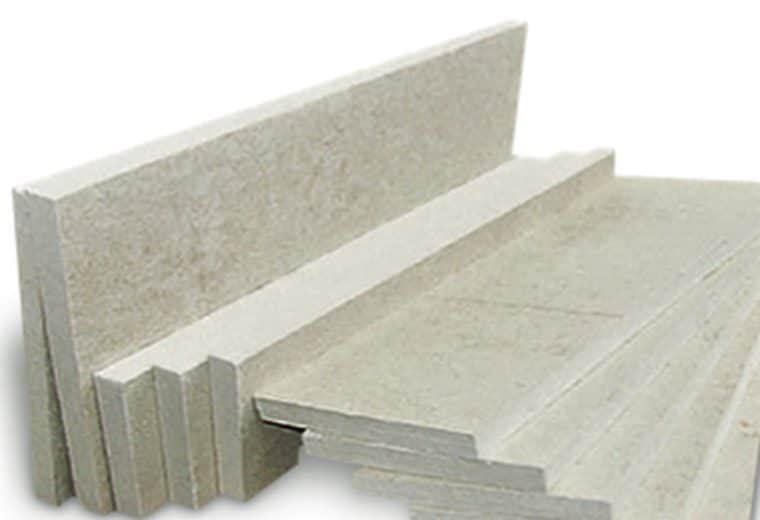
Fibre boards are available in ASW and in a bio-soluble variant. For load-bearing insulation layers and doors, board is more dimensionally stable than blanket.
Questions for the substitution assessment
What temperature is present at each fibre layer, in normal operation and at peaks?
Is the atmosphere oxidising, reducing or alternating? Are there alkalis, salts, fluorine or phosphorus in the furnace chamber?
Which layers will be renewed at the next overhaul anyway?
Where does ASW remain technically necessary, and is the justification recorded in the risk assessment?
How will the old wool be removed, classified and disposed of?
Bio-soluble does not mean harmless; it means not classified as carcinogenic. And ASW is not banned, but its use must be justified. The decision therefore belongs in the planning of every relining, layer by layer, with temperatures and atmosphere on the table.
At a glance
Cat. 1B
classification of alumino-silicate wool (ASW) as carcinogenic; under Note Q, AES is not classified
1200 °C
usual upper limit for AES under TRGS 619; the continuous service temperature of a 1200 °C product is lower
900 °C
wool exposed above this temperature can contain cristobalite, ASW and AES alike: removal then also under TRGS 559
We use cookies and similar technologies to ensure that our website functions properly and to analyse how our content is used. In the settings you can choose which cookies you wish to allow. Privacy policy

 PDFAll furnace types