Shaft furnace
Refractory lining of shaft furnaces for various thermal processes.
Furnace profile at a glance.
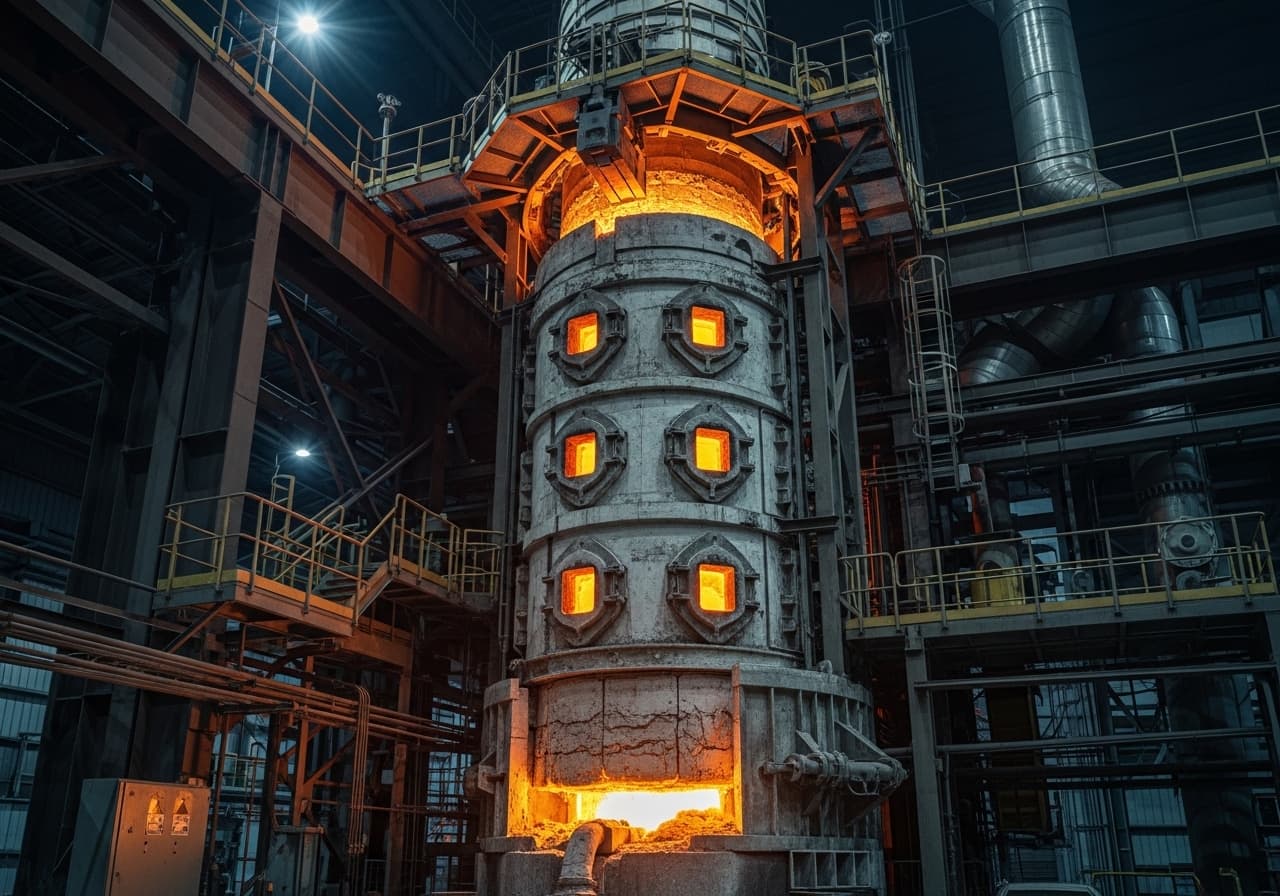
The shaft furnace is a vertical furnace unit used in numerous industrial sectors for thermal processes such as lime burning, melting and reduction. The cylindrical design with a vertical material flow places particular demands on the refractory lining: every zone of the shaft — from the throat and the preheating zone to the firing zone and cooling zone — is subject to different thermal, chemical and mechanical loads. SBS Refractory Service specialises in the complete relining, repair and maintenance of shaft furnaces and has many years of experience with all common shaft furnace types in the lime, cement and metal industries.
The refractory lining of a shaft furnace must withstand extreme conditions: in the firing zone, temperatures of more than 1,200 °C prevail together with chemical attack from process gases and melt phases. In the preheating zone, severe temperature changes occur that generate thermal shock stresses in the brickwork. The descending column of material loads the shaft wall mechanically through abrasion and pressure. Our refractory specialists analyse the wear profile over the entire height of the shaft and select the optimal material for every zone — from fireclay bricks in the preheating zone to high-alumina bricks in the heavily loaded firing zone.
An economically optimised shaft furnace lining takes account of the specific operating conditions: throughput, type of fuel, feed material and the required campaign length. SBS develops zone-specific material concepts that maximise service life and energy efficiency. By using modern insulating materials behind the wear layer, heat losses through the furnace shell can be significantly reduced. After every lining we prepare complete documentation including material certificates and a zone-by-zone description of the structure. Via our emergency service we are quickly on site even in the event of unplanned wear.
Typical problems with the Shaft furnace.
These loads determine the choice of material and the design of the refractory lining.
Zone-specific wear
The differing loading profiles over the height of the shaft — thermal shock in the preheating zone, chemical attack in the firing zone, abrasion in the cooling zone — require a precisely matched material selection for every zone. Incorrect allocation leads to the premature failure of individual areas.
Mechanical abrasion from the material column
The continuously descending bulk material generates considerable abrasion on the shaft wall. High mechanical loads occur particularly in zones with changes in cross-section and at the tuyère level, calling for abrasion-resistant materials with high compressive strength.
Chemical attack in the firing zone
In the firing zone, process gases and melt phases from the feed material react aggressively with the refractory lining. Alkalis, sulphur compounds and melt phases infiltrate the brick structure and lead to chemical corrosion and destruction of the structure.
Safety during work at height
The complete relining of a shaft furnace requires work inside the vertical shaft — partly at a considerable height. Fall protection, protection against falling material and ventilation of the shaft space are safety-critical requirements that call for specialised assignment planning.
Materials & lining
Every zone of your furnace places its own demands on temperature resistance, chemical resistance and mechanical load capacity. We select the optimum material combination.
Click on a material for details
Fireclay bricks
Refractory bricksPreheating and cooling zone
High-alumina bricks
Refractory bricksFiring zone
Typical work on the Shaft furnace.
Our services for this furnace type — from complete relining to ongoing maintenance.
From site inspection to acceptance.
Our structured process ensures quality, on-time delivery and safety in every project.
Assessment & site inspection
Measurement of the shaft wall thickness
Planning
Material selection for the shaft zones
Execution
Brickwork of the shaft
Safety
Work at height, protection against falling material
Assessment & site inspection
Once the shaft furnace has cooled, our refractory specialists carry out a systematic condition analysis. The residual lining thickness is determined zone by zone by measurement and ultrasound — from the throat and the preheating and firing zones to the cooling zone and the tapping area. Erosion channels, slag build-up and local break-outs are documented and a zone-by-zone wear profile is prepared. On the basis of these data we prepare a detailed inspection report with a concrete recommendation for action.
Planning
During the planning phase we define the zone-specific material concept. High-alumina bricks with maximum chemical resistance are selected for the firing zone, and thermal-shock-resistant fireclay bricks for the preheating zone. The insulating layer behind the wear lining is designed for optimal thermal insulation. The construction schedule takes account of the scaffolding in the shaft, the material logistics and the coordination with your production plan. All materials are specified in advance and ordered in good time.
Execution
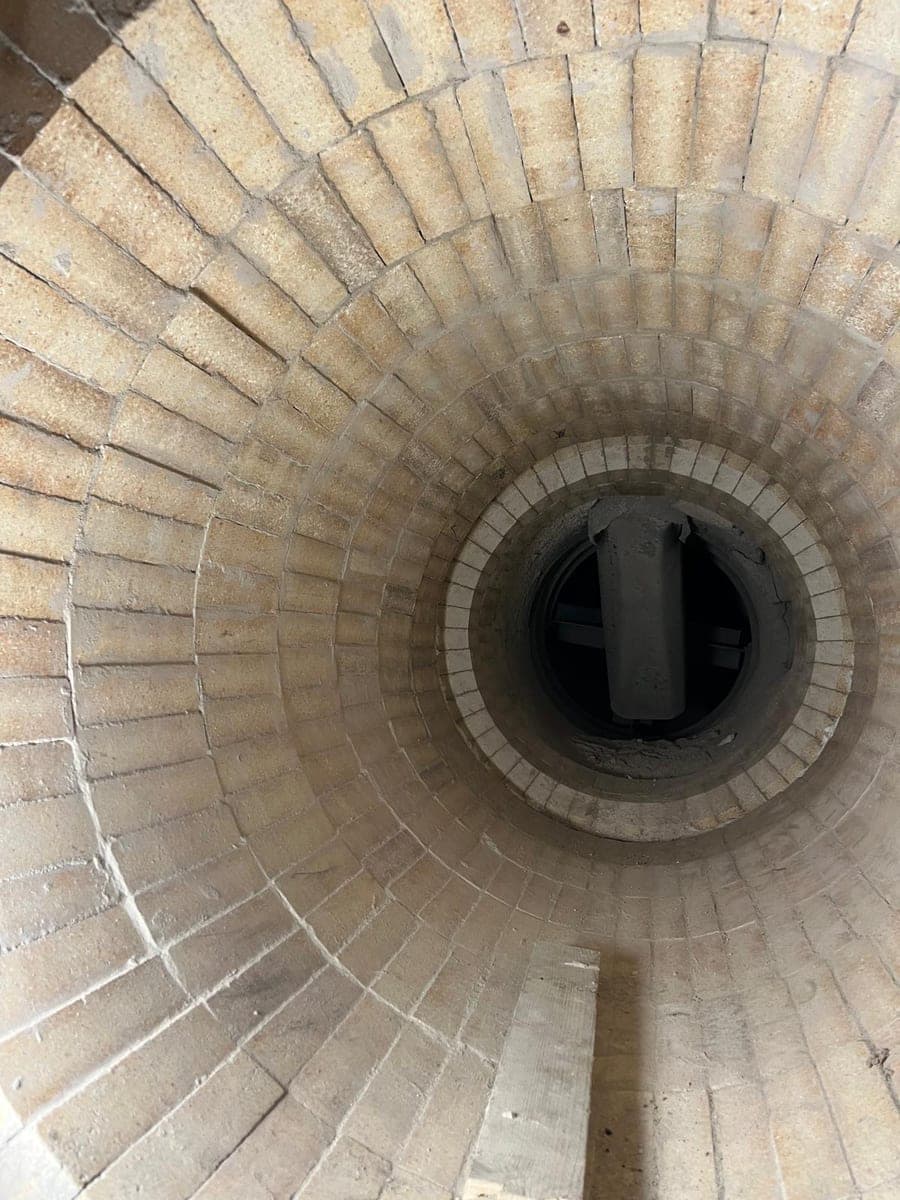
Execution begins with the erection of scaffolding and safety equipment in the shaft. After the mechanical break-out of the old lining, the furnace shell is inspected for deformation and corrosion damage. The new brickwork is built up zone by zone from the bottom upwards: tapping area, tuyère level, firing zone, preheating zone and throat area. Every layer of bricks is laid in refractory mortar and checked for dimensional accuracy. Finally, a controlled heat-up follows a defined drying curve.
Safety
Work inside the shaft furnace requires special safety measures in accordance with the regulations for confined spaces. Before entry, the shaft is checked for temperature, freedom from gas and the stability of the remaining lining. Scaffolding with safety nets and fall protection is installed before work begins. All employees wear safety helmets and there is permanent radio communication with the supervisor. SBS works in accordance with the SCC guidelines and prepares a project-specific safety plan for every shaft furnace assignment.
From our project portfolio.
Over 500 successfully completed refractory construction projects in the DACH region and the Benelux countries.

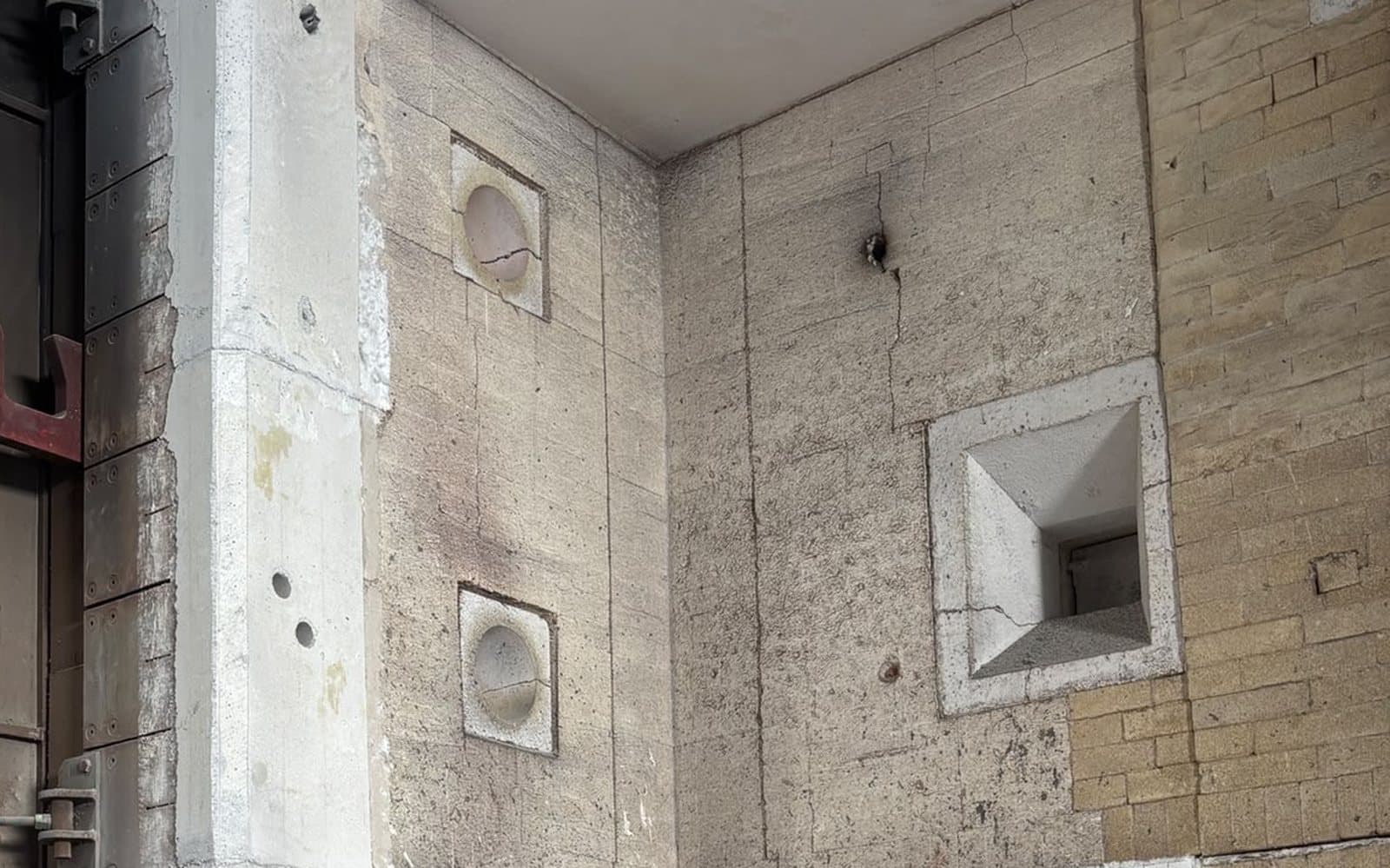
Shaft furnace
Frequently asked questions
Everything you need to know about the Shaft furnace
Go deeper.

Planning a project?
Whether complete relining, repair or emergency — free initial consultation and a fast response.