
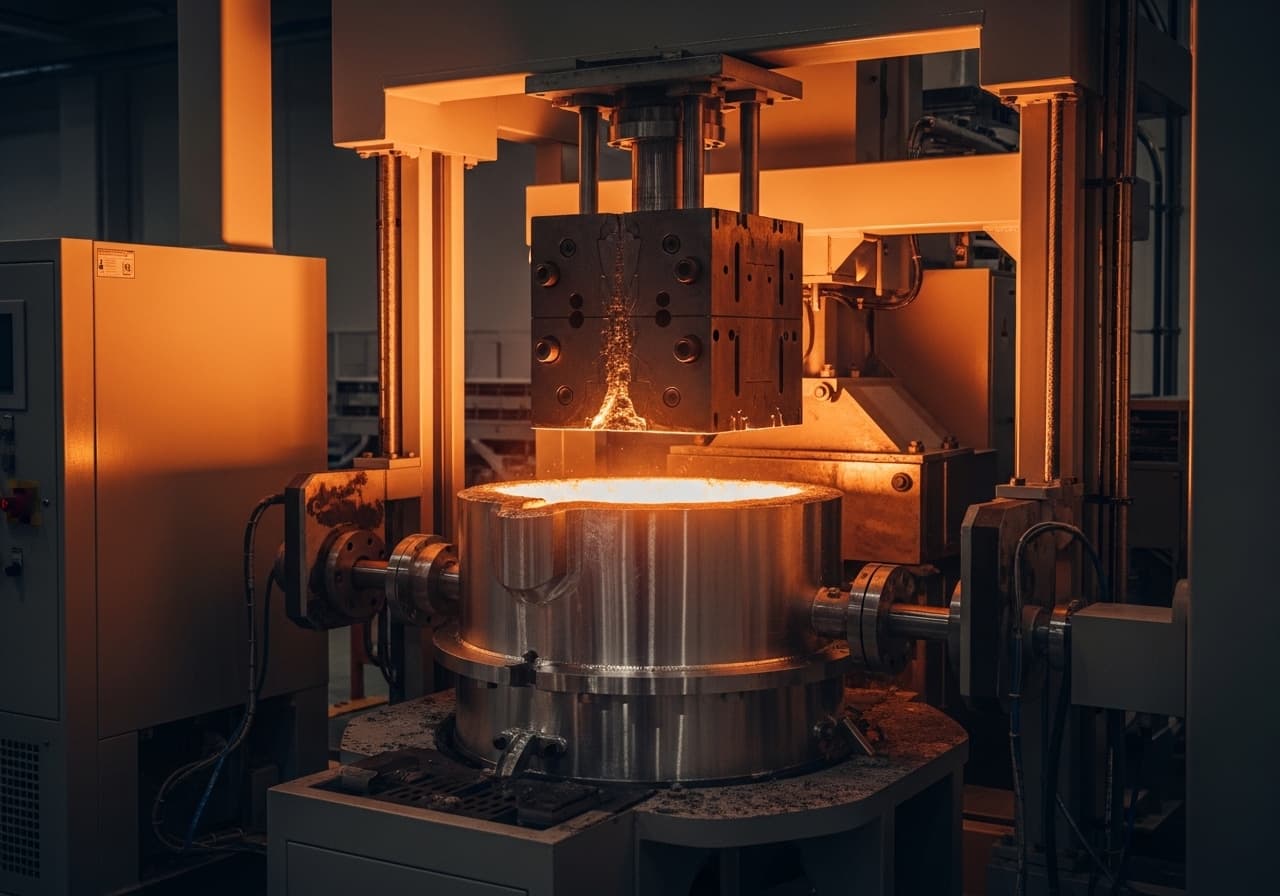
Low-pressure die casting furnace
Refractory lining and maintenance of low-pressure die casting furnaces for aluminium low-pressure casting.
Furnace profile at a glance.
Crucible body
The crucible holds the aluminium melt and must be gas-tight in order to build up the overpressure required for the casting process. It is cast from non-wetting special castable or installed as a prefabricated graphite/SiC crucible. The wall thickness is typically 60–150 mm.
Riser tube
The ceramic riser tube is the most critical assembly of the low-pressure die casting furnace. It carries the melt upwards from the crucible bottom into the die and is exposed to extreme temperature changes with every casting cycle. Materials based on silicon nitride or sialon offer the best resistance.
Sealing faces
The sealing faces between crucible and lid and at the riser tube connection must be absolutely gas-tight. Corundum build-up or thermal deformation is controlled by regular maintenance and precisely fitting sealing materials.
Lid
The furnace lid closes the crucible pressure-tight and accommodates the riser tube and the compressed air supply. It is insulated with ceramic fibre and must be easy to remove for maintenance work.
Maximum precision for pressure-tight aluminium castings.
The low-pressure die casting furnace is a highly specialised unit in the aluminium foundry which, by applying pressure, feeds the melt through a riser tube directly into the die above. This process delivers particularly dense, cavity-free castings with excellent mechanical properties and is used above all in the automotive industry for safety-relevant components such as wheels, chassis parts and engine components. SBS Refractory Service has comprehensive experience in refractory construction for low-pressure die casting furnaces from all common manufacturers and serves customers throughout the DACH region. Our specialists know the particular requirements of crucible, riser tube and sealing faces from many years of practice and ensure high-quality execution on schedule.
The strain on the refractory lining in a low-pressure die casting furnace differs fundamentally from that in other aluminium furnaces: the riser tube is under permanent cyclic thermal load, since with every casting cycle hot melt rises and then falls back again. The sealing faces between crucible and furnace lid must be gas-tight in order to maintain the required working pressure of 0.2 to 1.0 bar — even the smallest leaks lead to pressure loss and casting defects. The crucible body itself is exposed to the permanent action of the aluminium melt and must at the same time be chemically inert in order to meet the high quality requirements placed on the castings.
A professionally executed refractory lining of the low-pressure die casting furnace is the basic prerequisite for a stable casting process with low scrap rates. SBS analyses the operating conditions holistically — from the alloy type processed and the cycle times through to the pressure control — and recommends a material concept designed for maximum service life and consistent casting quality. The work is carried out in close coordination with your production planning and fully documented.
Typical problems with the Low-pressure die casting furnace.
These loads determine the choice of material and the design of the refractory lining.
Riser tube wear from thermal shock
With every casting cycle the riser tube is subjected to thermal and erosive loading from the rising and falling melt. The resulting thermal shock stresses lead to micro-cracks and progressive material failure.
Gas-tightness of the sealing faces
Low-pressure die casting requires a gas-tight connection between crucible and furnace lid. Wear or deformation of the refractory sealing faces causes pressure loss and hence incomplete mould filling or casting defects.
Metal infiltration in the crucible body
Under applied pressure, molten aluminium penetrates the pores and micro-cracks of the crucible lining to an increased degree. The corundum layer that forms damages the surface and considerably shortens the service life of the crucible.
Contamination of the melt
Low-pressure castings are subject to the strictest quality requirements. Even the slightest impurities from the refractory lining — such as oxide particles or fibre fragments — lead to inclusions in the casting and increase the scrap rate.
Materials & lining
Every zone of your furnace places its own demands on temperature resistance, chemical resistance and mechanical load capacity. We select the optimum material combination.
Click on a material for details
Graphite crucible
CrucibleMelt contact
Ceramic riser tube
Preformed shapeMelt transport
Ceramic fibre lid insulation
InsulationLid and back-up insulation
Typical work on the Low-pressure die casting furnace.
Our services for this furnace type — from complete relining to ongoing maintenance.
From site inspection to acceptance.
Our structured process ensures quality, on-time delivery and safety in every project.
Assessment & site inspection
Inspection of crucible, riser tube and sealing faces
Planning
Coordination with foundry production
Execution
Crucible change, riser tube replacement, seal renewal
Safety
SCC-compliant work procedures
Assessment & site inspection
Our refractory specialists carry out a comprehensive condition analysis of the low-pressure die casting furnace. The crucible body is examined for cracking, metal build-up and corundum layers. The riser tube is checked for erosion, cracks and deformation. The sealing faces are measured for flatness and wear. In addition, thermographic imaging is carried out to detect thermal bridges and insulation defects. The inspection report contains a detailed wear analysis with a recommendation for action.
Planning
During the planning phase we match the material concept to your specific casting process — alloy type, cycle time, pressure parameters and target service life all feed into the material selection. We coordinate the shutdown window closely with your foundry planning and ensure that replacement crucibles and riser tubes are available in good time. Where several furnaces are in operation, we plan the work so that sufficient casting capacity is always maintained.
Execution
Execution begins with the controlled cooling of the furnace and the removal of the old crucible and the worn riser tube. The furnace shell is inspected for damage and repaired where necessary. The new crucible is then installed — either as a prefabricated graphite/SiC crucible or as a monolithic castable lining. The new riser tube is fitted and the sealing faces carefully machined. Finally, the furnace is heated up in accordance with a defined temperature programme and the gas-tightness is tested.
Safety
All work is carried out in strict compliance with SCC safety standards. The risk assessment takes into account the particular hazards of the low-pressure die casting furnace — in particular residual pressure in the system, residual heat and the compact design of the furnace. Before work begins, the pressure system is depressurised and secured against being switched back on. Personal protective equipment and heat-protective clothing are mandatory.
From our project portfolio.
Over 500 successfully completed refractory construction projects in the DACH region and the Benelux countries.
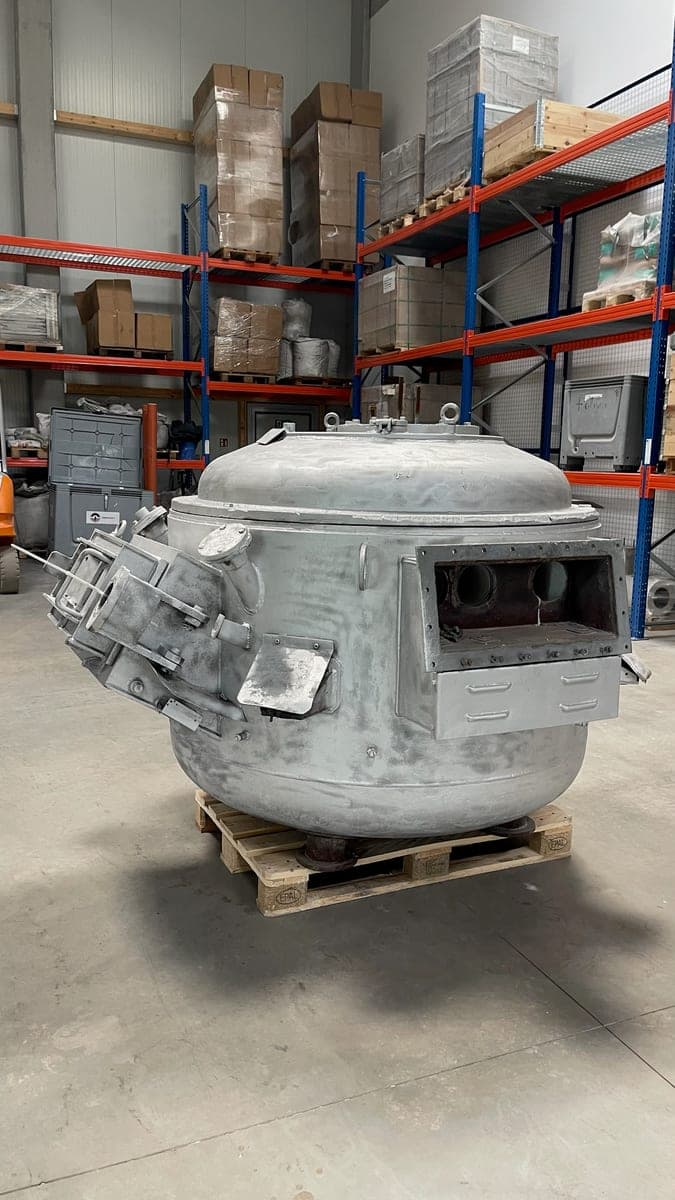
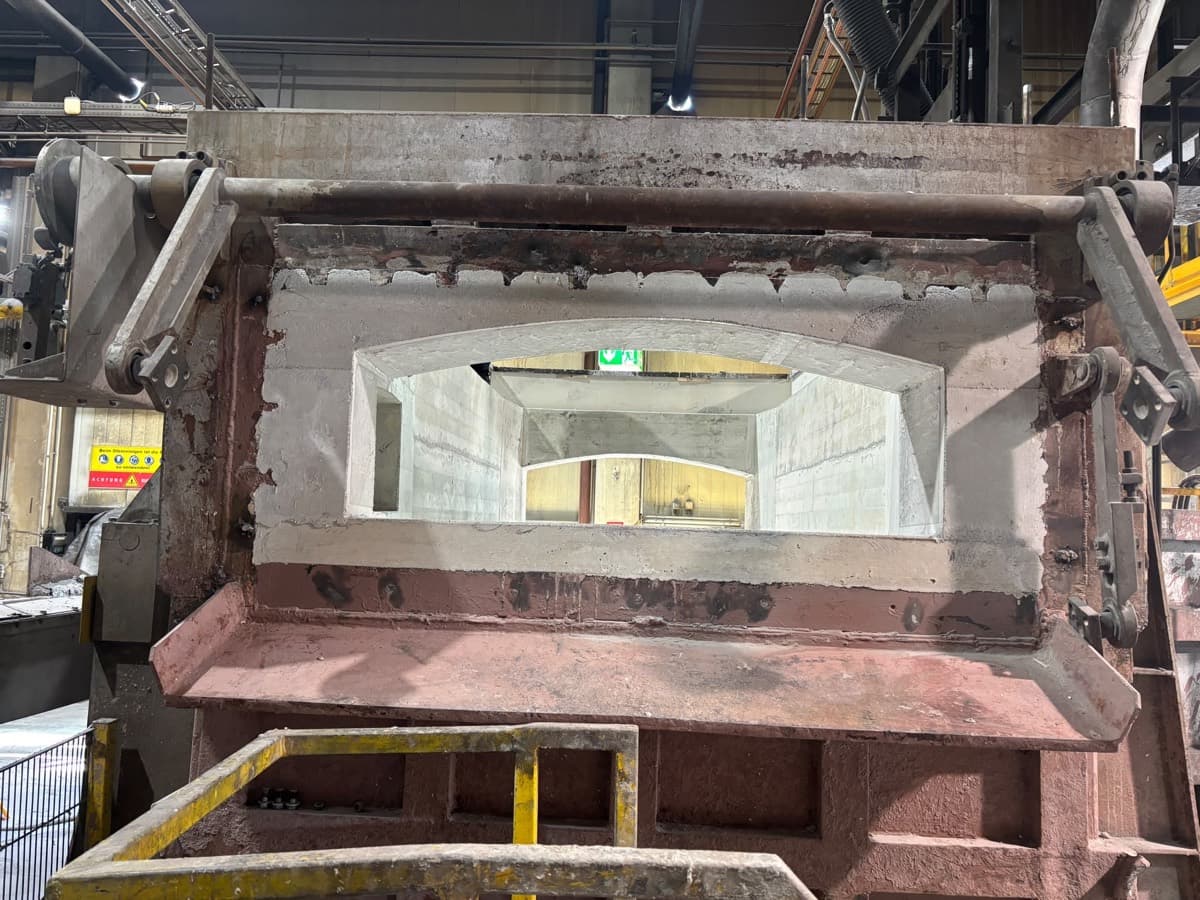
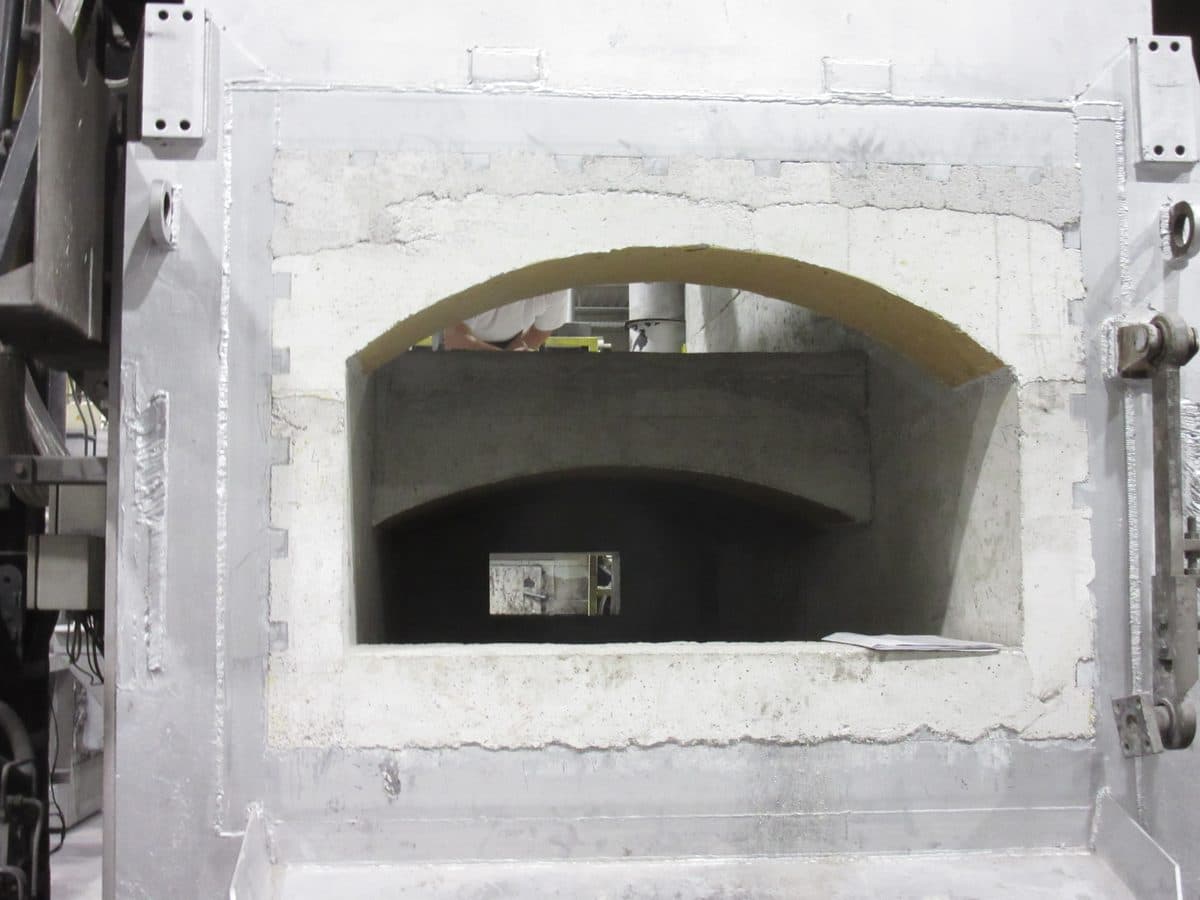
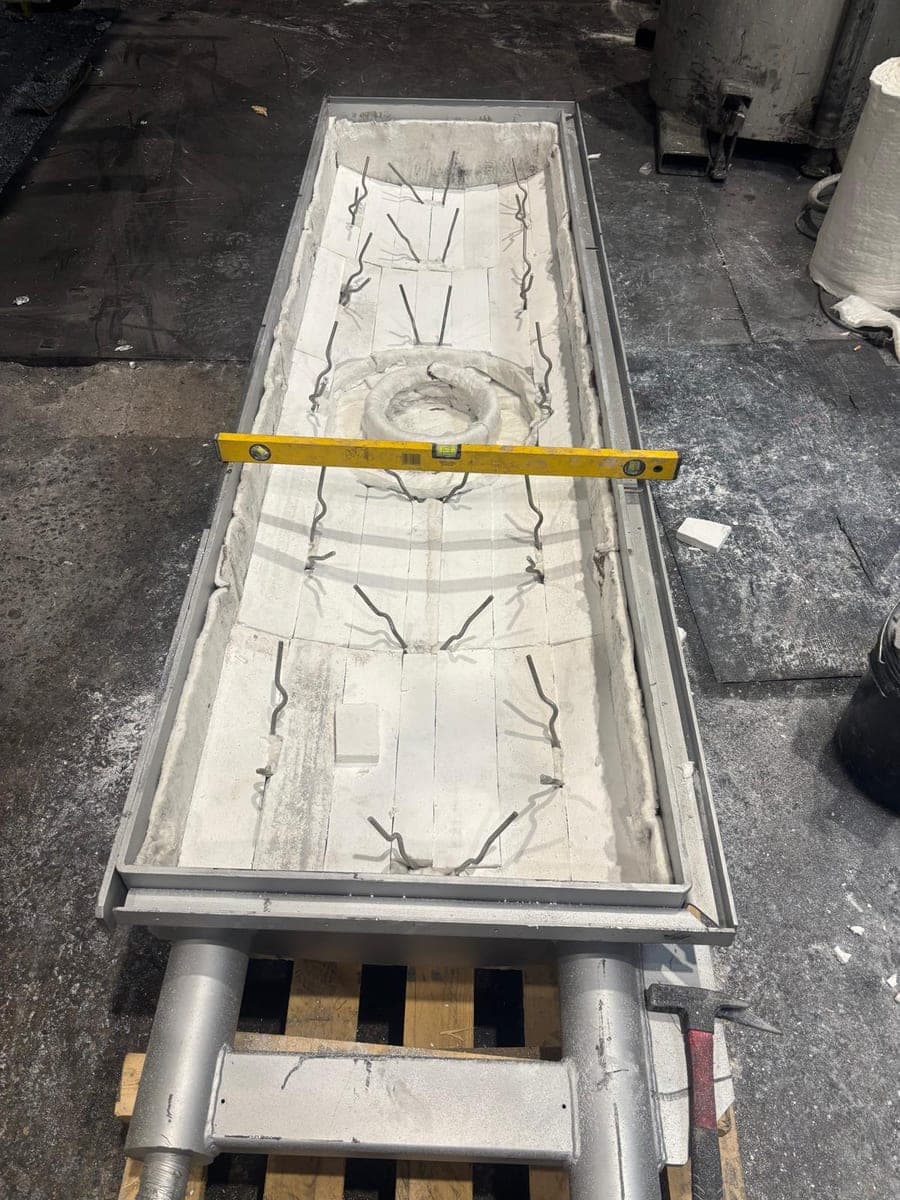
Low-pressure die casting furnace
Frequently asked questions
Everything you need to know about the Low-pressure die casting furnace
Go deeper.

You may also be interested in.
Planning a project?
Whether complete relining, repair or emergency — free initial consultation and a fast response.