
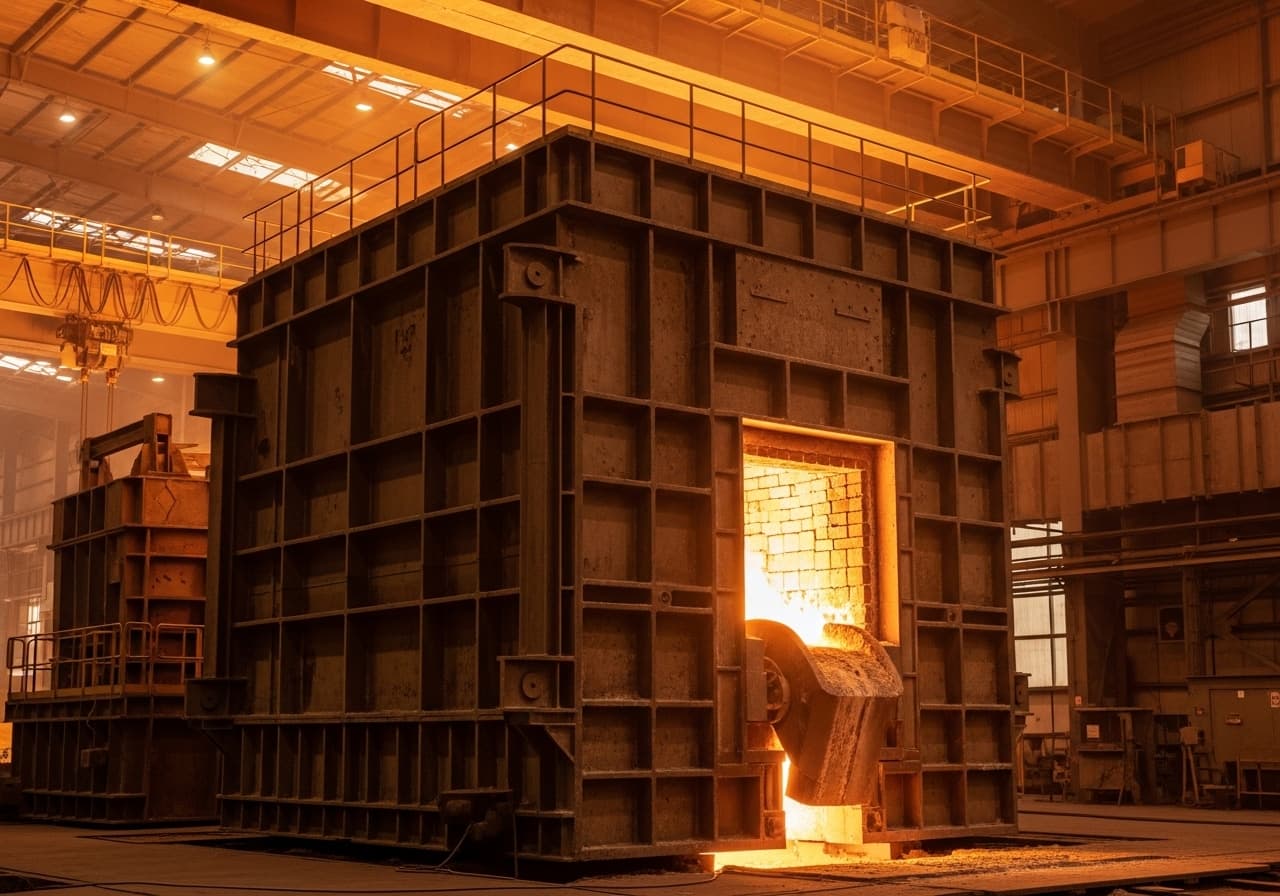
Holding furnace
Refractory maintenance of holding furnaces for the temperature-stable storage of aluminium melt.
Furnace profile at a glance.
Furnace bath
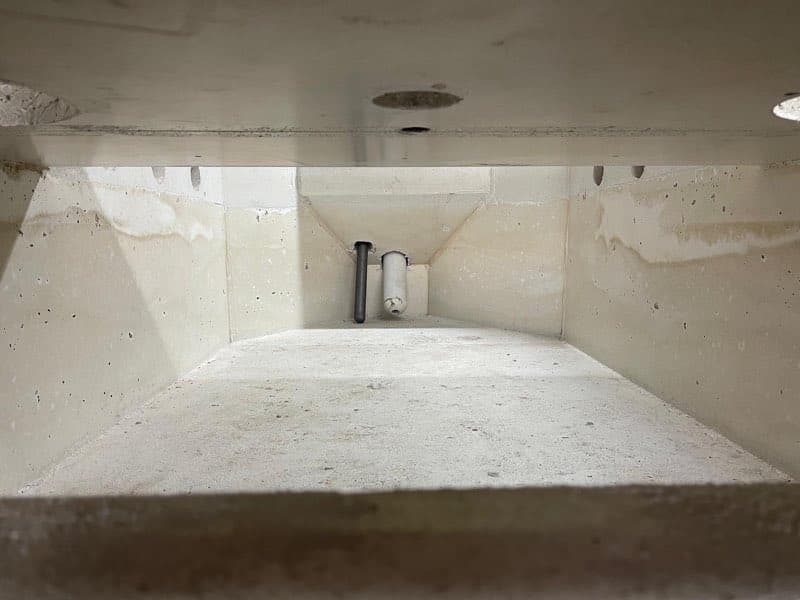
The furnace bath is in permanent contact with the aluminium melt and must resist metal infiltration for months on end. It is built up from non-wetting special castable or high-alumina bricks and protected against heat losses by a safety and insulating layer.
Side walls
The side walls are most heavily loaded in the area of the bath line — this is where metal infiltration, corundum growth and temperature changes during filling coincide. A multi-layer build-up of wear lining, safety lining and insulation offers optimal protection.
Lid
The furnace lid is opened frequently and is therefore exposed to cyclic thermal loads. Ceramic fibre modules offer excellent insulation at low weight and can be replaced individually in the event of local wear.
Heating elements
The surround of the heating elements — gas burners or electric heating elements — must transfer heat efficiently to the melt while at the same time protecting the structural components against overheating. Refractory embedding mixes and burner blocks ensure the function and durability of the heating system.
Hold heat efficiently, preserve quality.
The holding furnace is a central unit in the aluminium industry: it receives the molten metal from the melting furnace and keeps it available at a constant temperature of 680–740 °C for hours or days — for the casting process, for dosing or for transport. SBS Refractory Service specialises in refractory construction for aluminium holding furnaces of all designs and serves customers throughout Germany. Our experienced refractory installers know the specific requirements of holding technology from many years of practice: constant temperature control, minimum energy consumption and maximum lining service life.
The refractory lining of a holding furnace is subject to different loading from that of a melting furnace. The temperatures may be moderate, but the continuous exposure from permanent contact with molten aluminium is considerable. Metal infiltration, corundum growth at the melt surface and chemical attack by salt slags and flux residues attack the lining continuously over weeks and months. The bath areas below the melt line are particularly affected. SBS deliberately uses non-wetting materials and infiltration-resistant castables that permanently withstand these gradual wear mechanisms.
An economically optimised holding furnace is characterised by low energy losses and long intervals between linings. Insulation plays a decisive role here: using modern insulating bricks and ceramic fibre boards, heat losses through walls and lid can be reduced by 20–30 per cent. SBS analyses the existing insulation, prepares a temperature profile and recommends targeted improvements that pay for themselves within a few months. On completion of every lining you receive complete documentation including material certificates and an acceptance record.
Typical problems with the Holding furnace.
These loads determine the choice of material and the design of the refractory lining.
Metal infiltration from continuous contact
Molten aluminium stands permanently in the furnace bath for weeks and penetrates the pores and micro-cracks of the lining. The aluminium oxide compounds that form increase in volume and burst the refractory structure apart from within.
Corundum growth at the melt line
At the interface between melt and atmosphere, aluminium oxide (corundum) forms which adheres to the lining and can only be removed mechanically. Corundum build-up narrows the usable space and makes charging and cleaning more difficult.
Energy losses due to inadequate insulation
Holding furnaces run continuously — every weak point in the insulation leads to a permanent loss of energy. Outdated or damaged insulation can increase energy consumption by up to 30 per cent.
Chemical attack by fluxes and salt slags
Residues from melt treatment and salt slags attack the refractory lining chemically. Sodium-bearing fluxes in particular react with the lining and considerably accelerate wear in the bath zone.
Materials & lining
Every zone of your furnace places its own demands on temperature resistance, chemical resistance and mechanical load capacity. We select the optimum material combination.
Click on a material for details
Insulating bricks
Insulating materialThermal insulation
Ceramic fibre boards
Fibre insulationLid insulation
Refractory castable
Casting mixBath lining
Typical work on the Holding furnace.
Our services for this furnace type — from complete relining to ongoing maintenance.
From site inspection to acceptance.
Our structured process ensures quality, on-time delivery and safety in every project.
Assessment & site inspection
Temperature profile measurement and condition assessment
Planning
Optimisation of the insulation for minimum energy consumption
Execution
Renewal of the lining with a focus on energy efficiency
Safety
documented safe working procedures
Assessment & site inspection
Our refractory specialists carry out a comprehensive condition analysis of the holding furnace. This includes a temperature profile measurement on the furnace exterior by thermography to identify weak points in the insulation, visual inspection of the bath lining for cracks, infiltration zones and corundum build-up, and measurement of the residual lining thickness in the critical bath areas. On the basis of this data we prepare an inspection report with a specific recommendation for action — from targeted repair of individual zones through to a complete relining.
Planning
During the planning phase we define the material concept, matched to the specific requirements of your holding furnace. Particular attention is paid to optimising the insulation for minimum energy consumption and to selecting infiltration-resistant materials for the bath lining. We coordinate the shutdown window closely with your production planning and prepare a detailed construction schedule. All materials are specified, ordered and checked for availability in advance in order to rule out delays during execution.
Execution
Execution begins with draining the residual melt and the controlled cooling of the furnace. After the mechanical break-out of the old lining, the furnace shell is inspected for deformation and corrosion damage. The rebuild proceeds layer by layer: first the back-up insulation of insulating bricks and calcium silicate boards is installed, then the wear lining is cast in refractory castable or built up in brick. The furnace lid is re-insulated with ceramic fibre boards. Finally, a controlled heat-up follows a defined drying curve.
Safety
All work is carried out in strict compliance with the documented safe working procedures. Before work begins, a risk assessment is carried out with particular focus on residual melt, hot surfaces and dust generation during break-out. When handling ceramic fibre materials, special occupational safety measures in accordance with TRGS 619 apply — respiratory protection and protective clothing are mandatory. The electrical heating systems are isolated before work begins and secured against being switched back on.
From our project portfolio.
Over 500 successfully completed refractory construction projects in the DACH region and the Benelux countries.
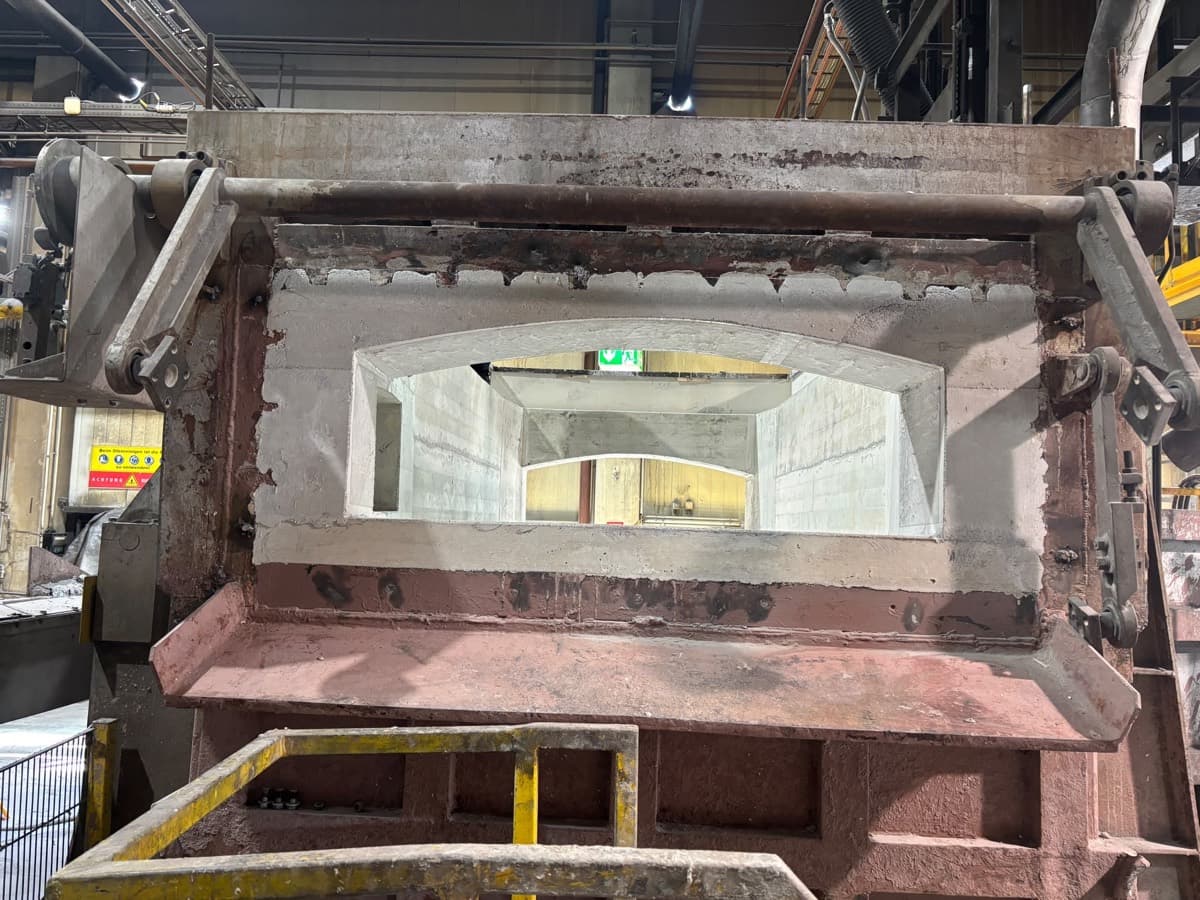
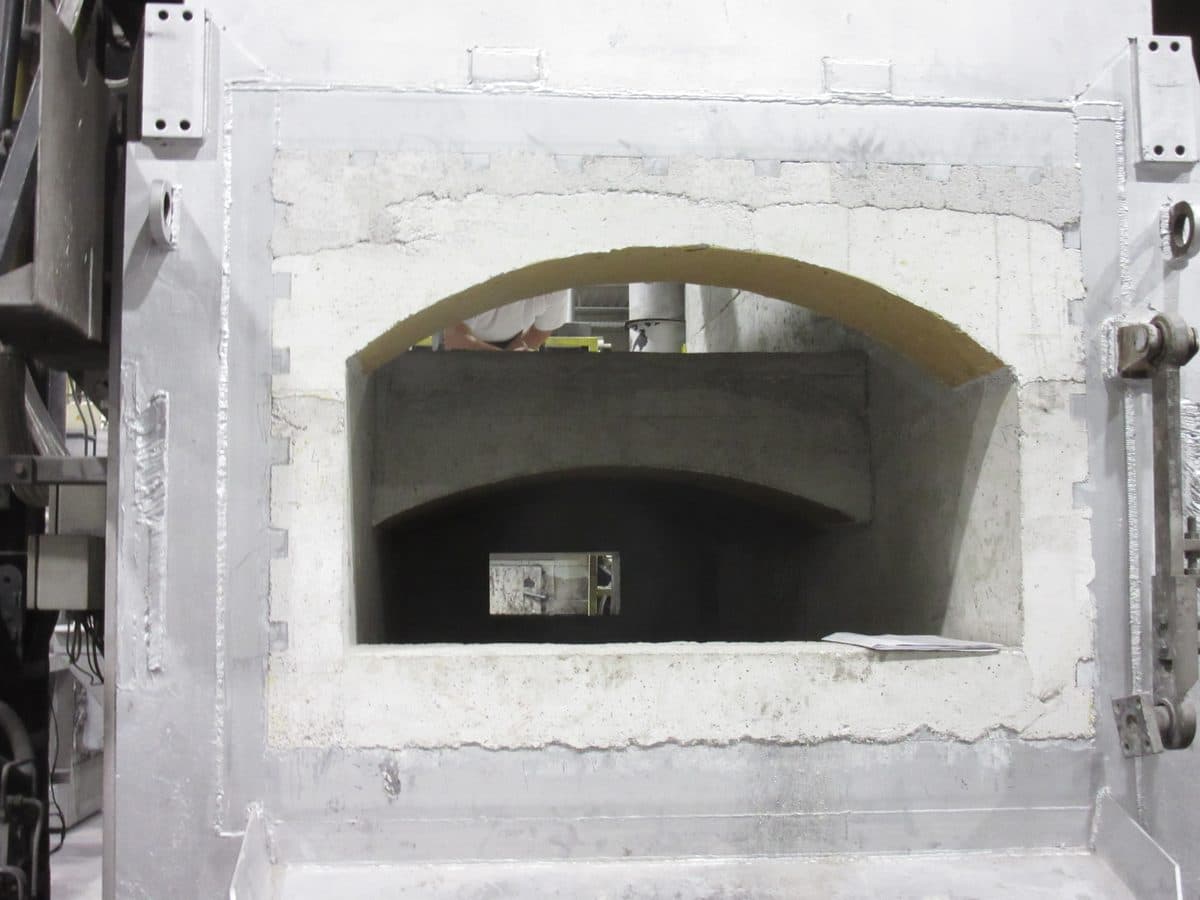
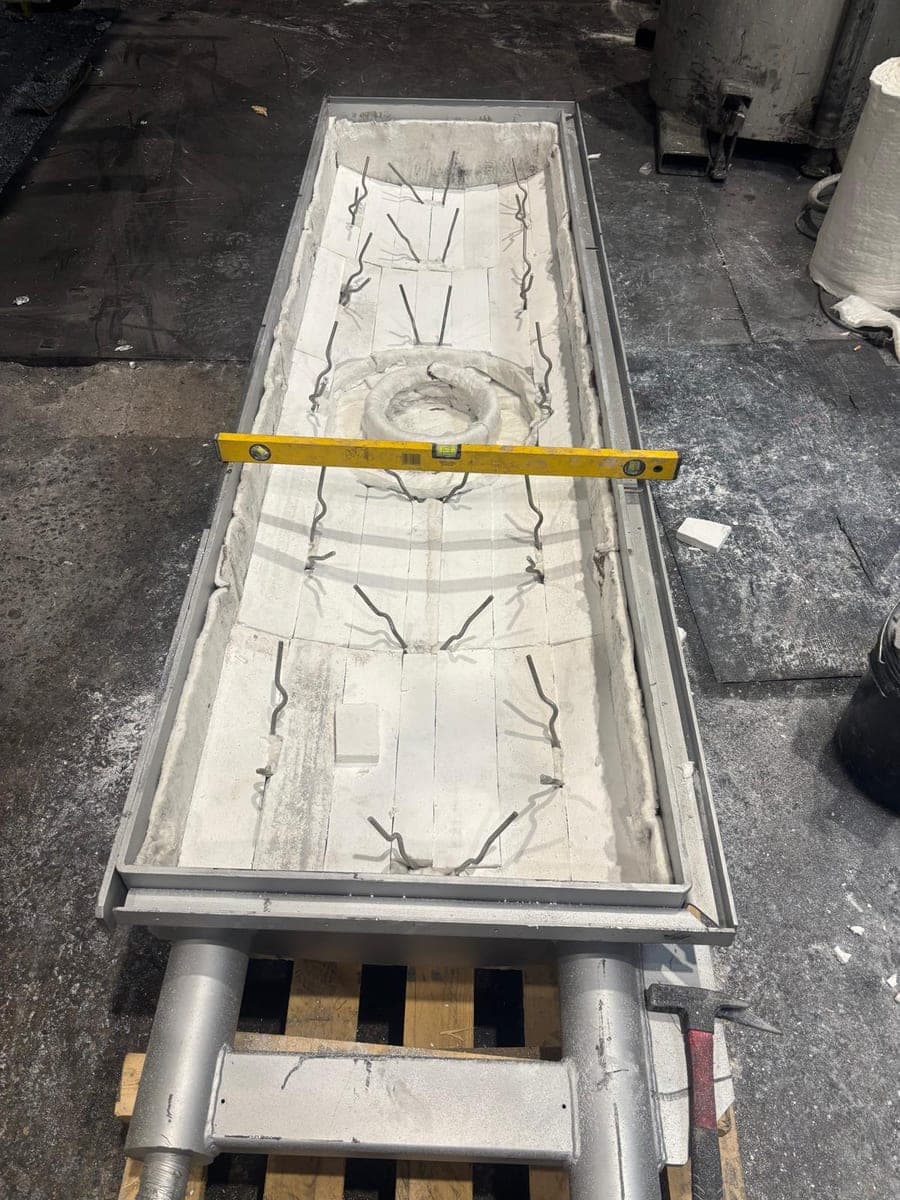
Holding furnace
Frequently asked questions
Everything you need to know about the Holding furnace
Go deeper.

You may also be interested in.
Planning a project?
Whether complete relining, repair or emergency — free initial consultation and a fast response.