Layer upon layer: when previous repairs eat up furnace capacity
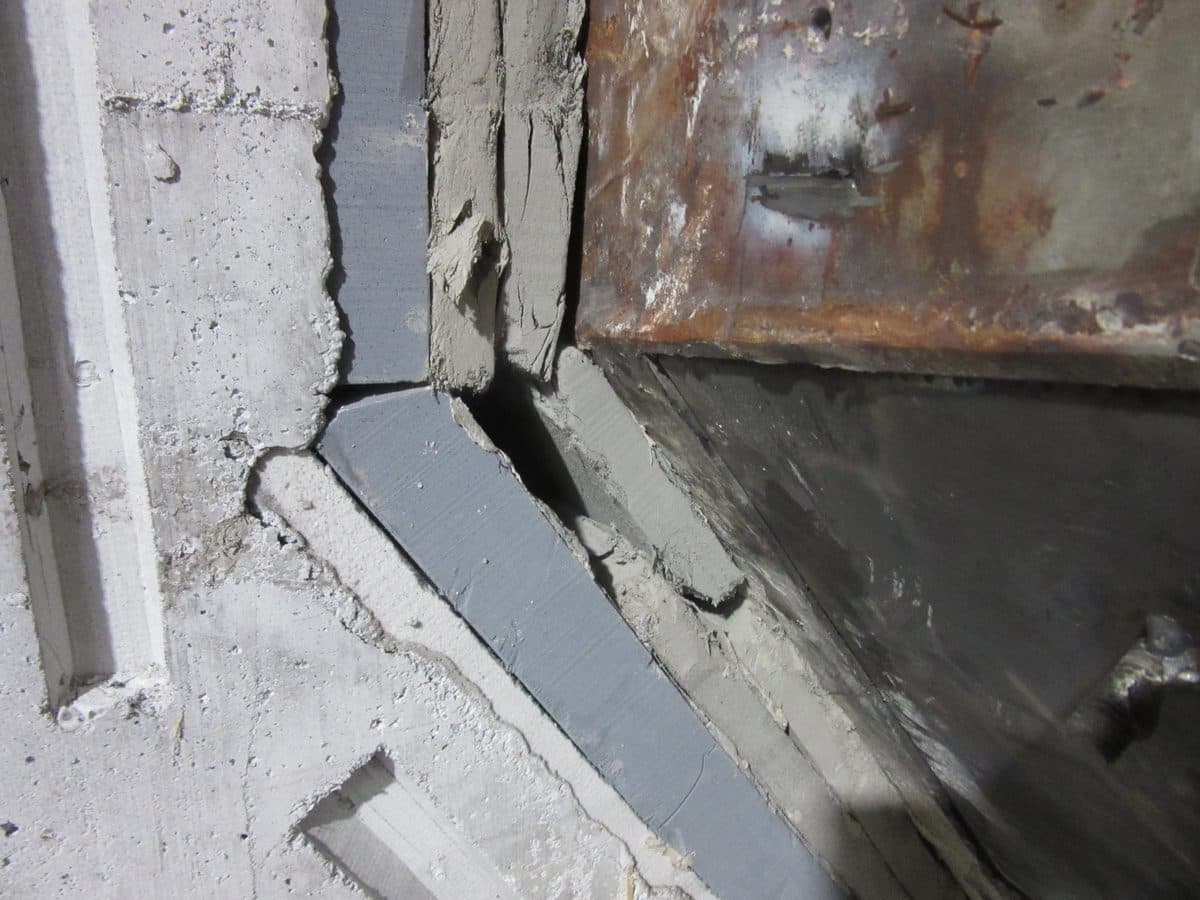
An aluminium furnace was delivering 3 tonnes instead of 4. The cause was not wear, but up to 100 mm of gunned concrete that a previous contractor had applied over slag.

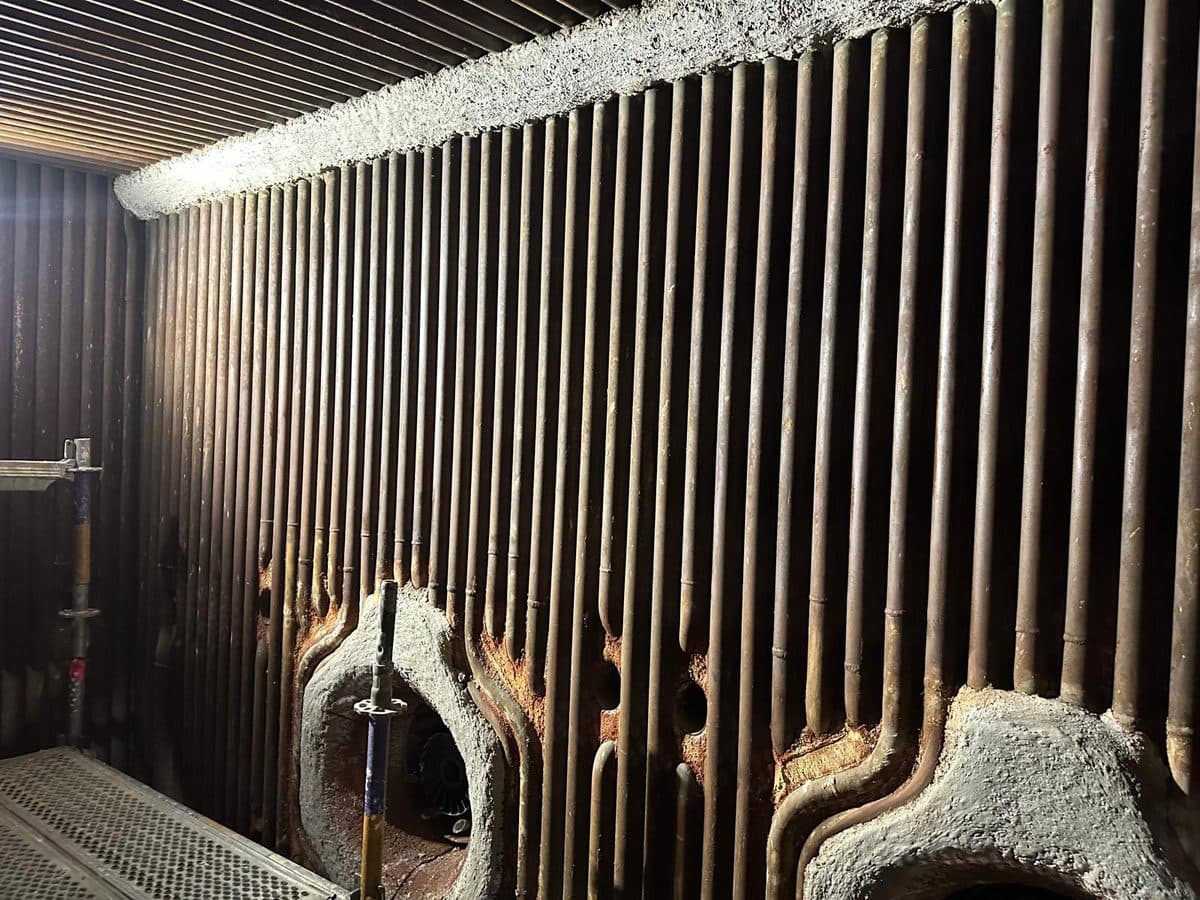
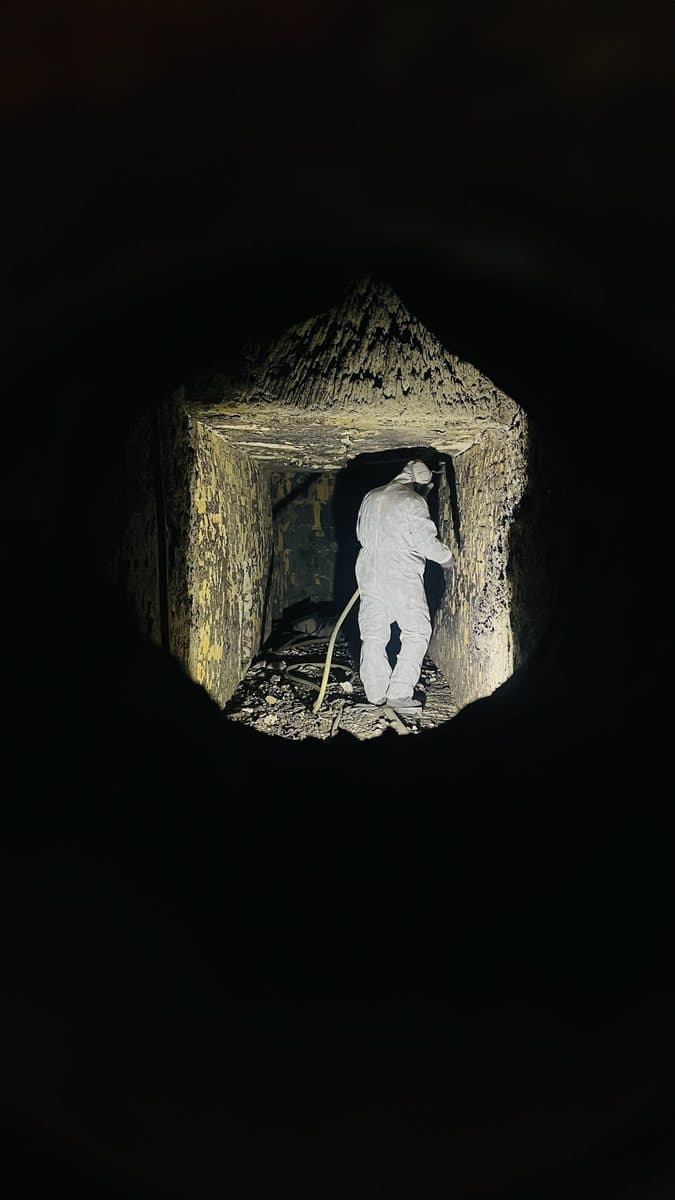
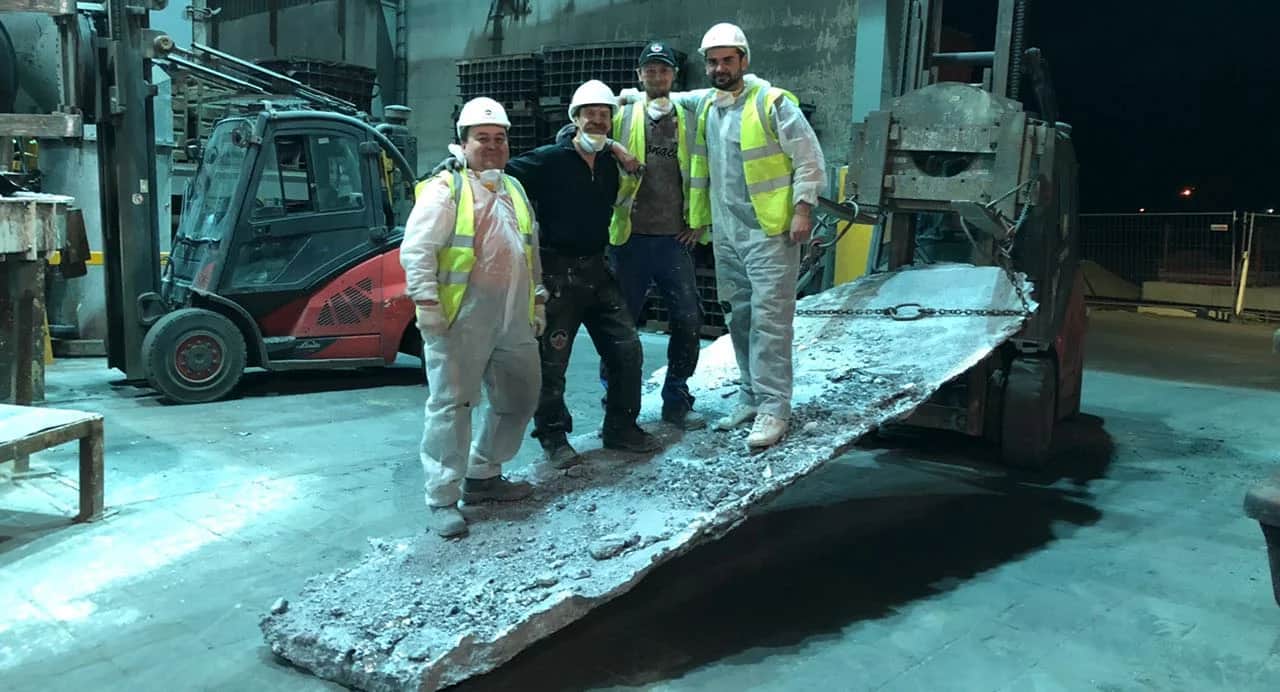
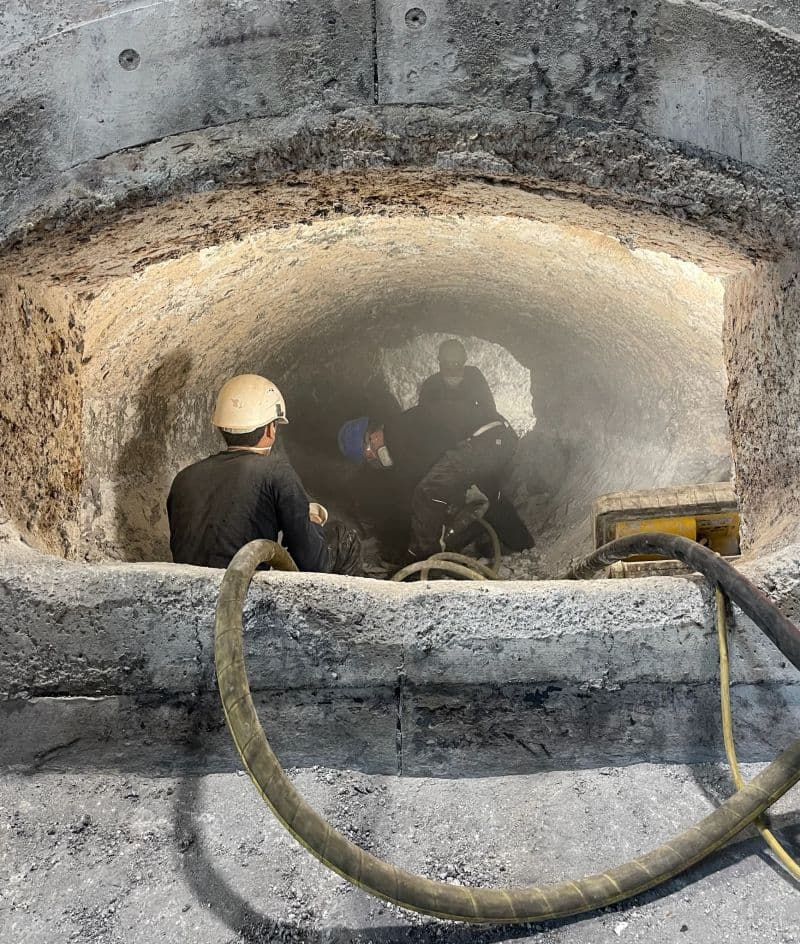
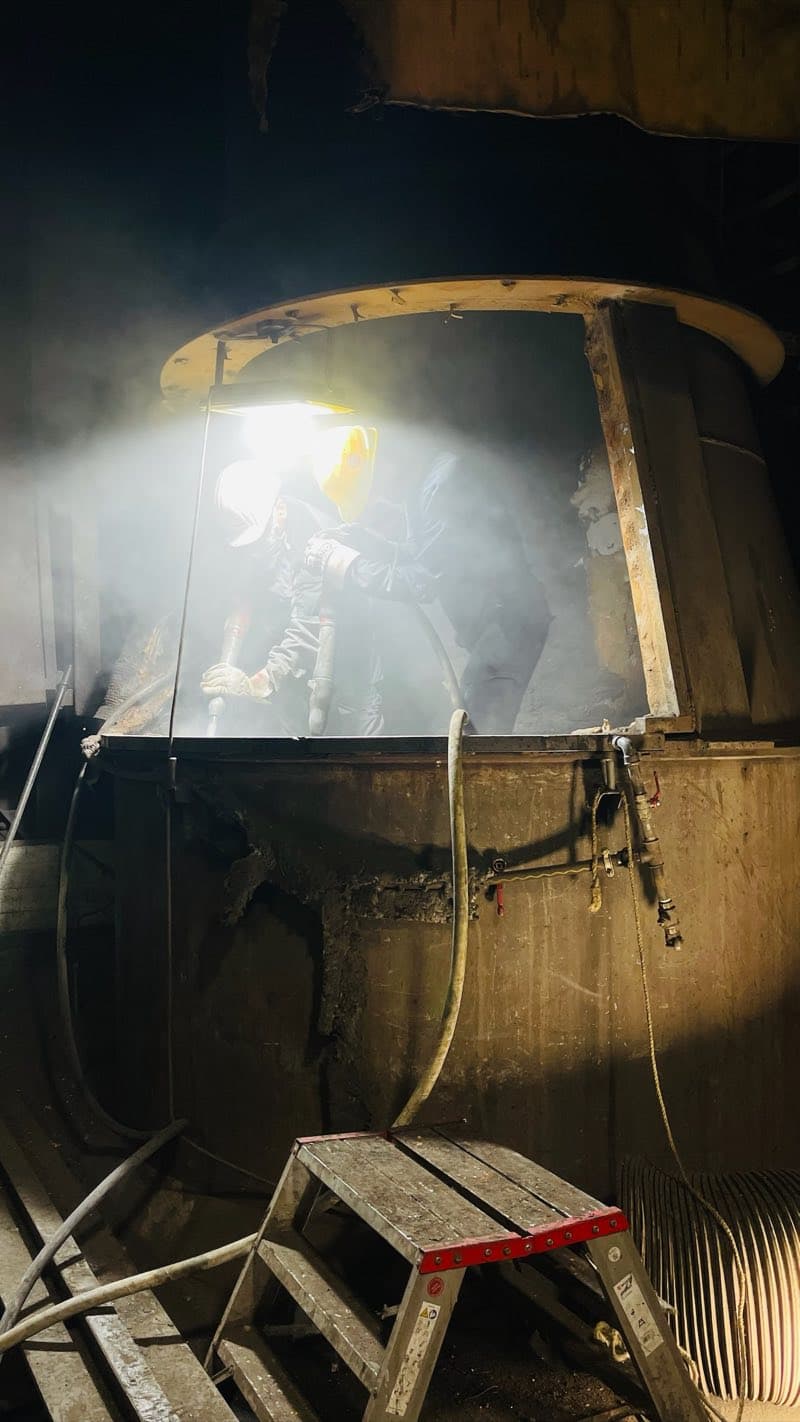
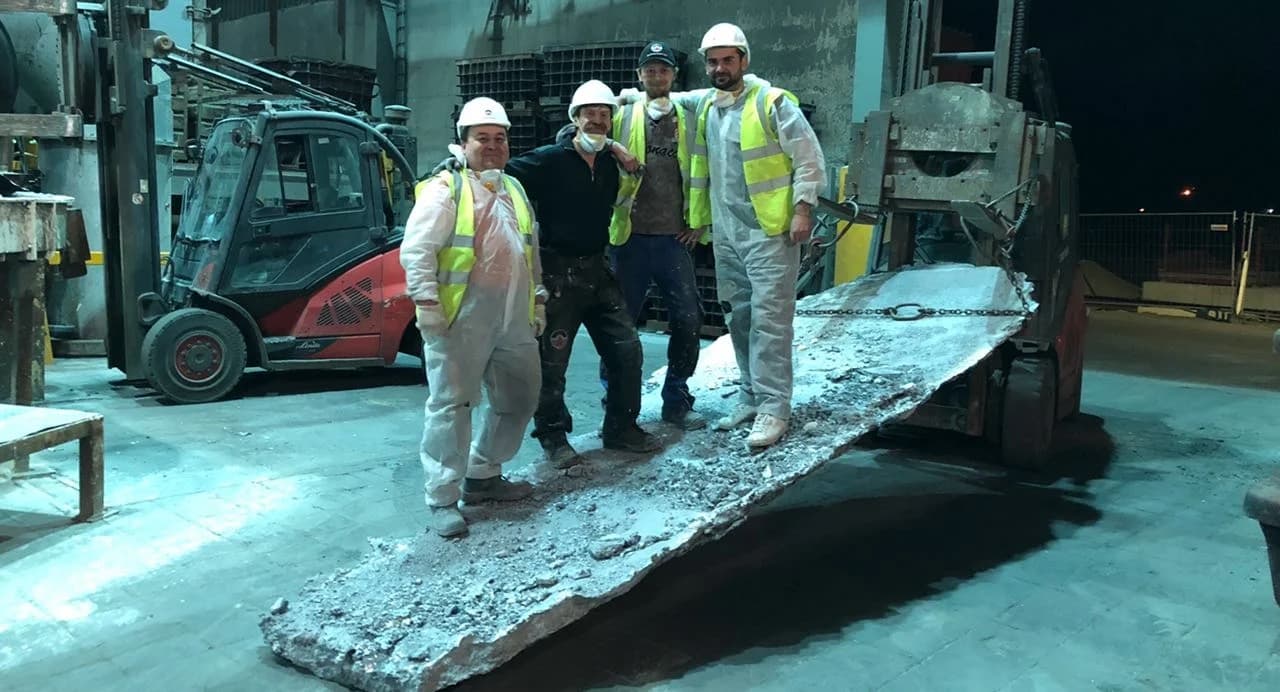
The cross-section of a tree tells you its age: the more rings, the older it is. The same logic applies inside an aluminium furnace — except that here, more is not better. A customer got in touch because his furnace, despite regular maintenance, was only delivering 3 tonnes per cycle instead of the 4 it was designed for. The cold clean-out revealed the reason: the previous maintenance contractor had applied gunned concrete several times over — over slag and over old layers that had never been removed. In places, this had built up to an applied thickness of as much as 100 millimetres.
Why applied layers cost more than their price
- Every millimetre applied is taken away from the furnace contents. At 100 mm all round, almost a tonne of capacity disappears — per cycle, permanently.
- Gunned concrete on slag does not bond to the substrate. The layer sits loosely on top and detaches as a whole under thermal cycling instead of wearing evenly.
- The mass to be heated grows with every layer. The furnace needs longer and more energy to reach the same batch temperature — gas, electricity and working hours all rise together.
- The damage stays invisible. Seen from the inside, a freshly gunned wall looks fine. What becomes noticeable is the output — and that tends to be blamed on the process at first.
What belongs there instead
- Before any application, the substrate is exposed. Slag and legacy layers that no longer carry load have to go, otherwise the new layer is a predetermined breaking point from day one.
- The actual geometry is checked against the design. If the interior deviates, that is a finding and not a side issue.
- Care spraying is a thin protective layer of 5 to 7 centimetres on a clean substrate — not a means of filling up wear.
If a furnace produces less than it used to while being operated in exactly the same way, the first question is not what is missing — but what there is too much of.
Related articles
Matching references

Maintenance uncovers a loss of capacity
Professional maintenance of an aluminium furnace uncovers faulty repairs by a previous contractor – after correction, around 20 tonnes more aluminium per month and noticeably reduced energy consumption.

Maintenance gunning and shotcrete on a melting furnace
Professional maintenance gunning with a 5–7 cm protective layer to extend service life – prevents slag build-up and sustainably increases aluminium yield.
Planning a project?
Whether complete relining, repair or emergency — free initial consultation and a fast response.