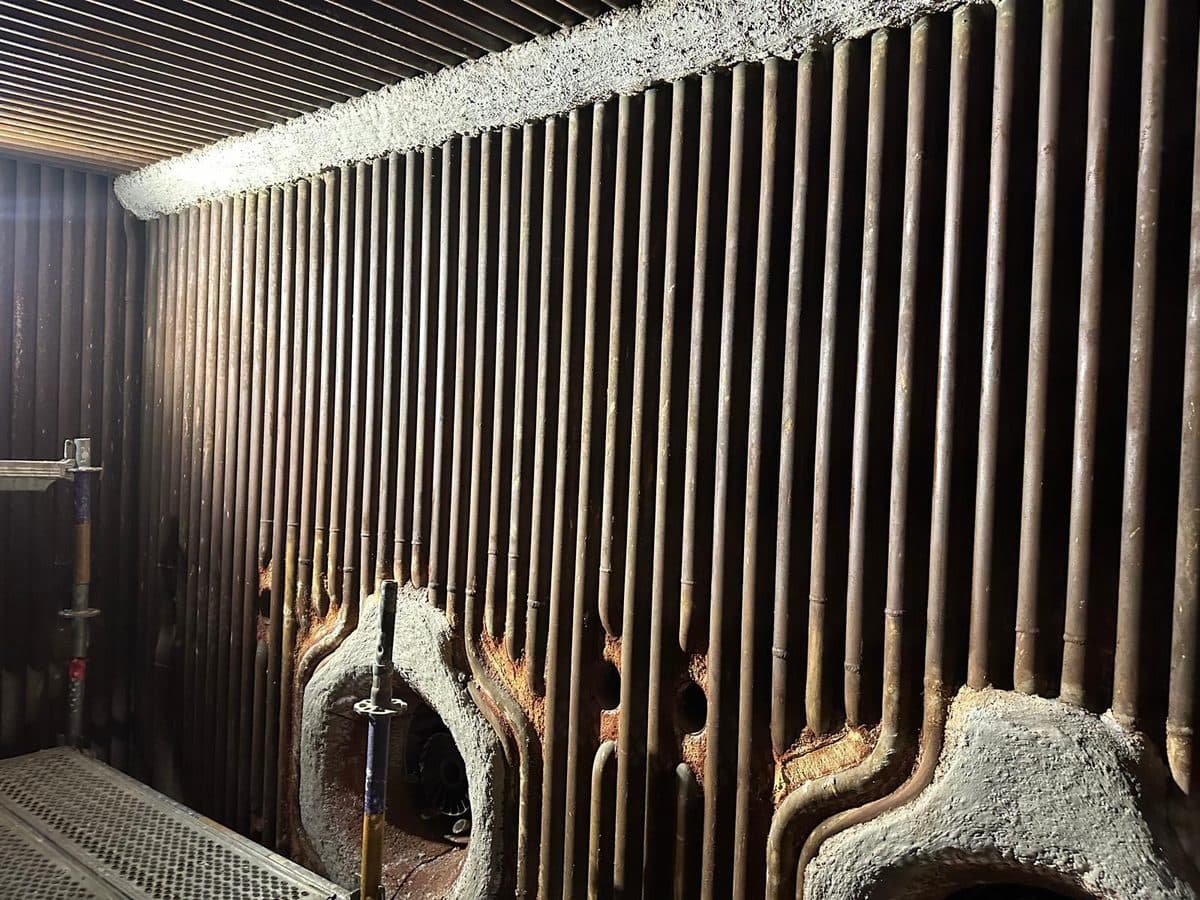
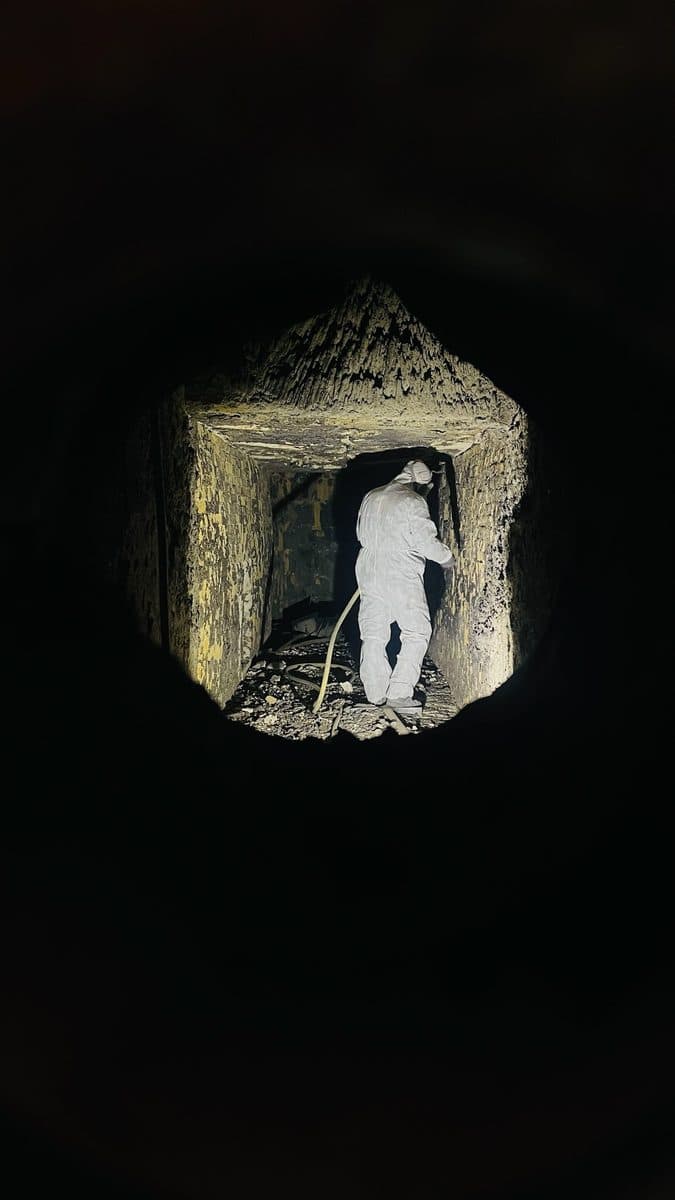
Strip-out as raw material: where refractory waste goes
Year after year, around 32 million tonnes of used refractory material arise worldwide; in Europe, 12.6 per cent of what arises there becomes raw material again. For the operator, the strip-out is therefore no longer rubble but a fraction with value — or with a disposal risk. What decides that on site.
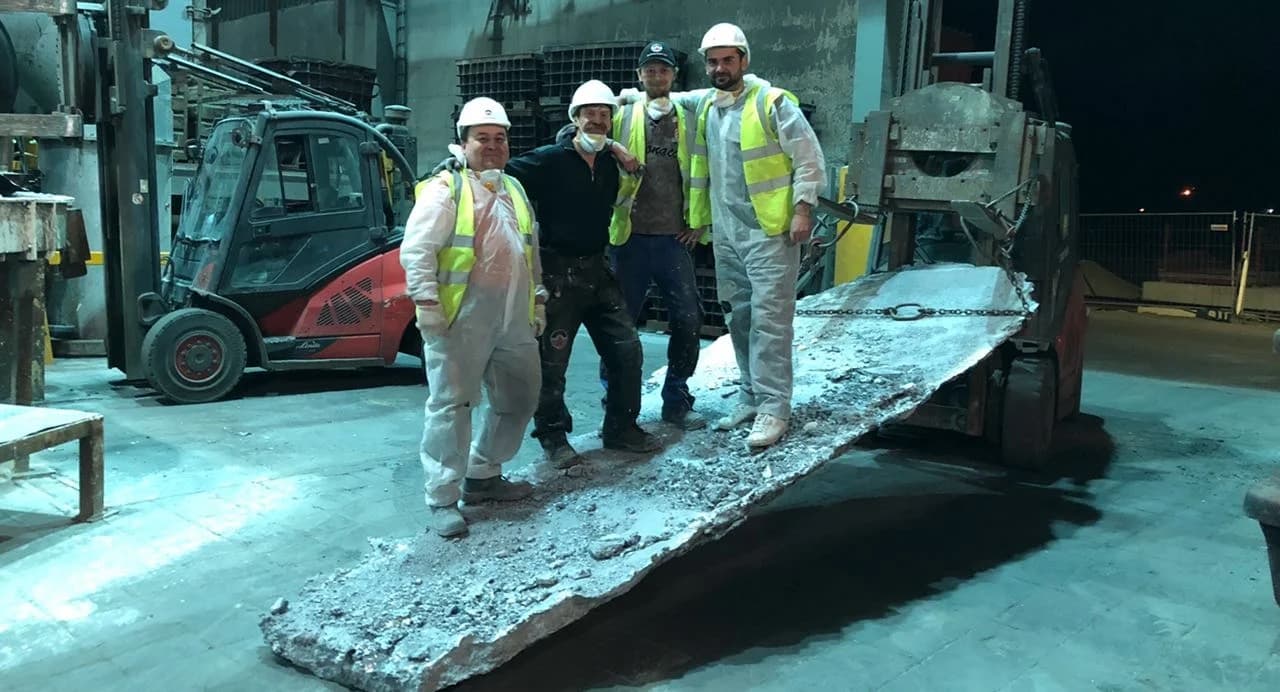
What is broken out of a furnace was long regarded as rubble: bring in a skip, fill it, take it away. That is changing in three places at once. The manufacturers are building up recycling routes — RHI Magnesita and Horn & Co. have placed their European plants in Siegen and Mitterdorf into a joint venture. Since May 2024 Austria has had its own regulation under which processed refractory waste reaches end-of-waste status and is raw material again. And the industry is keeping count: in 2023 the recycling rate in Europe stood at 12.6 per cent, with a target of 15 per cent by 2025. According to the manufacturers, every tonne of recyclate saves around 1.8 tonnes of carbon dioxide. For the operator that means: the strip-out carries a price in both directions, and that price is decided on site, not at the disposal contractor.
What comes out of the furnace
A lining is not one material but four or five. The working lining of corundum, aluminosilicate or silicon carbide products is what the recycler wants — as long as it is clean. Behind it lies the insulation of lightweight bricks, calcium silicate boards or fibre, which nobody wants mixed in with the working lining. Old ceramic fibre is a case of its own: it counts as hazardous waste and belongs in sealed bags, not in the open skip. Then there are residues of mortar and monolithics, and in melting furnaces the most valuable item of all: metal residues, skulls and dross, which the remelter pays for instead of their costing disposal. With salt slag the opposite applies — it is the most expensive item in the skip.
Mixed is always the most expensive class
The rule is simple: the disposal contractor rates a skip by its worst content. If ten kilograms of fibre or a remnant of salt slag lie among twenty tonnes of clean corundum, the whole skip is hazardous waste. If there is metal in it, the operator pays for something he could have sold. Strip-out separated by type costs discipline on site — several containers, labelling, a sequence — and saves several times that at removal. Anyone who plans the strip-out as a single fraction has already made the decision before the first brick falls.
Waste code and tracking stay with the operator
Linings from metallurgical processes come under waste code 16 11 — as hazardous or non-hazardous, depending on contamination. Which number it becomes is decided by the waste characterisation analysis, not by gut feeling. Hazardous fractions are subject to the electronic waste-tracking procedure, and the waste producer is the furnace operator, even if a contractor does the stripping and loading. That is why disposal contractor, waste code and sampling need to be settled before the shutdown, not in the week after it. Weighbridge tickets and disposal certificates go into the furnace file: at the next overhaul they are the basis on which the strip-out can be costed.
Take-back and recyclate
Manufacturers are increasingly taking back strip-out separated by type and feeding it into new products: RHI Magnesita set out to raise the recyclate share of its products from under three per cent in 2020 to over ten per cent by 2025. The EU project ReSoURCE is working on automated sorting, because today the rate fails above all on the fact that mixed strip-out cannot be separated cleanly. For the operator this yields a simple question for the supplier of the next relining: do you take the strip-out back, in what quality, at what price? Anyone who writes that into the tender gets answers that otherwise nobody volunteers.
Fraction, route, cost direction
Metal residues, skulls, dross → remelter or dross processor → revenue instead of disposal.
Clean working lining (corundum, aluminosilicate, SiC) → recycler or manufacturer take-back → cheap to cost-neutral.
Insulation of lightweight brick and calcium silicate → mineral recovery or landfill → standard costs.
Old ceramic fibre → hazardous waste, sealed in bags → expensive, but predictable.
Salt slag, salt- or chloride-contaminated layers → special route with analysis → the most expensive item.
Everything in one skip → rated by the worst content → the most expensive class for the whole quantity.
How a strip-out that pays off is run
Before the shutdown: define the fractions, settle disposal contractor and waste code, agree sampling.
Place and label containers by fraction before the first hammer strikes.
Remove fibre first and separately, into bags, not into the open skip.
Strip out zone by zone: working lining and insulation not in one go.
Collect and weigh metal, skulls and dross — that is the item with revenue.
Weighbridge tickets, certificates and quantities per fraction into the furnace file.
The strip-out is not rubble but four or five fractions with very different prices. Anyone who separates them on site pays the expensive route for the smallest quantity and sells what has value — and gives recycling what it can actually recover.
At a glance
12.6 %
recycling rate for refractory waste in Europe in 2023 — the industry's target: 15 per cent
16 11
waste code for linings from metallurgical processes — hazardous or not is decided by the analysis
1.8 t CO₂
saving per tonne of recyclate, according to the manufacturers
We use cookies and similar technologies to ensure that our website functions properly and to analyse how our content is used. In the settings you can choose which cookies you wish to allow. Privacy policy

 PDFAll furnace types