
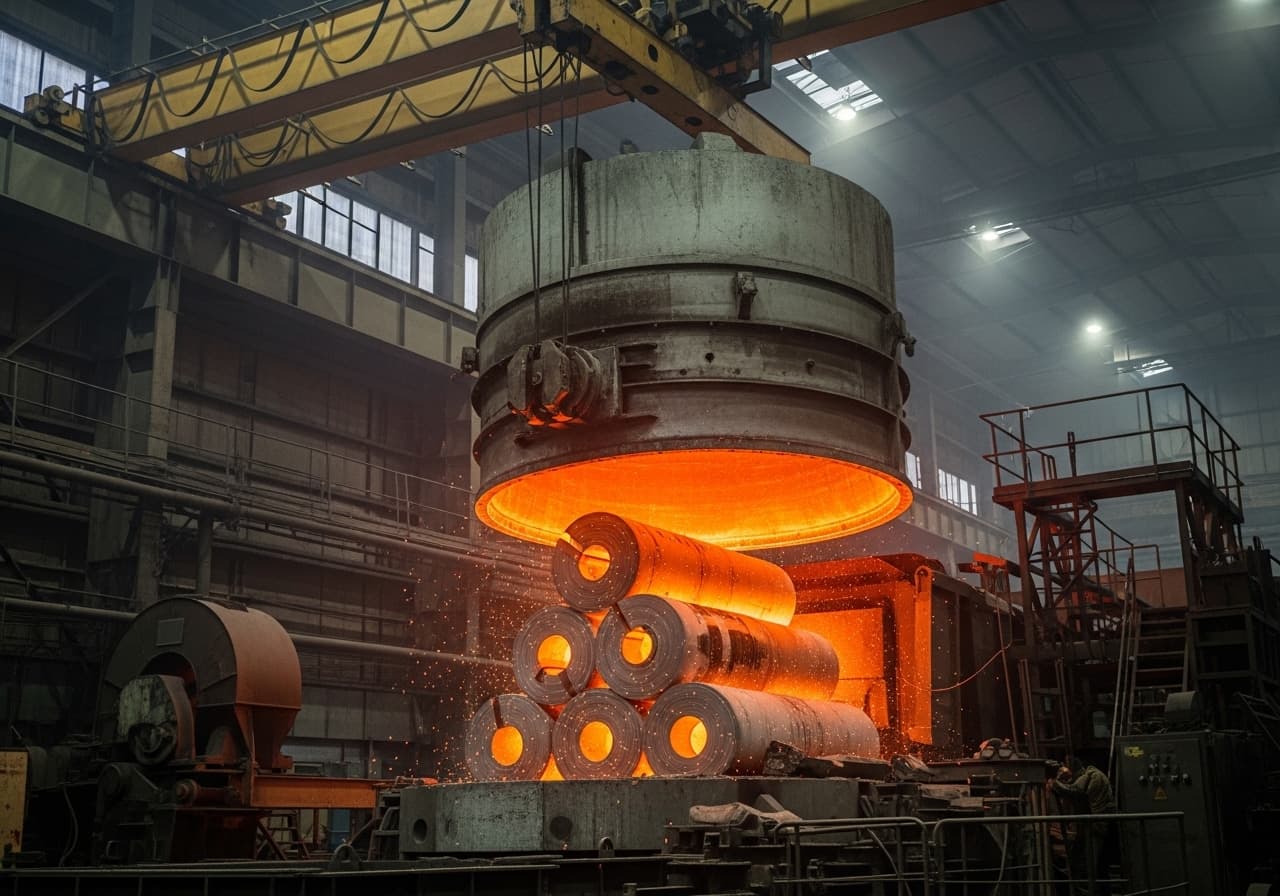
Bell furnace
Refractory lining of bell furnaces for the annealing of coils and wire.
Furnace profile at a glance.
The bell furnace is a specialised batch furnace used particularly in the steel industry and wire production for the annealing of coils, wire bundles and strip steel. Its unique design principle — a removable heating bell over a protective bell and the furnace base — permits precise atmosphere control and uniform heat distribution during the annealing process. SBS Refractory Service is your experienced partner for refractory construction on bell furnaces of every design and size. Our specialists have mastered the particular requirements of bell insulation and base sealing and ensure maximum energy efficiency and process reliability in your annealing treatments.
The refractory lining of a bell furnace differs fundamentally from other batch furnaces: the heating bell is regularly lifted off and moved to different furnace bases, which places a heavy mechanical and thermal load on the insulation. Every bell transfer generates vibration and temperature changes that lead to material fatigue over the service life. The seal between the bell and the base is decisive for atmosphere control — even the smallest leaks lead to the ingress of oxygen and thus to oxidation of the annealed material. This can seriously impair the surface quality of coils and wire.
For every bell furnace, SBS develops a tailor-made insulation concept designed for the maximum service life of the bells and optimal energy efficiency. Modern ceramic fibre boards and modules are increasingly replacing conventional brick linings in the heating bell and considerably reduce the weight of the bell while at the same time improving insulating performance. A lighter bell relieves the crane installation and reduces mechanical wear with every relocation cycle. Our refractory installers also check and renew the high-temperature-resistant sealing systems on the base that ensure a gas-tight process under a protective gas atmosphere.
Typical problems with the Bell furnace.
These loads determine the choice of material and the design of the refractory lining.
Atmosphere tightness at the base
The seal between the protective bell and the furnace base must be absolutely gas-tight in order to maintain the protective gas atmosphere. Even small leaks lead to the ingress of air and to oxidation of the annealed material with a loss of quality.
Mechanical loading from bell relocation
Regularly lifting off and relocating the heating bell by crane generates vibration and impact loads that can damage the insulation. Over many cycles this leads to material fatigue, fibre loss and insulation defects.
Uneven heat distribution
Damaged or unevenly worn bell insulation leads to temperature differences inside the furnace. This impairs the uniformity of the annealing treatment and can lead to inconsistent mechanical properties in the annealed material.
Bell weight and crane loading
Heavy conventional brick linings considerably increase the weight of the bell and place a load on the crane and transport infrastructure. Conversion to lightweight ceramic fibre insulation can reduce the weight of the bell by up to 70 per cent.
Materials & lining
Every zone of your furnace places its own demands on temperature resistance, chemical resistance and mechanical load capacity. We select the optimum material combination.
Click on a material for details
Ceramic fibre boards
Ceramic fibreBell insulation
Lightweight refractory bricks
Refractory bricksHigh-temperature zone
Typical work on the Bell furnace.
Our services for this furnace type — from complete relining to ongoing maintenance.
From site inspection to acceptance.
Our structured process ensures quality, on-time delivery and safety in every project.
Assessment & site inspection
Inspection of the bell insulation
Planning
Optimisation of the thermal insulation
Execution
Renewal of the insulating lining
Safety
Safe transport of the bell
Assessment & site inspection
The condition analysis of a bell furnace covers the separate inspection of the heating bell, protective bell and furnace base. On the heating bell we assess the condition of the insulation by visual inspection and thermography at operating temperature — thermal bridges and insulation defects are reliably located in this way. On the base we check the sealing surfaces for deformation and wear as well as the condition of the high-temperature-resistant seal. The results are summarised in an inspection report that breaks down the repair requirement for each component individually.
Planning
During the planning phase we define the insulation concept for the heating bell and select the optimal combination of ceramic fibre boards and lightweight refractory bricks. The weight of the bell after conversion is calculated and compared with the crane load. For the base seal, the appropriate sealing system is specified — adapted to the furnace geometry, type of protective gas and operating temperature. The shutdown period is coordinated with your production planning and a construction schedule is prepared that permits the bell conversion with minimal interruption to production.
Execution
Execution begins with lifting off the heating bell and dismantling the worn insulation. The steel shell of the bell is inspected for corrosion and deformation, and anchors and fixing points are checked and renewed where necessary. The new insulation is built up layer by layer — ceramic fibre boards as the hot face with back-up insulation of calcium silicate boards or lightweight refractory bricks. On the base, the sealing surfaces are reworked and new high-temperature seals are installed. Finally, a functional test of the tightness is carried out under a protective gas atmosphere.
Safety
Special safety regulations for crane work and work at height apply to bell transport and installation. Before any work begins, the bell is set down safely on an assembly frame and secured against tipping over. When handling ceramic fibres, the applicable occupational safety regulations are strictly observed — dust masks, protective clothing and extraction equipment are mandatory. All work is documented and the tightness of the protective gas atmosphere is recorded.
From our project portfolio.
Over 500 successfully completed refractory construction projects in the DACH region and the Benelux countries.

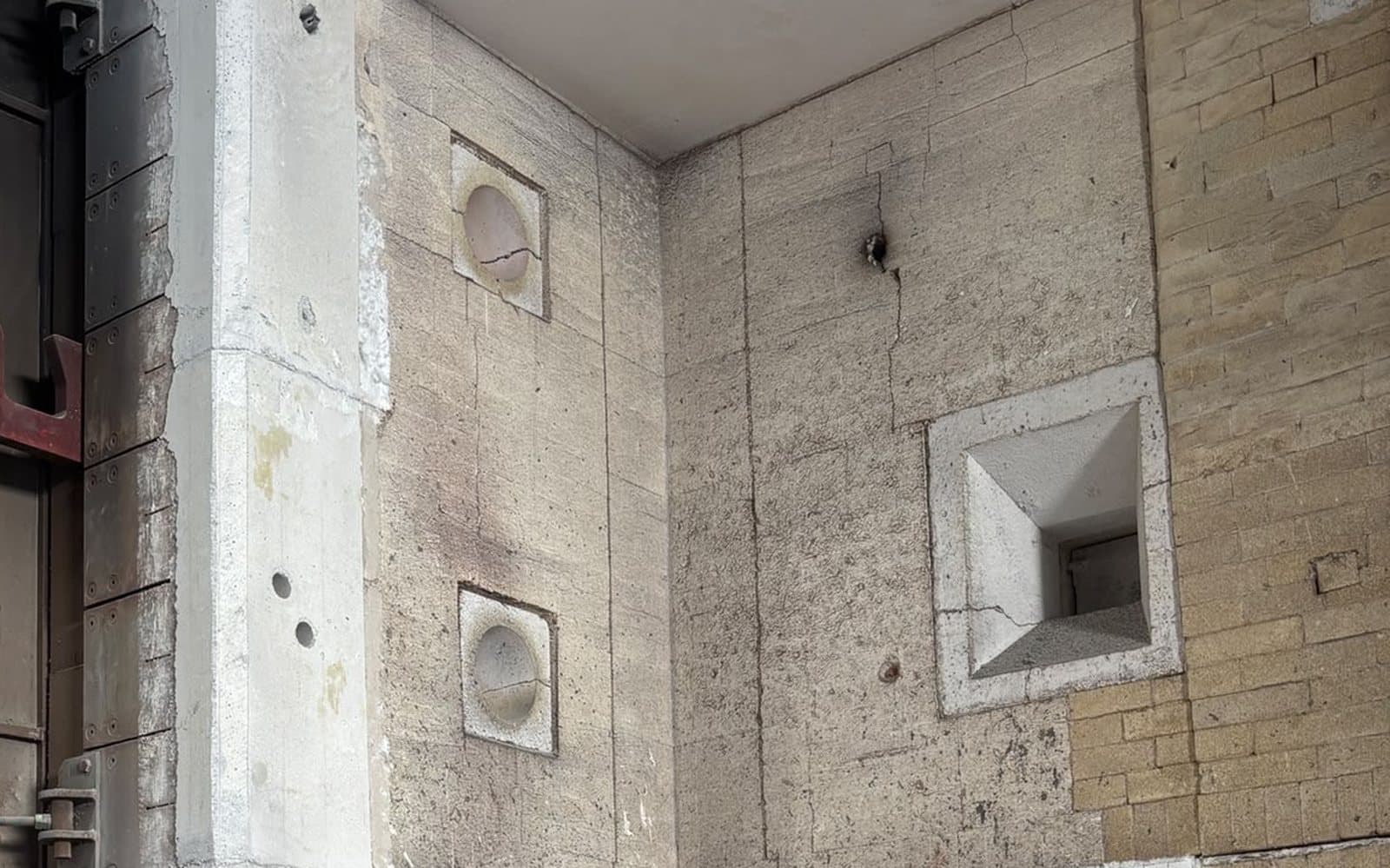
Bell furnace
Frequently asked questions
Everything you need to know about the Bell furnace
Go deeper.

Planning a project?
Whether complete relining, repair or emergency — free initial consultation and a fast response.