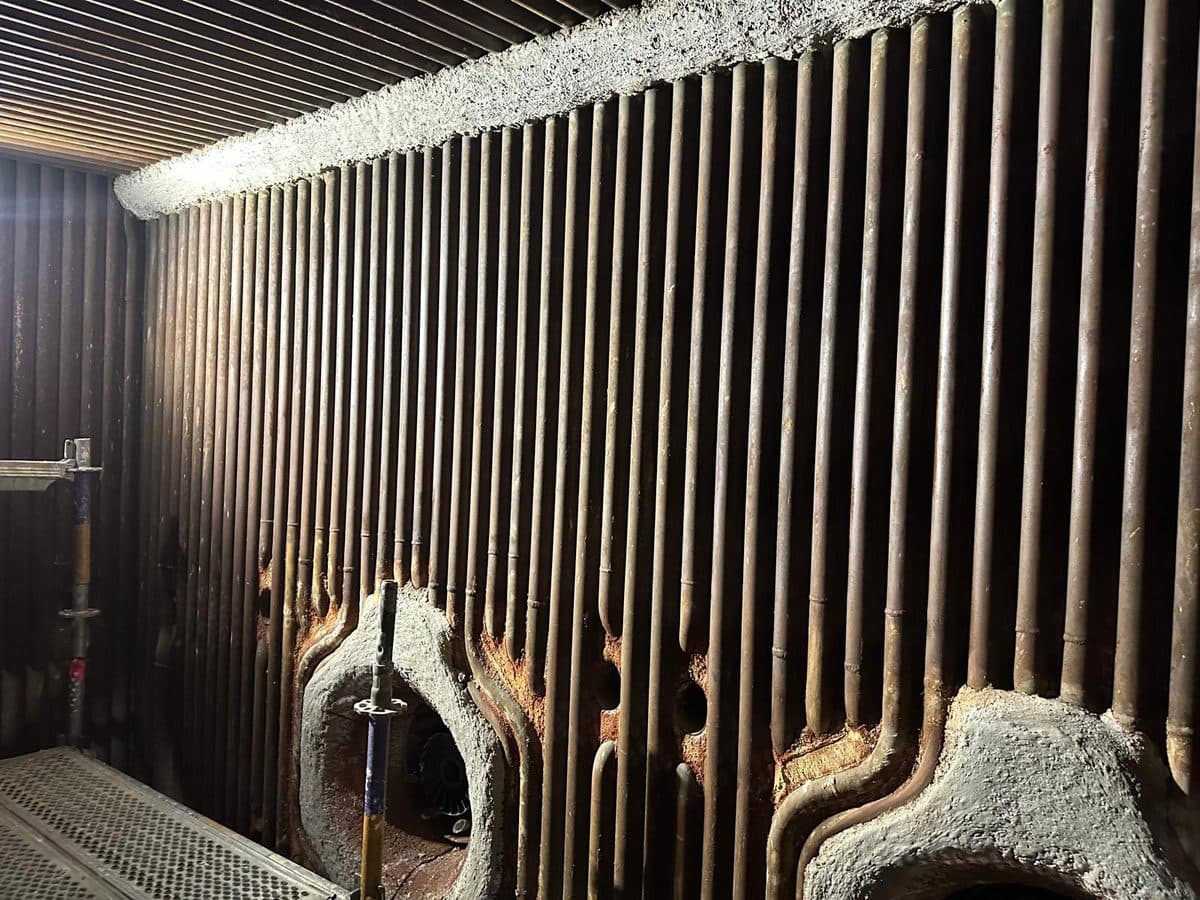
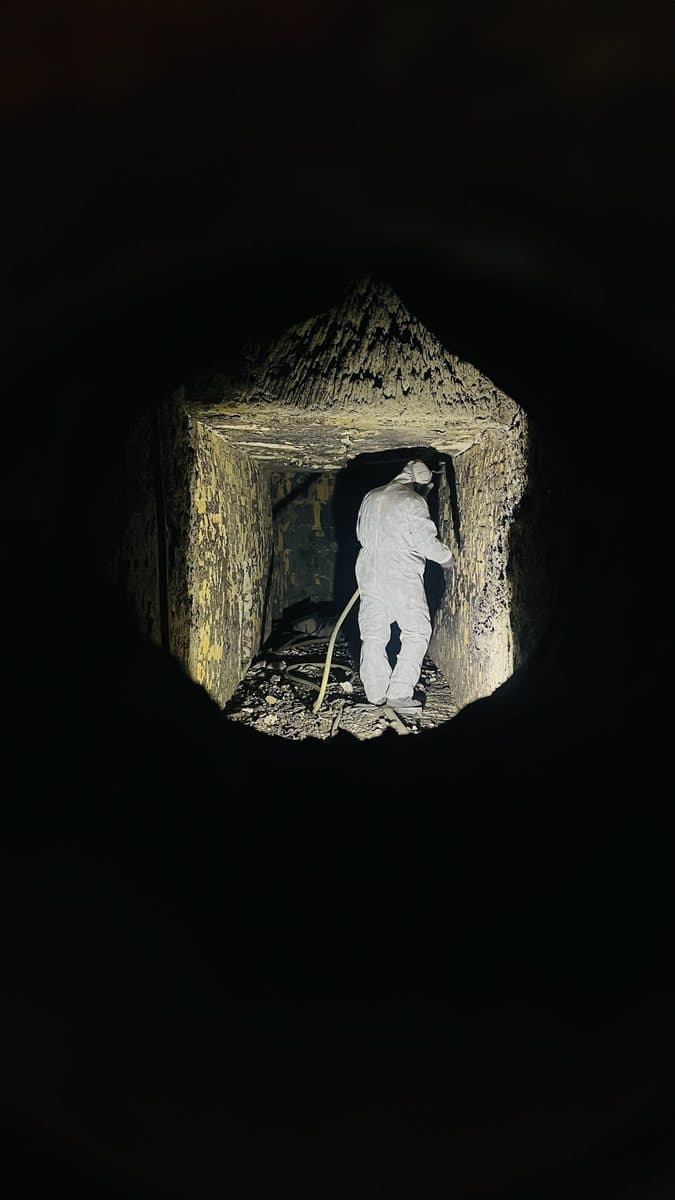
Hoppers and chutes: here it is flow, not heat, that decides
In a furnace the enemy is heat. In a hopper it is standstill. Whatever slides does no damage — whatever stays put becomes the weak point, however good the material underneath.
In a furnace the enemy is heat. In a hopper it is standstill. Whatever slides does no damage — whatever stays put becomes the weak point, regardless of how good the material underneath is.
Hoppers, chutes and transfer points are never the centre of a plant drawing, yet they govern throughput. They rarely get a design of their own — and then fail for reasons that have nothing to do with temperature.
What makes a hopper different from a furnace wall
The materials are similar. The loading is not.
Abrasion instead of chemical attack. In the furnace chamber, melt or slag eats into the surface. In the hopper, material grinds across it mechanically, always in the same direction.
Geometry is the function. A furnace wall has to be tight and load-bearing; its shape is secondary. In a hopper the shape is the job: if angle or surface are wrong, the component no longer does what it is there for — even with the lining intact.
The damage grows by itself. A spot where material builds up narrows the cross-section, slows the flow and therefore collects even more. In a furnace a zone wears evenly; here the process accelerates.
You see it in the throughput, not on the wall. The first sign is rarely a crack, but a plant that manages less than it did the year before.
That is why we do not judge a hopper by residual wall thickness alone. A lining can be thick and sound and still be wrong — if the surface no longer lets the material run.
No ledges
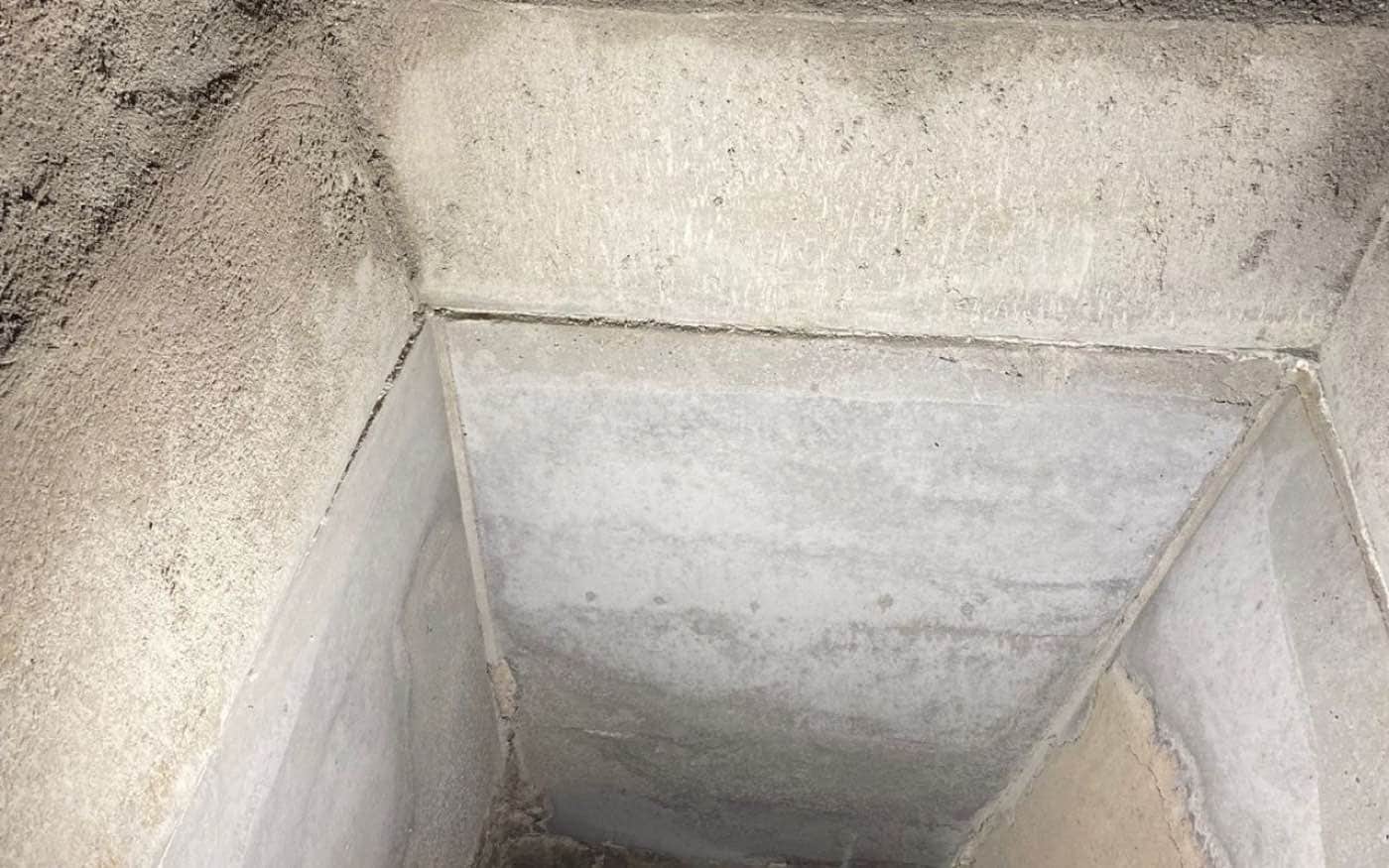
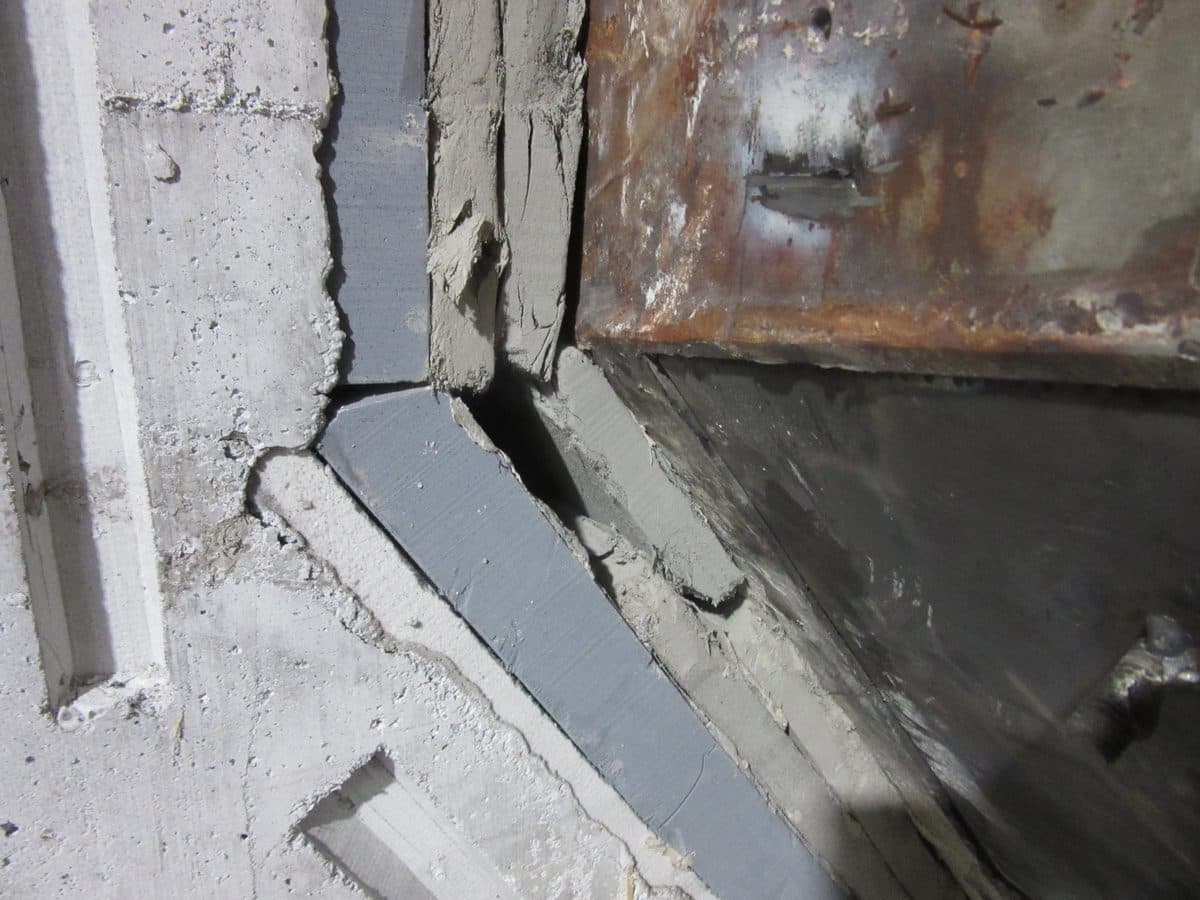
The lining follows the slope without a step. That sounds self-evident and is not, in execution: wherever two sections meet, wherever a repair ties into the existing lining, or wherever a plate stands proud, a ledge of a few millimetres arises easily.
A few millimetres are enough. Material settles in front of it, bakes on, and the ledge becomes a step that narrows the cross-section. So we work transitions out instead of leaving them standing — and place the sections so that as few of them as possible fall in the sliding zone.
The surface is the component
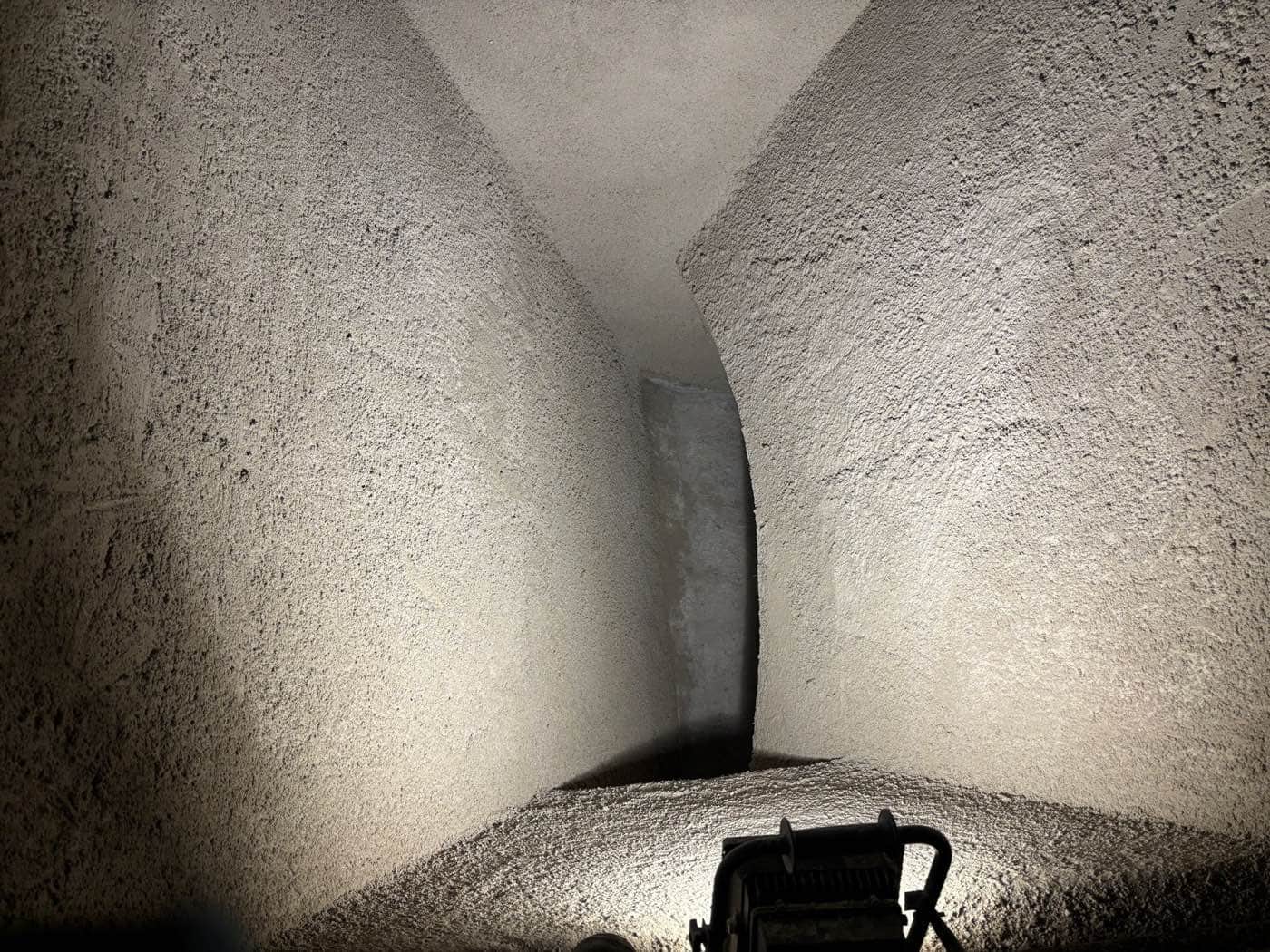
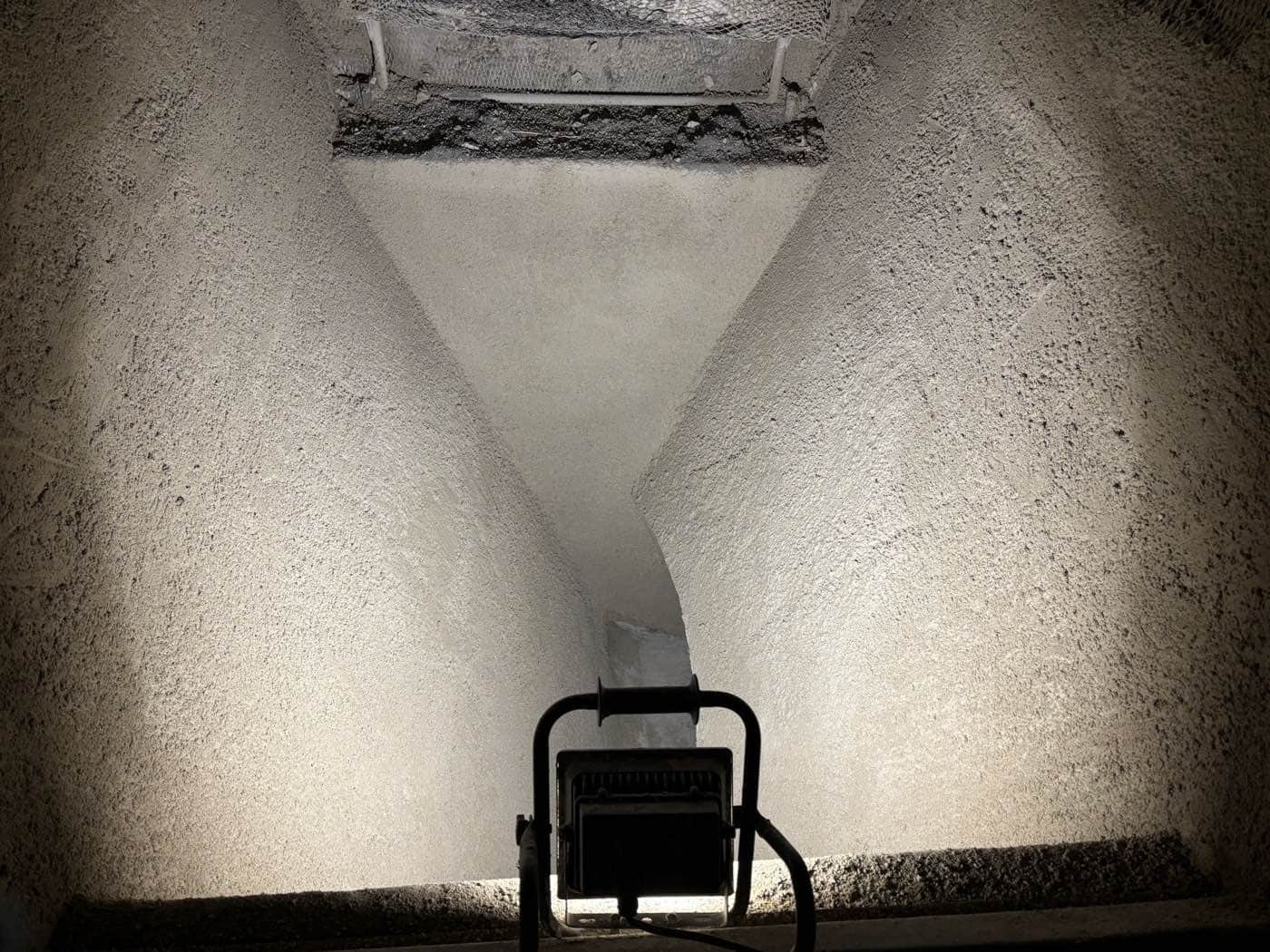
Where the material slides along, we finish the surface closed. A rough face is not merely unsightly, it brakes — and whatever brakes, stays.
Trowel it closed, do not just smooth it over. A trowelled face has a dense surface zone. It resists abrasion longer than an open-pored surface with the same material underneath.
Work in the direction of flow. Grooves pulled across act like many small ledges in a row.
Rough is not wrong everywhere. Outside the sliding zone, on walls and roofs, a gunned surface is perfectly fine and faster. The effort belongs where the material runs.
Tie repairs in flush. A new layer standing proud of the existing one is a built-in ledge.
You can read the layout off the finished lining: where it is smooth, somebody calculated; where it is rough, somebody saved — and both can be right.
The connection at the top
The third place where hopper linings fail is the upper edge. That is where the new layer ties into the existing one, and that is where gravity works against it: whatever lies below presses onto its substrate. Whatever hangs above pulls away from it.
So the connection is anchored and finished flush, not merely rendered on. A layer that only rests at the top comes away as a shell at the first change of load or temperature — and drops in one piece into the hopper it was meant to protect.
What you see during an inspection
Build-up always in the same place. That is neither coincidence nor a material problem, but a pointer to the geometry at exactly that point.
Polished tracks. Where the material runs, the surface is bright. Where it stays dull, nothing runs — something is standing there.
Edges with a burr. A sharp ledge you can feel with a finger is the start of the next build-up.
A hollow ring at the upper edge. If the connection area sounds hollow, the layer has already come away from its substrate, even with nothing visible.
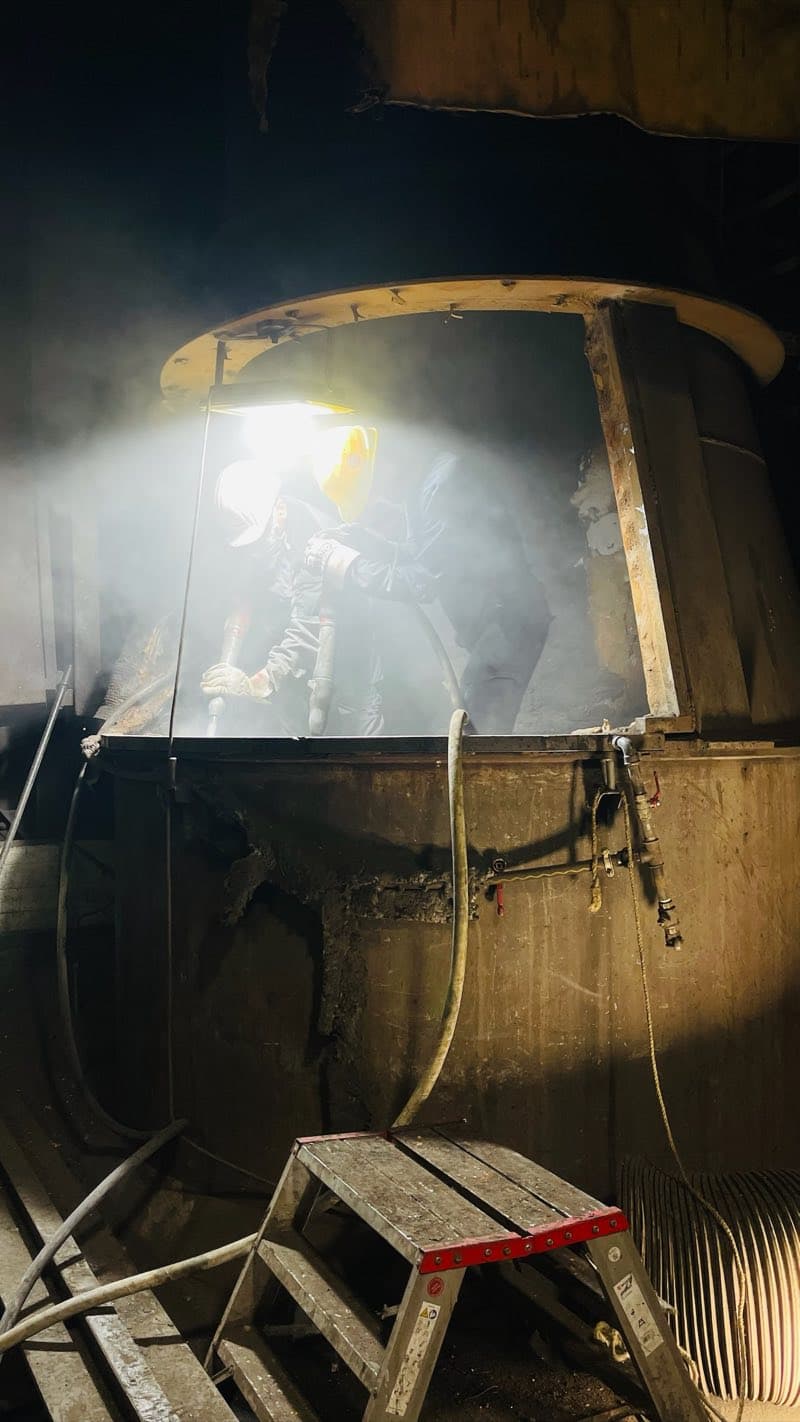
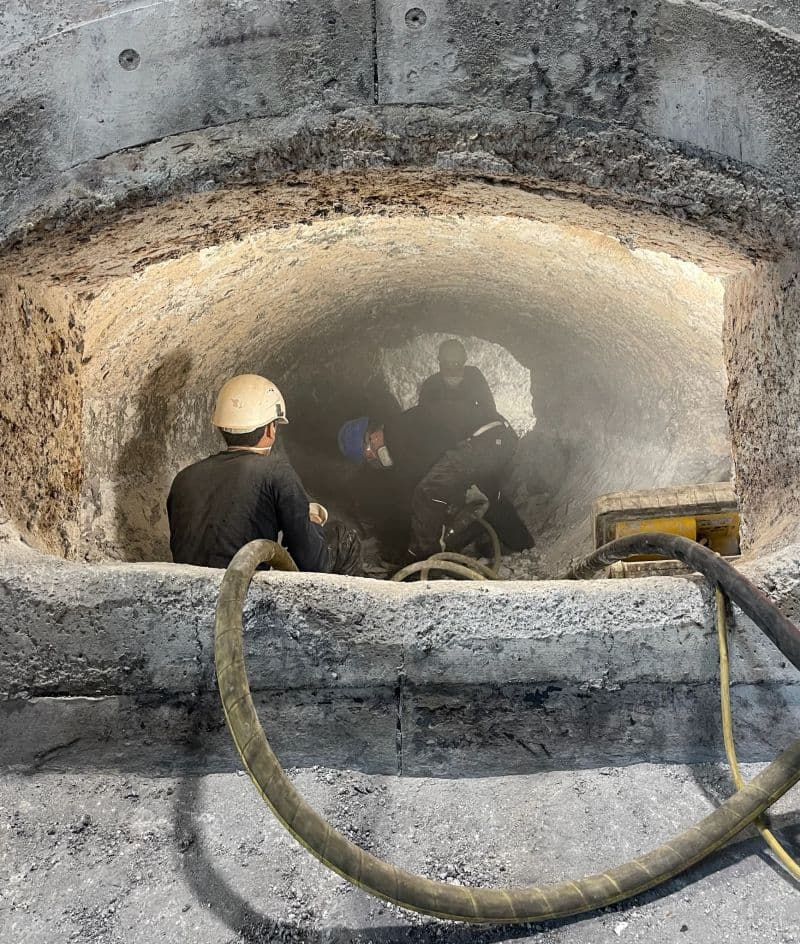
None of these findings needs an instrument. They only need someone to climb in with a lamp and walk the surface, instead of shining a light in from above.
The hopper is the component that gets inspected least often and quietly costs output most often. Anyone watching throughput fall and searching at the furnace is frequently searching in the wrong place.
We use cookies and similar technologies to ensure that our website functions properly and to analyse how our content is used. In the settings you can choose which cookies you wish to allow. Privacy policy

 PDFAll furnace types