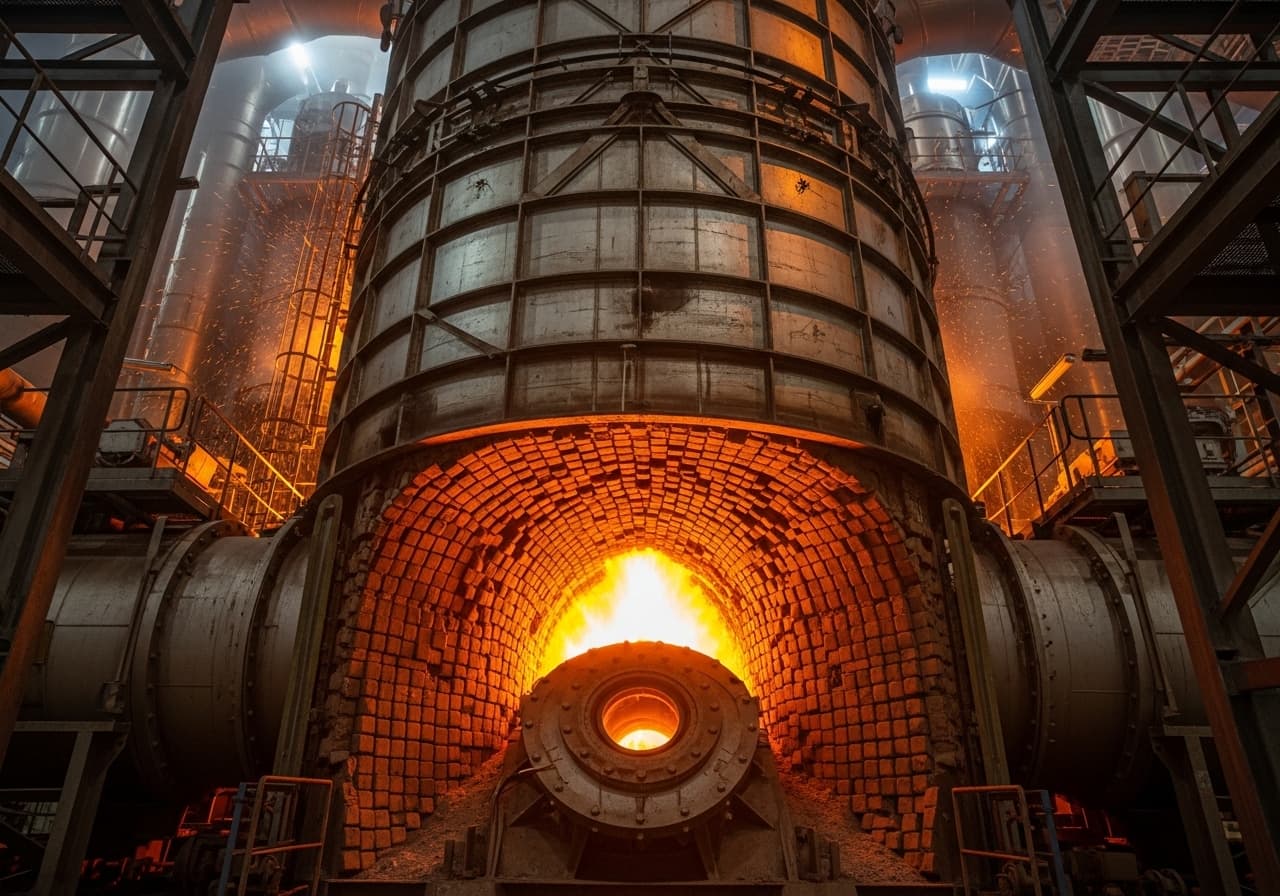
Thermal incineration plant
Refractory lining of thermal incineration plants for the disposal of industrial waste and residues.
Furnace profile at a glance.
Rotary kiln
Rotating steel cylinder with a multi-zone refractory lining. The feed area requires abrasion-resistant materials, the main combustion zone highly refractory chrome corundum or high-alumina bricks, and the discharge zone slag-resistant qualities.
Afterburning chamber
Stationary combustion chamber for the complete post-combustion of the flue gases. The lining of corundum-bearing refractory castables must permanently withstand at least 1,300 °C and chemically aggressive gas atmospheres.
Waste heat boiler
Heat recovery system for steam generation. The refractory lining in the inlet area is heavily loaded by fly ash erosion and condensation of corrosive gases.
Flue gas cleaning
Multi-stage cleaning system with refractory-lined ducts, quenches and scrubbers. The lining must be acid-resistant and resistant to thermal cycling.
High-temperature refractory construction for hazardous waste incineration.
Thermal incineration plants for the disposal of hazardous waste and industrial residues place the highest demands on the refractory lining. Changing waste compositions with widely varying contents of chlorides, fluorides, heavy metals and organic compounds attack the refractory materials in many different ways. SBS Refractory Service specialises in refractory construction in rotary kilns, stationary incineration plants and their associated afterburning chambers.
Operating temperatures of 900 to 1,300 °C in combination with chemically highly aggressive flue gases call for careful zone-by-zone material selection. Mechanical wear from the charge dominates in the feed area of the rotary kiln, thermal and chemical attack in the main combustion zone, and slag contact at extreme temperatures in the discharge zone. Every zone requires an individually matched refractory concept.
Our installation teams have extensive experience in handling contaminated areas and work in strict compliance with all safety and environmental regulations. SCC certification of our personnel goes without saying. From inspection and material planning through to on-schedule execution during the overhaul, we offer the complete package of services.
Typical problems with the Thermal incineration plant.
These loads determine the choice of material and the design of the refractory lining.
Changing waste compositions
Hazardous waste varies widely in its chemical composition. The refractory lining must be resistant to a broad spectrum of aggressive substances — from chlorides and fluorides through to heavy metal compounds.
Extreme thermal loading in the rotary kiln
The rotation of the kiln generates cyclic thermomechanical loading. At the same time, temperatures above 1,200 °C with direct flame contact prevail in the main combustion zone.
Aggressive slag attack
Molten slags from waste incineration penetrate the pores of the refractory lining and cause chemical corrosion and structural loosening.
Mechanical wear from charging
In the feed area of the rotary kiln, the impact behaviour of the waste causes considerable mechanical abrasion of the lining.
Work in contaminated areas
Residues of hazardous waste require special PPE, contaminant measurements and decontamination measures before and during the refractory work.
Materials & lining
Every zone of your furnace places its own demands on temperature resistance, chemical resistance and mechanical load capacity. We select the optimum material combination.
Click on a material for details
High-alumina bricks
Shaped bricksHigh-temperature zone in the rotary kiln
Refractory castable (corundum-bearing)
Refractory castableAfterburning chamber
Chrome corundum bricks
Special bricksSlag contact zones with aggressive waste
Typical work on the Thermal incineration plant.
Our services for this furnace type — from complete relining to ongoing maintenance.
From site inspection to acceptance.
Our structured process ensures quality, on-time delivery and safety in every project.
Assessment & site inspection
Endoscopic examination and wear measurement in the rotary kiln
Planning
Zone concept for differing thermal and chemical loading
Execution
Segment-by-segment relining or partial repair
Safety
Contaminant exposure to be observed, PPE concept required
Assessment & site inspection
The inspection of thermal incineration plants begins with an endoscopic examination of the rotary kiln in the warm state, in order to record wear under operating conditions. Once the plant has cooled down, a detailed walk-through follows with measurement of the residual thicknesses in all zones. We document crack patterns, slag deposits, spalling and chemical corrosion patterns. The results feed into a zone-based wear record.
Planning
On the basis of the inspection we prepare a differentiated zone concept. Every zone of the rotary kiln receives an individually matched refractory material — from abrasion-resistant high-alumina bricks in the feed area through chrome corundum in the slag zone to corundum-bearing castables in the afterburning chamber. Material selection takes account of the specific waste streams and operating conditions of the plant.
Execution
Relining in the rotary kiln is carried out segment by segment — the kiln is rotated step by step so that work always takes place in the lower segment. For partial repairs, damaged areas are broken out and renewed with the same or an improved material. The afterburning chamber is relined completely or in sections as required. All work is carried out by experienced installation teams holding special qualifications for work in hazardous waste incineration plants.
Safety
Work in thermal incineration plants for hazardous waste requires a comprehensive safety concept. Before work begins, contaminant measurements (dioxins, heavy metals, asbestos) are carried out. All employees wear full PPE including respiratory protection with activated carbon filters. Contaminated demolition materials are collected properly and disposed of as hazardous waste. Our trained safety personnel are specially qualified for these working conditions.
From our project portfolio.
Over 500 successfully completed refractory construction projects in the DACH region and the Benelux countries.
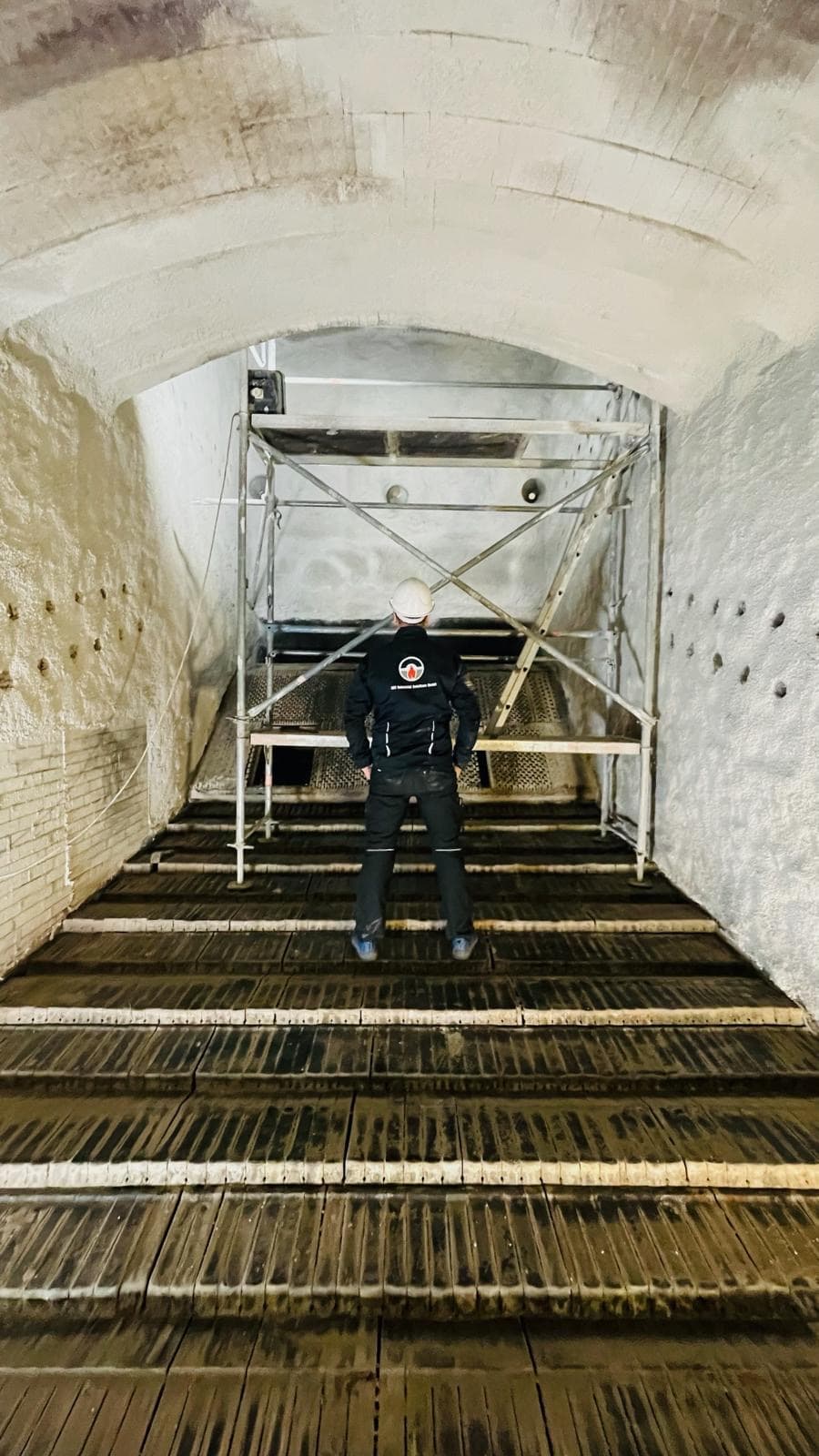
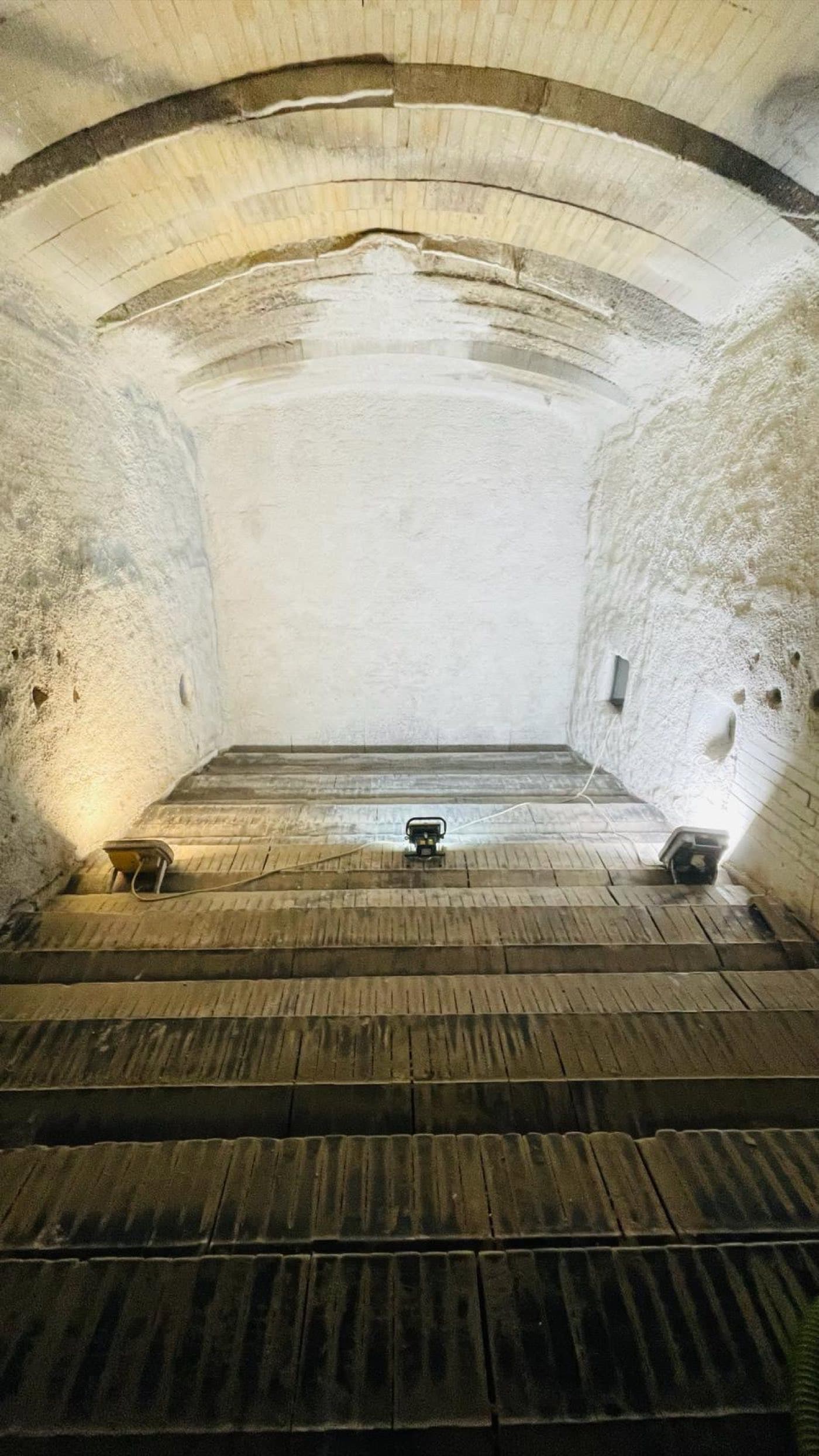
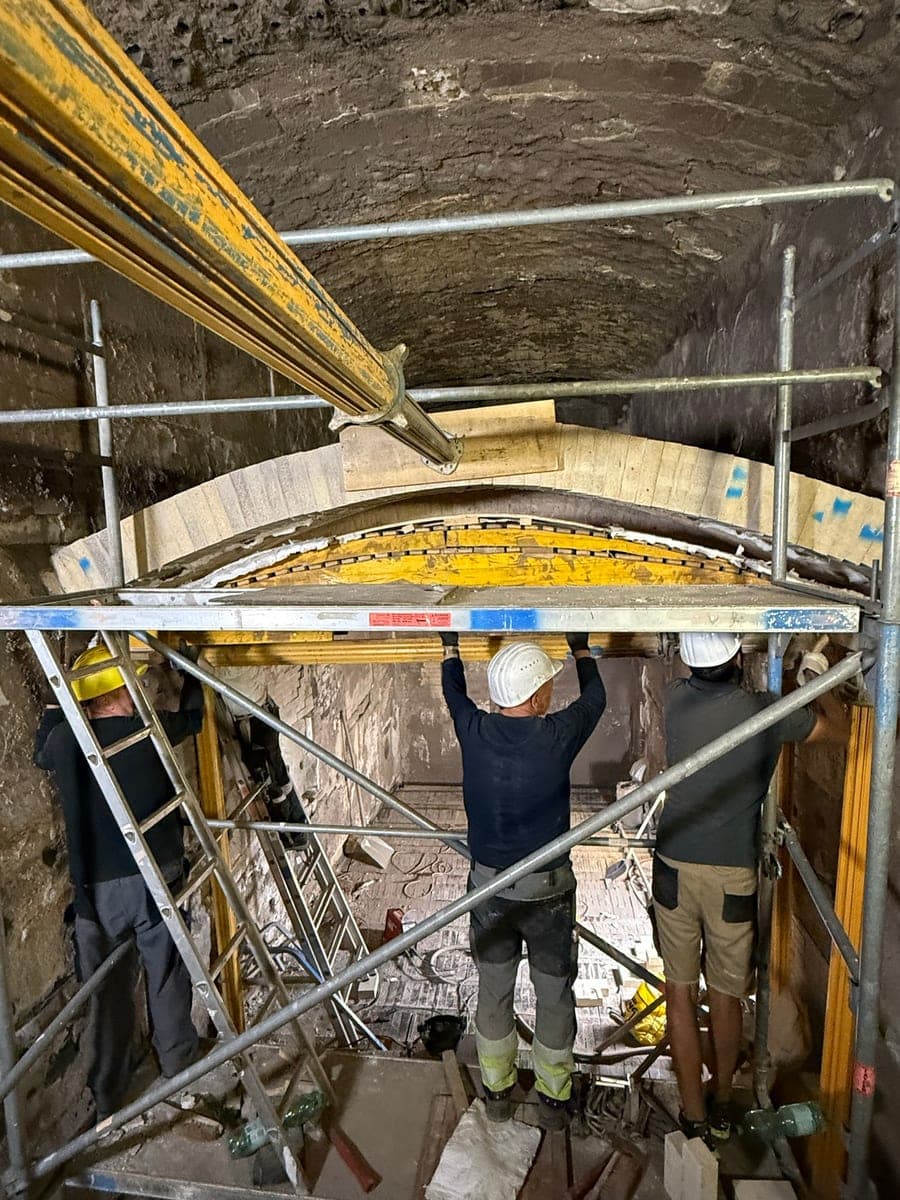

Thermal incineration plant
Frequently asked questions
Everything you need to know about the Thermal incineration plant
Go deeper.

You may also be interested in.
Planning a project?
Whether complete relining, repair or emergency — free initial consultation and a fast response.