LD converter
Refractory lining of LD converters (BOF) for steelmaking by the basic oxygen process.
Furnace profile at a glance.
Converter vessel
Pear-shaped steel shell with a refractory inner lining of MgO-C bricks. The lining wall thickness is typically 600–900 mm. The lining is divided into several wear zones that are optimised with different brick qualities.
Cone area
Upper, tapering section of the converter with the highest wear. This is where the oxygen jet, slag splashes and outflowing gases converge. Lined with high-carbon MgO-C bricks (14–20 % C) for maximum slag resistance.
Mouth
Upper rim of the converter, heavily loaded mechanically and thermally by slag build-up and its removal by chipping. Regularly repaired and reworked with refractory castable. The mouth geometry influences gas outflow and dust emissions.
Bottom with bottom-blowing tuyeres
Converter bottom with built-in purging or bottom-blowing tuyeres for bath movement. The area around the tuyeres is extremely highly loaded thermally and mechanically. Special tuyere bricks and adapted bottom geometries safeguard service life.
Taphole
Lateral taphole for slag-free steel tapping. Lined with special shapes and wear sleeves. The taphole geometry is checked after every campaign and repaired as required.
Robust lining for the basic oxygen process.
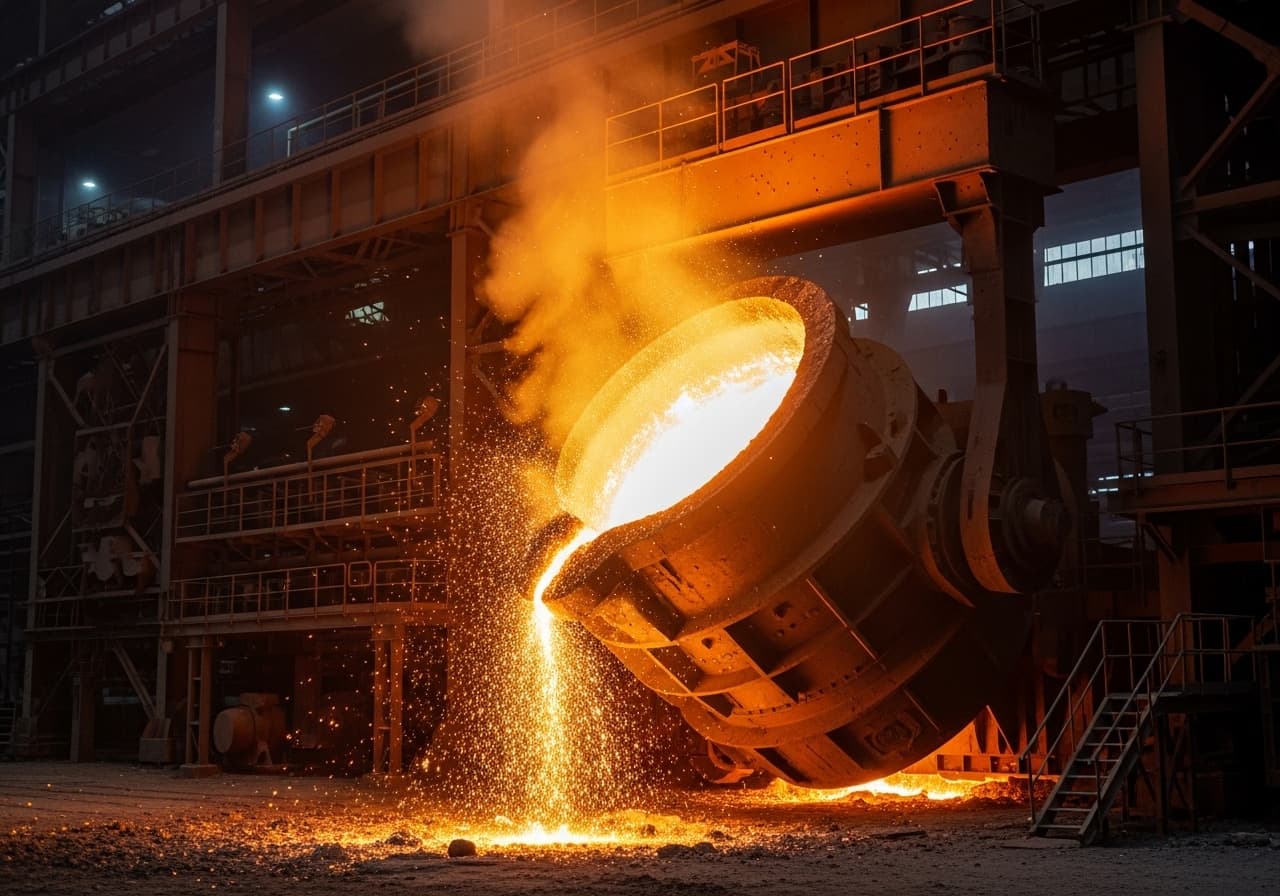
The LD converter (Linz-Donawitz converter, also BOF – Basic Oxygen Furnace) is the most important unit in primary steelmaking worldwide. By blowing pure oxygen onto liquid pig iron, carbon and unwanted accompanying elements are oxidised and transferred into the slag. In the process the refractory lining must withstand temperatures of up to 1,700 °C, highly aggressive FeO-rich slags and the dynamic forces of oxygen refining.
SBS Refractory Service GmbH is your experienced partner for the lining and maintenance of LD converters. We use high-quality MgO-C bricks with an optimised carbon content and have mastered the ring bricklaying method for a dimensionally accurate and robust lining. Every lining is matched zone by zone to the specific wear characteristics of the converter — from the heavily loaded cone area to the mouth ring.
The cost-effectiveness of a converter lining is measured in cost per tonne of steel. Through optimised material selection, precise installation and consistent wear management with laser measurement and slag splashing practice, SBS maximises the converter campaign and minimises refractory costs. Our teams work around the clock and align completion with the planned shutdown windows.
Typical problems with the LD converter.
These loads determine the choice of material and the design of the refractory lining.
Highly aggressive FeO slags
Oxygen refining produces FeO contents of 15–30 % in the slag. These highly basic, oxidising slags attack the MgO-C lining chemically and break down the magnesia lattice. The cone and mouth area is particularly affected.
Dynamic process loading
The oxygen blowing process generates violent bath movement and splashing inside the converter vessel. The combined loading of thermal shock, chemical attack and mechanical erosion leads to accelerated wear of the lining.
Tilting and rotating movements
LD converters are tilted into various positions for charging, blowing and tapping. These movements generate mechanical loads in the lining and can lead to local failure of the lining if joints open up.
Zone-dependent wear
Wear in the converter is strongly zone-dependent: the cone wears fastest, followed by the mouth and the tapping area. The lining must be optimised zone by zone in order to achieve an even converter campaign.
Materials & lining
Every zone of your furnace places its own demands on temperature resistance, chemical resistance and mechanical load capacity. We select the optimum material combination.
Click on a material for details
MgO-C bricks (high carbon content)
Refractory bricksConverter cone and slag zone
Magnesia castable
MonolithicRepair and patching work in the mouth area
Typical work on the LD converter.
Our services for this furnace type — from complete relining to ongoing maintenance.
From site inspection to acceptance.
Our structured process ensures quality, on-time delivery and safety in every project.
Assessment & site inspection
Laser measurement of the internal wear contour after every converter campaign.
Planning
Optimisation of the lining geometry based on wear data, material selection for each zone.
Execution
Mechanical demolition with an excavator, relining with MgO-C bricks by the ring bricklaying method.
Safety
Protection against dust exposure, safety distances during demolition and crane work.
Assessment & site inspection
After every converter campaign the internal wear contour is recorded by 3D laser measurement. The data is compared with the target values and critical wear areas are identified. Regular measurements across the entire campaign allow precise wear prediction and determination of the optimal relining date. Thermographic images of the shell complete the analysis.
Planning
Based on the wear data collected, the lining concept for the next campaign is optimised. The brick qualities are defined zone by zone — higher carbon content in the cone, adapted qualities in the bottom and wall. Material ordering takes place in good time, and site set-up is coordinated with the steel plant. The entire sequence is documented in a project plan with milestones.
Execution
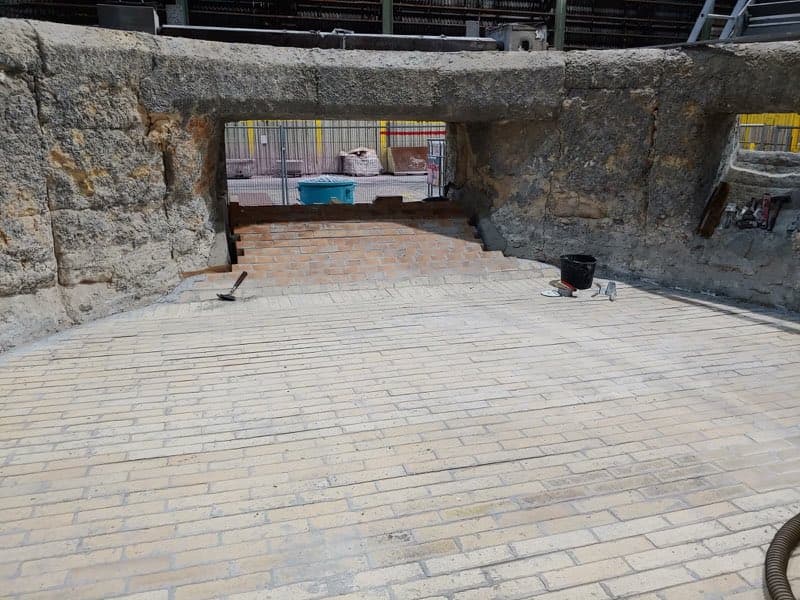
Mechanical demolition of the worn lining is carried out with special excavators working from the mouth. Once the old lining has been removed, the steel shell is inspected and repaired as required. Relining by the ring bricklaying method starts at the bottom and works upwards ring by ring. Every brick ring is precisely aligned and jointed. Once the bricklaying is complete, controlled heat-up with gas burners follows.
Safety
Demolition generates considerable dust exposure, which is controlled by water spraying and extraction. Safety distances protect against falling pieces of brick. Crane work for material transport requires certified crane operators and slingers. All employees wear full PPE including respiratory protection. Access to the converter interior is controlled by a permit-to-work procedure.
From our project portfolio.
Over 500 successfully completed refractory construction projects in the DACH region and the Benelux countries.
LD converter
Frequently asked questions
Everything you need to know about the LD converter
Go deeper.

You may also be interested in.
Planning a project?
Whether complete relining, repair or emergency — free initial consultation and a fast response.