
 PDFAll furnace types
Reading crack patterns: The comparison chart
Symptom, cause and required action side by side.
Only in the PDFSix damage patterns from real furnace inspections with classification: observe, plan or act immediately
To the articleOne melting furnace, one hour of inspection, three findings: a crack in the arch, build-up on the wall, spalling at the door frame. None of them stops the plant today. Together they decide when the next shutdown comes — and whether it is a planned one.
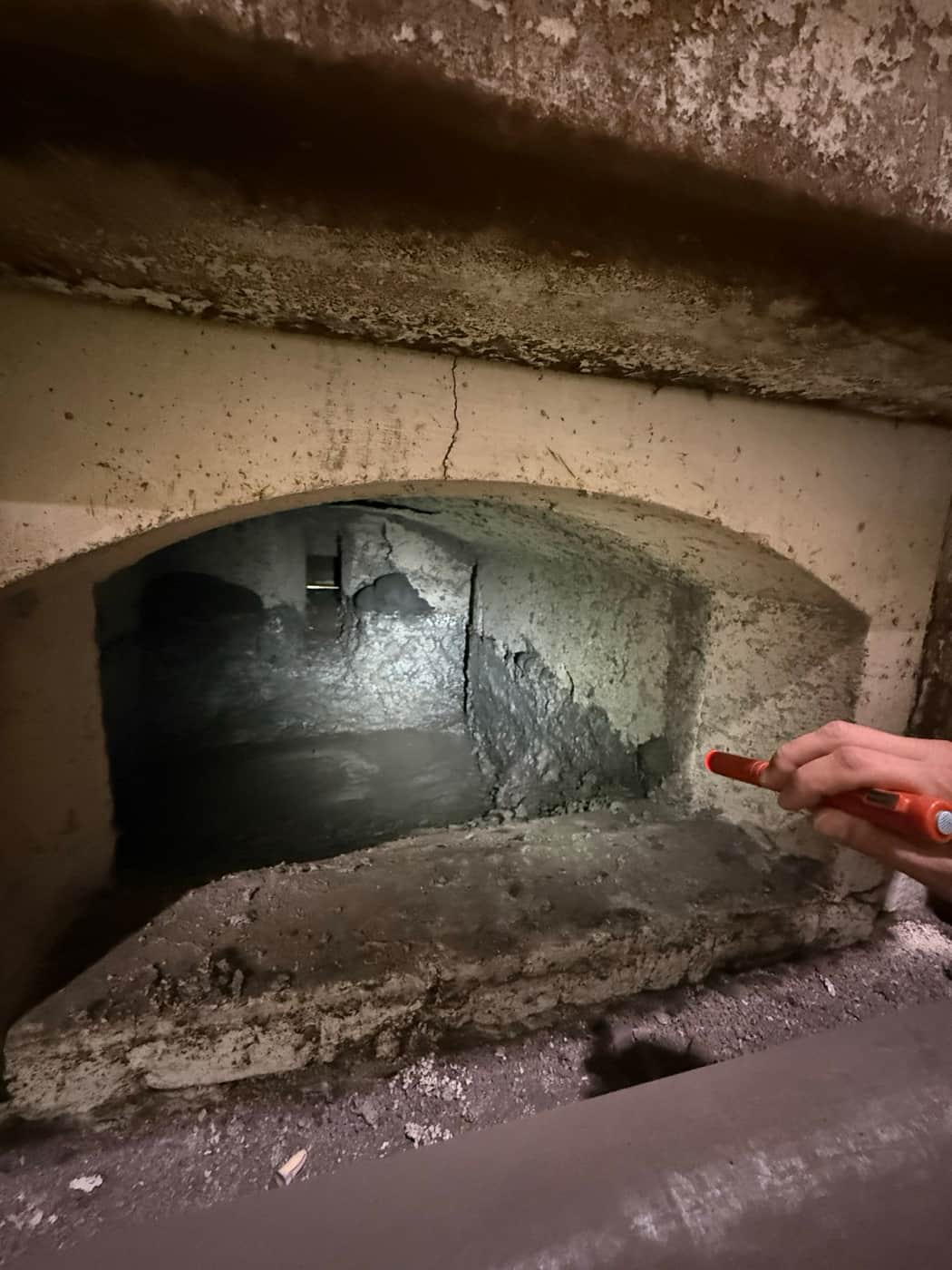
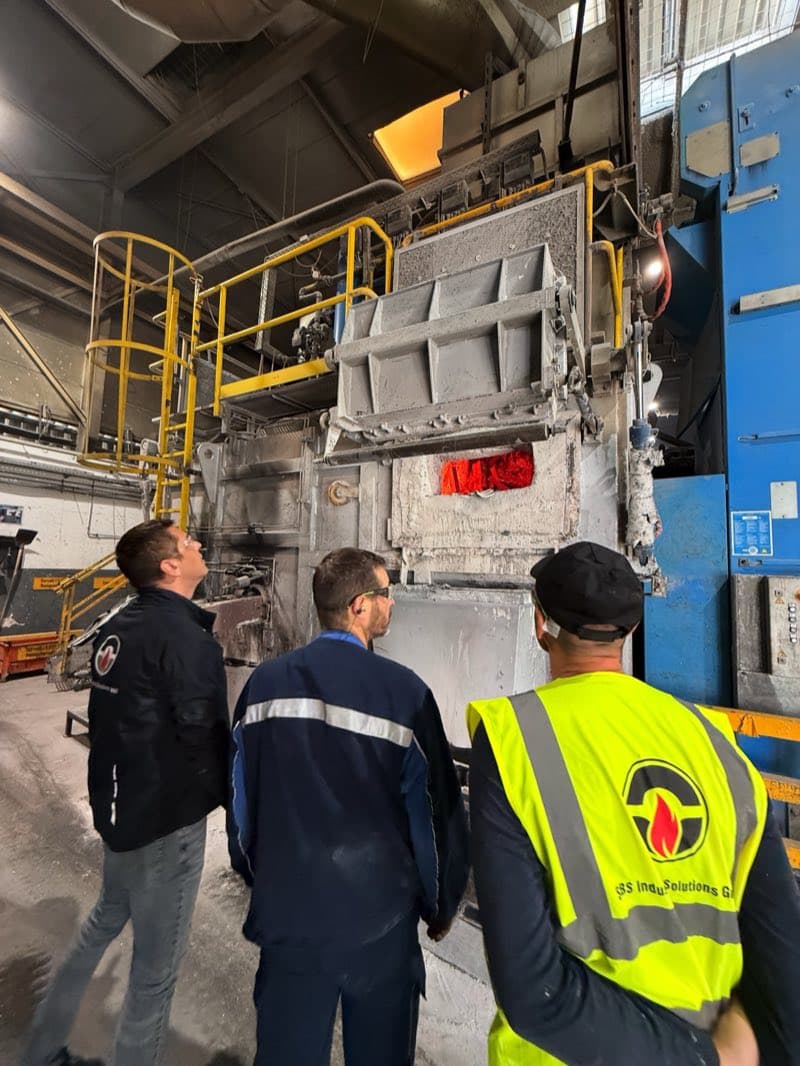
A walk-through takes an hour, costs almost nothing, and still decides the next shutdown. The pictures here come from an inspection in early October at an aluminium melting furnace in service — cooled down, opened, walked with a hand lamp. Three findings from that one morning. None of them spectacular. None of them stops the plant today.
That is precisely the point. What stops a plant is rarely what you see on the walk-through — it is what you saw on the last walk-through and did not classify.
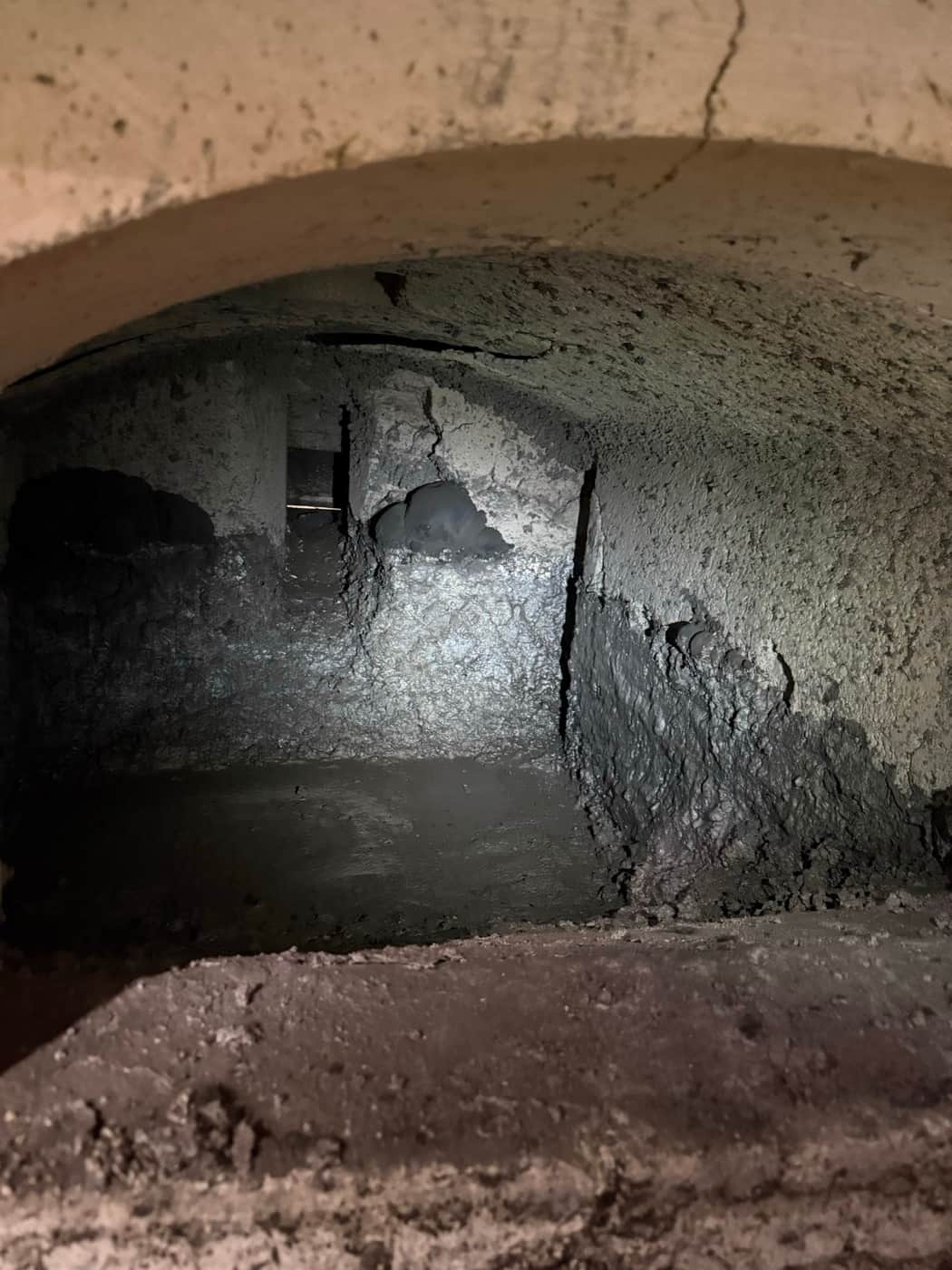
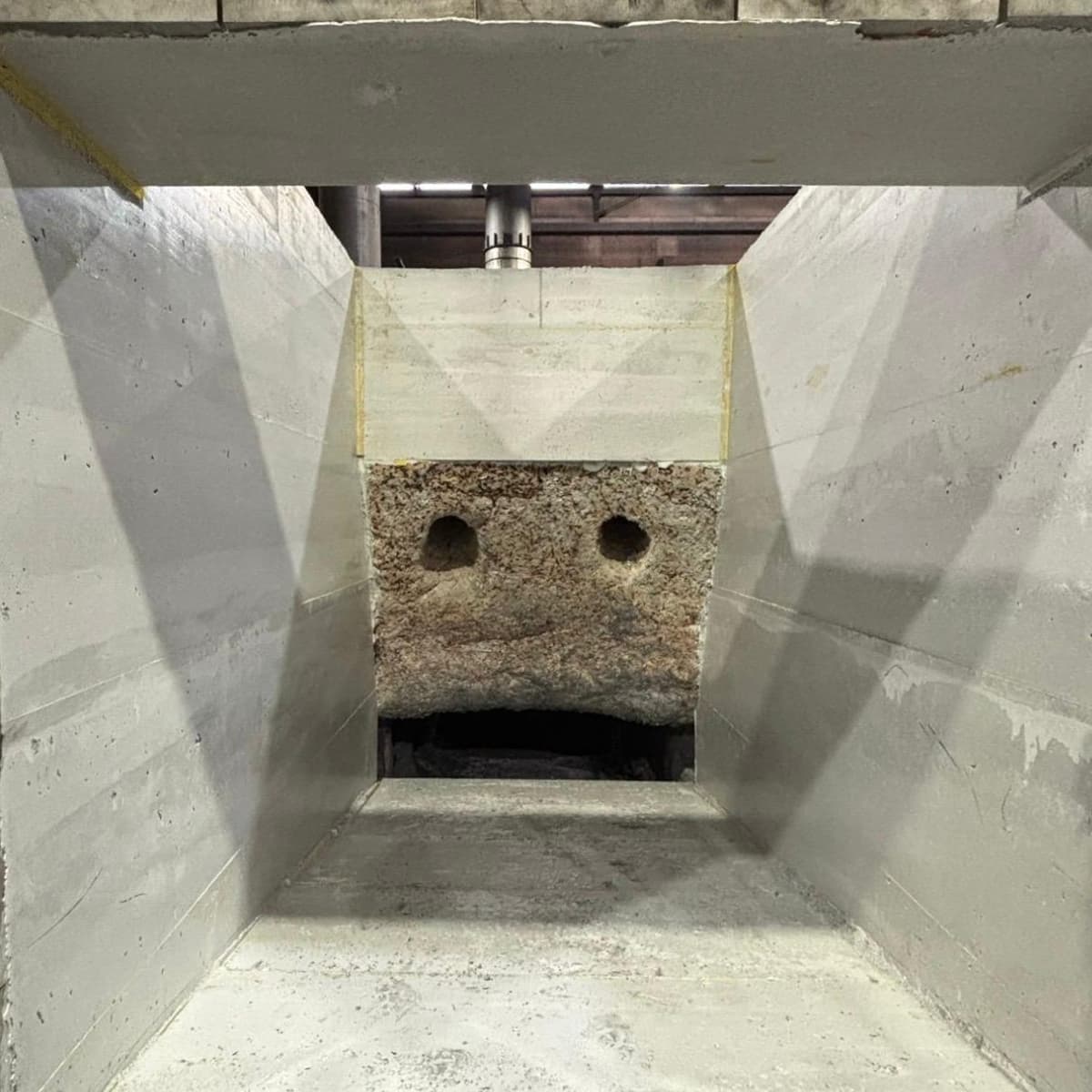
A crack runs across the arch, with a vertical separation in the side wall. Each is normal in itself: a monolithic lining cracks on first heat-up because it expands and has to yield somewhere. A hairline crack that does not widen further is not damage but a working expansion joint in an unplanned place.
The question is not whether there is a crack. The question is whether it was there last time and how wide it was then. Without a photo and a measurement from last year that cannot be answered — and then only guessing is left.
That is why every walk-through needs a photo with a scale at the same spot. A folding rule in the picture costs two seconds and turns an impression into a series of measurements.
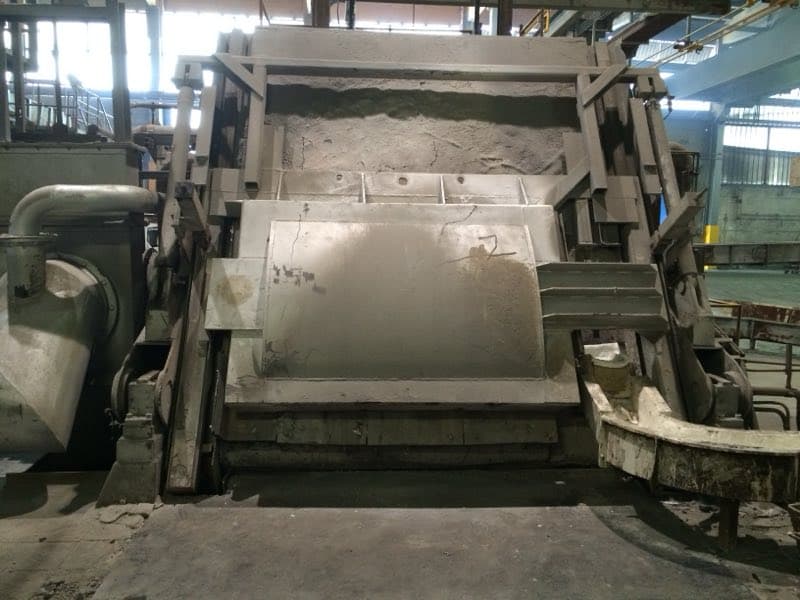
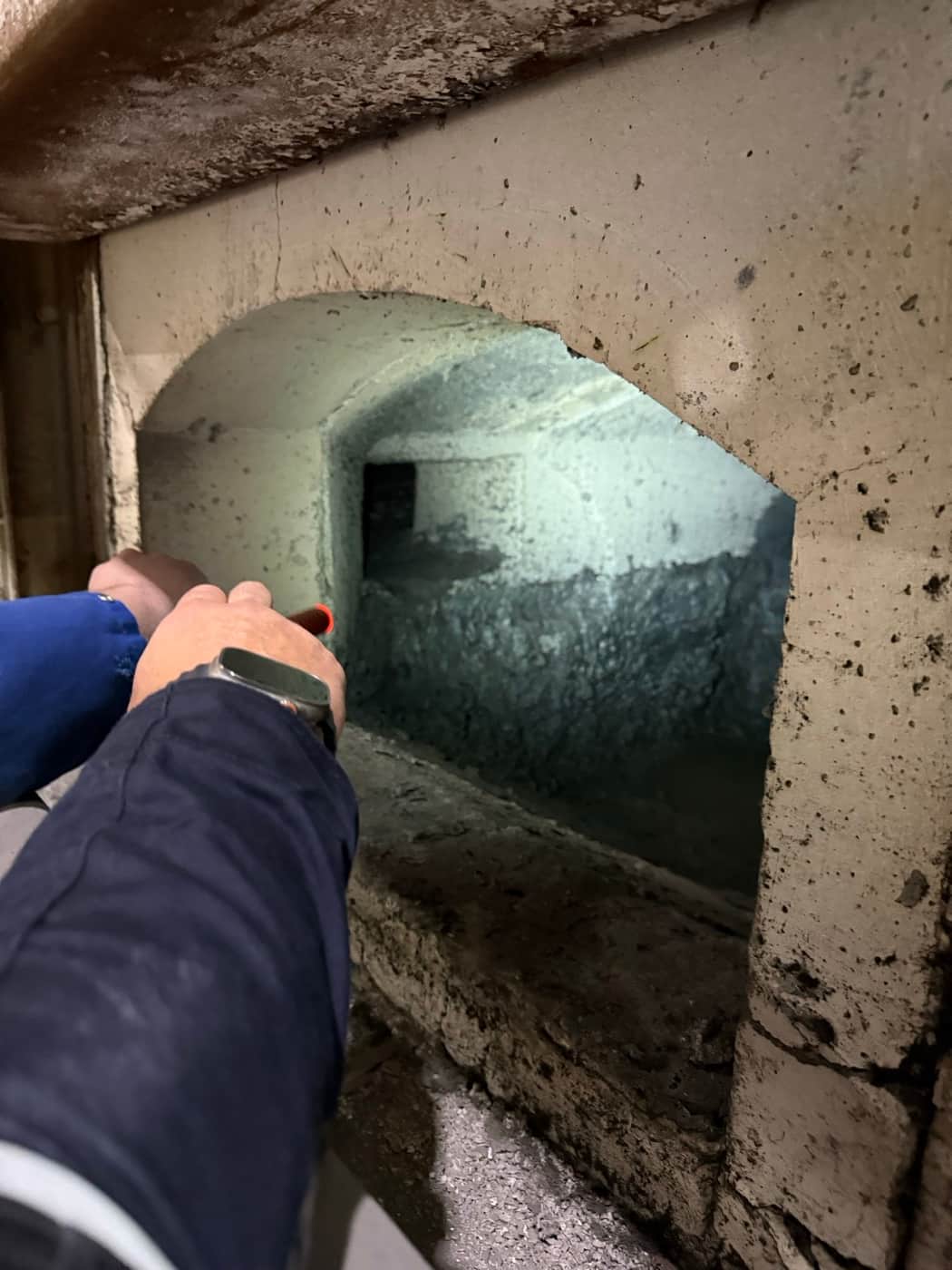
Hard grey crusts sit on the side wall — grown-on metal and oxide, some the size of a palm. In an aluminium furnace this is the normal case: the melt wets the lining, penetrates pores and grows inward from there as corundum. Corundum takes up more volume than what was there before. It bursts the surface open from within.
Which of the three applies cannot be seen from outside, nor on the thermogram. You see it when you strike it with a hammer in the cold furnace and listen to the sound.
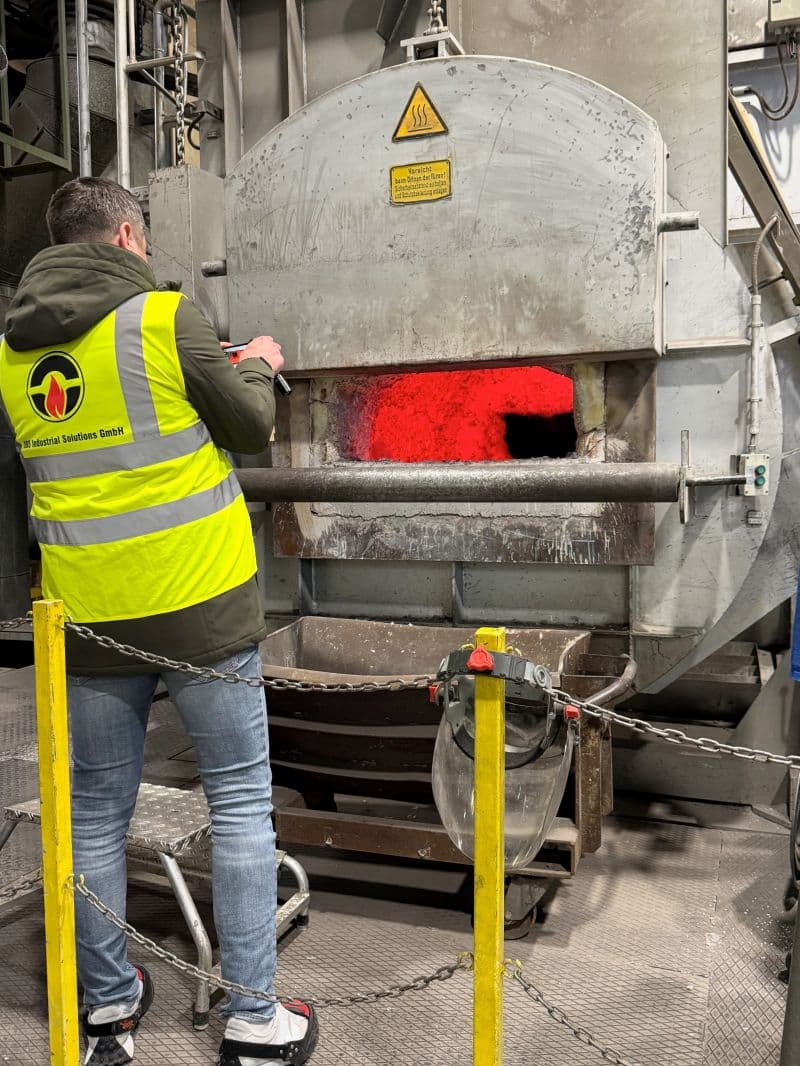
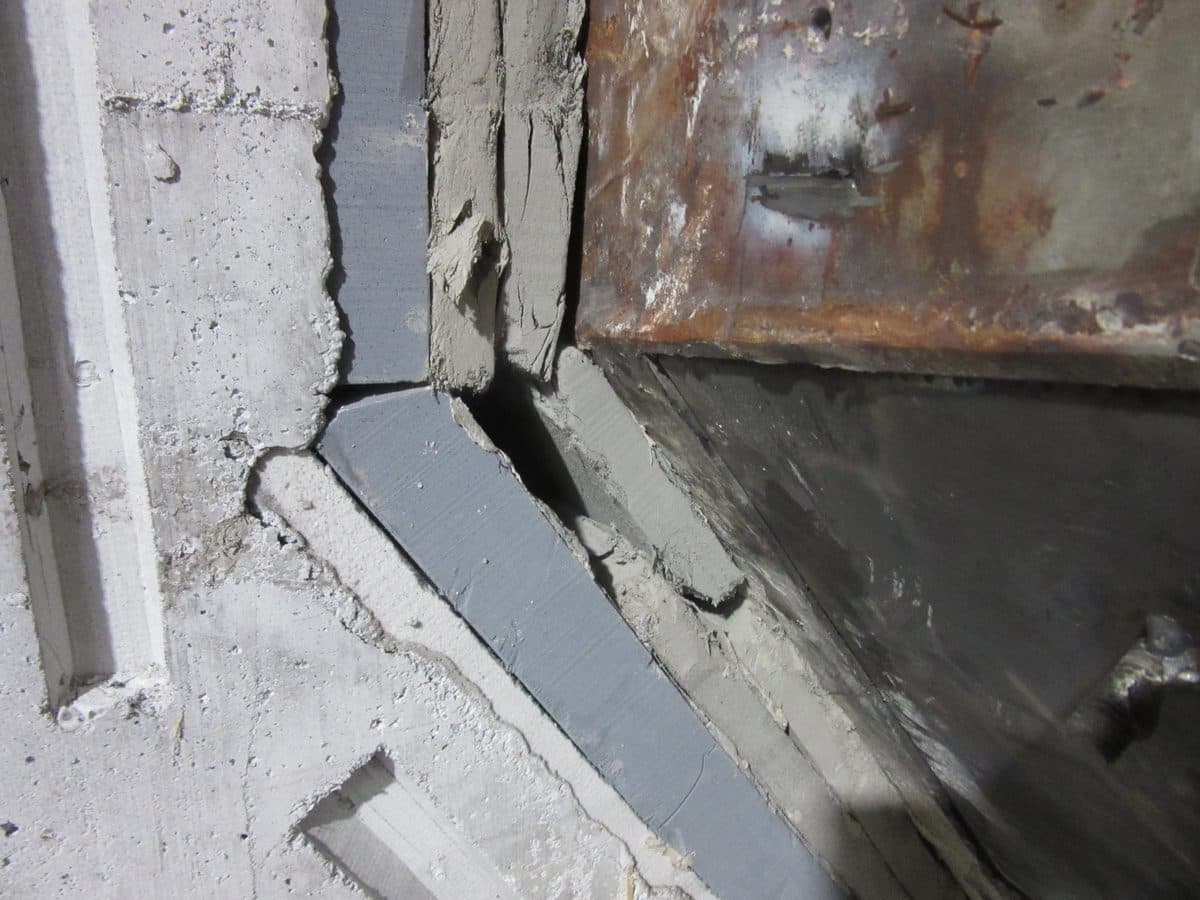
Pieces are missing from the frame of the opening, the edge has broken away, and cracks run off into the surrounding concrete. Openings are the most heavily stressed points of a lining: the temperature there swings by several hundred degrees every time the door is opened, tools knock against it, and the anchoring ends there.
A broken frame is not a cosmetic flaw. The edge guides the door and seals it. Without it, false air is drawn in, and the burner compensates with higher consumption — quietly, permanently, and on no fault list.
At the frame, repair almost always pays off earlier than elsewhere: the area is small, access is good, and the damage spreads outward from the edge.
These three findings do not turn into a quotation for a complete reline. They turn into an order of priority: what has to be done in the next planned shutdown, what will last another campaign, and what is merely watched and measured again next time.
That classification is the real value of a walk-through. It moves work out of the unplanned shutdown and into the planned one — and that is the only lever in refractory maintenance that saves money and raises availability at the same time.
A rule of thumb from practice: anything classed as „watch“ at the walk-through needs a date. Without a follow-up it becomes „it has always been like that“ next time.
All PDFs on this page are free, without sign-up. If you want to know when a new sheet is added: one e-mail a month, unsubscribe anytime.
PDFAll furnace typesSymptom, cause and required action side by side.
 PDFAll furnace types
When a targeted repair is enough, and the three findings where only a relining will hold.
 PDFEnergy & Combustion
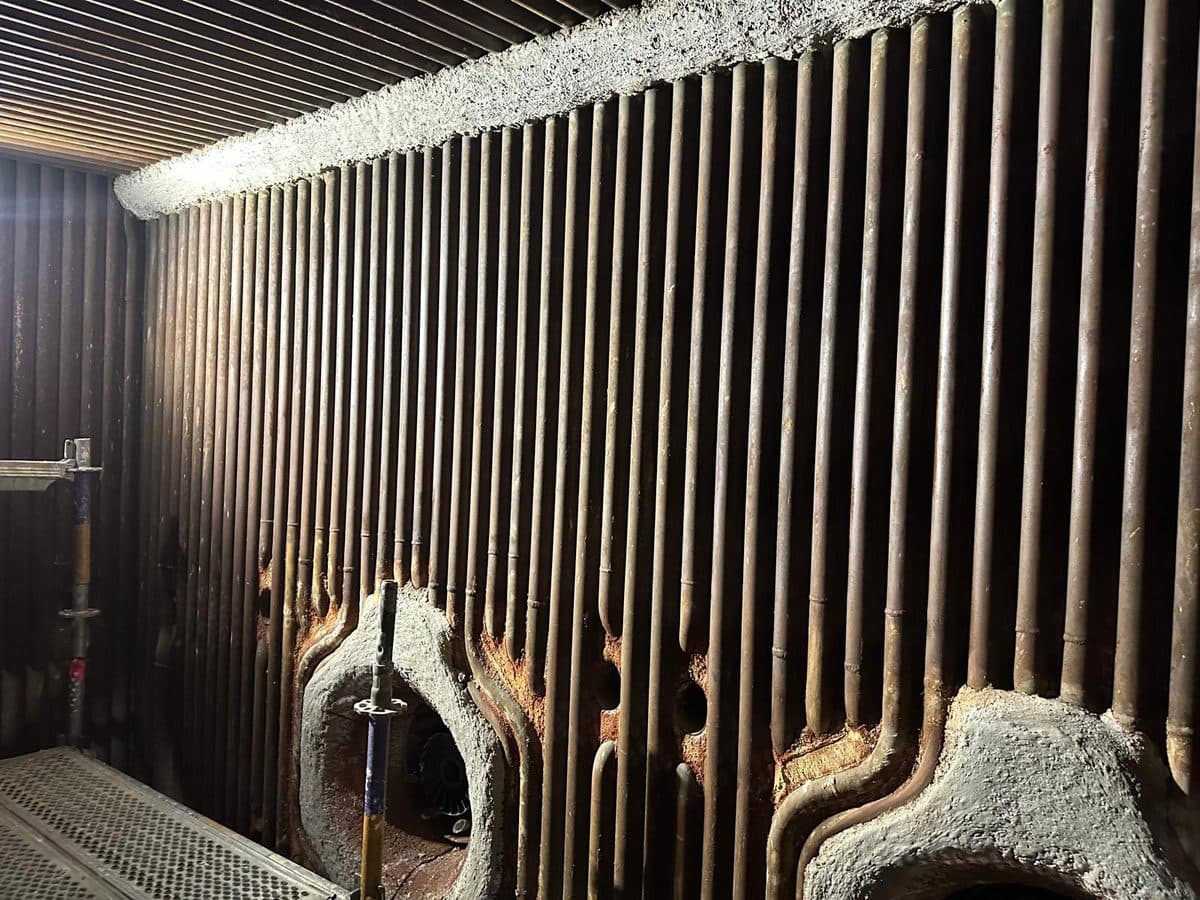
Protecting without blocking the heat: what matters when lining a boiler tube wall.
More insights from our projects
New insights from the job site every week – damage patterns, relinings and practical refractory know-how.
Whether complete relining, repair or emergency — free initial consultation and a fast response.
Your privacy matters to us.
We use cookies and similar technologies to ensure that our website functions properly and to analyse how our content is used. In the settings you can choose which cookies you wish to allow. Privacy policy