
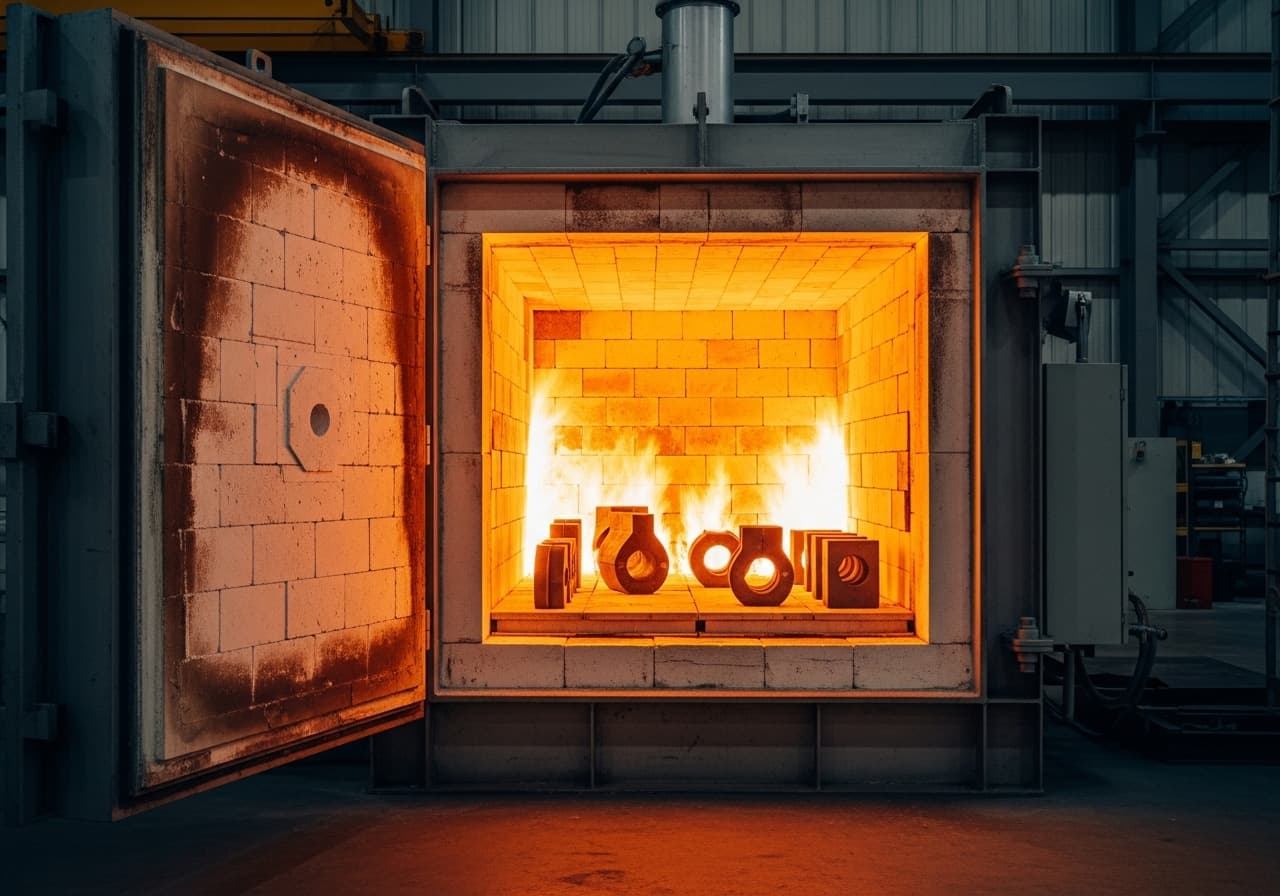
Chamber furnace
Refractory lining of chamber furnaces for versatile heat treatment processes.
Furnace profile at a glance.
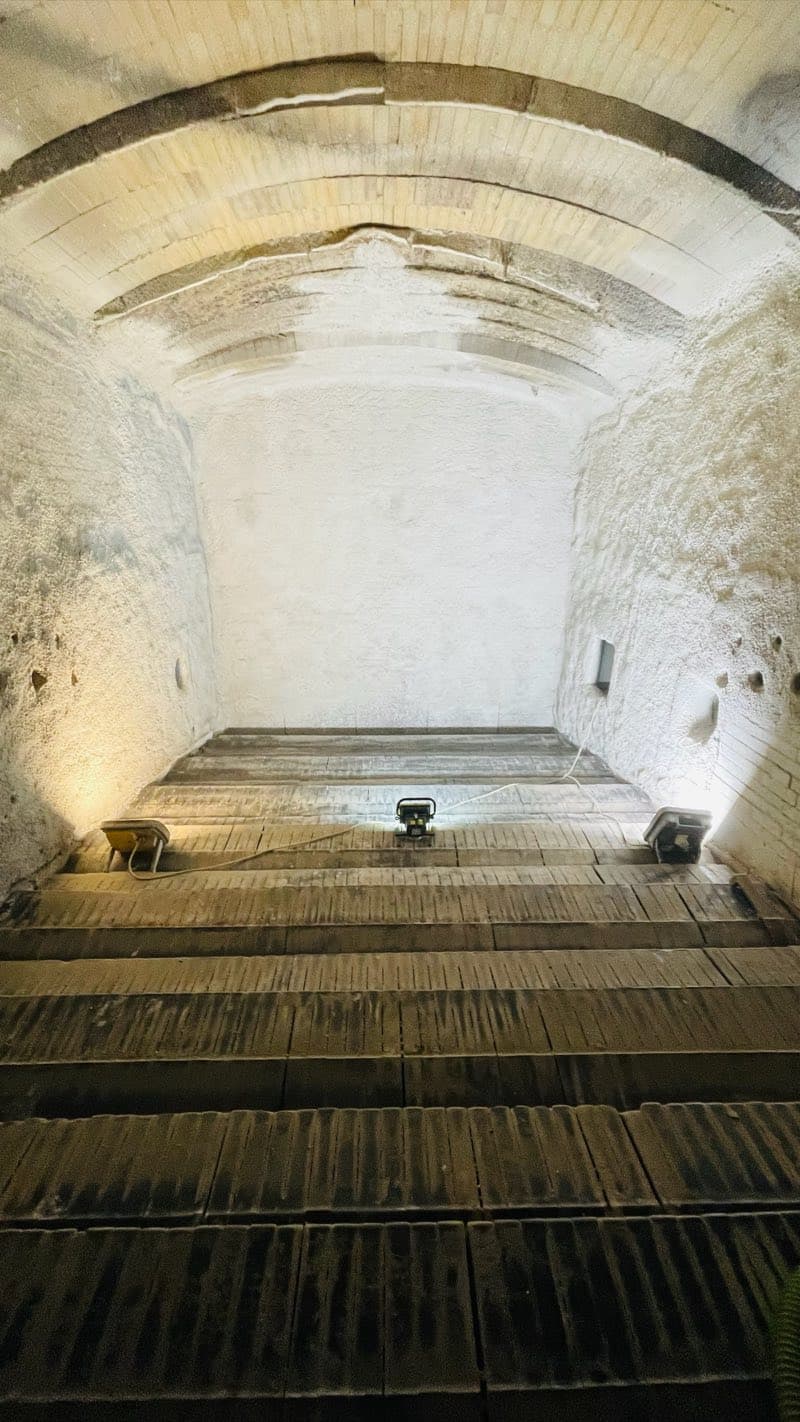
The chamber furnace is the most versatile furnace type in industrial heat treatment and forms the backbone of numerous manufacturing operations. Whether annealing, hardening, tempering or stress-relief annealing — chamber furnaces reliably cover a broad spectrum of thermal processes in the temperature range from 600 to 1,100°C. SBS Refractory Service has specialised in refractory construction for chamber furnaces for decades and serves customers from the automotive, aerospace and mechanical engineering industries throughout Germany. Our experienced refractory installers know the specific requirements of every chamber furnace design — from the compact laboratory furnace to the large-volume production furnace — and ensure execution on schedule with minimised shutdown times.
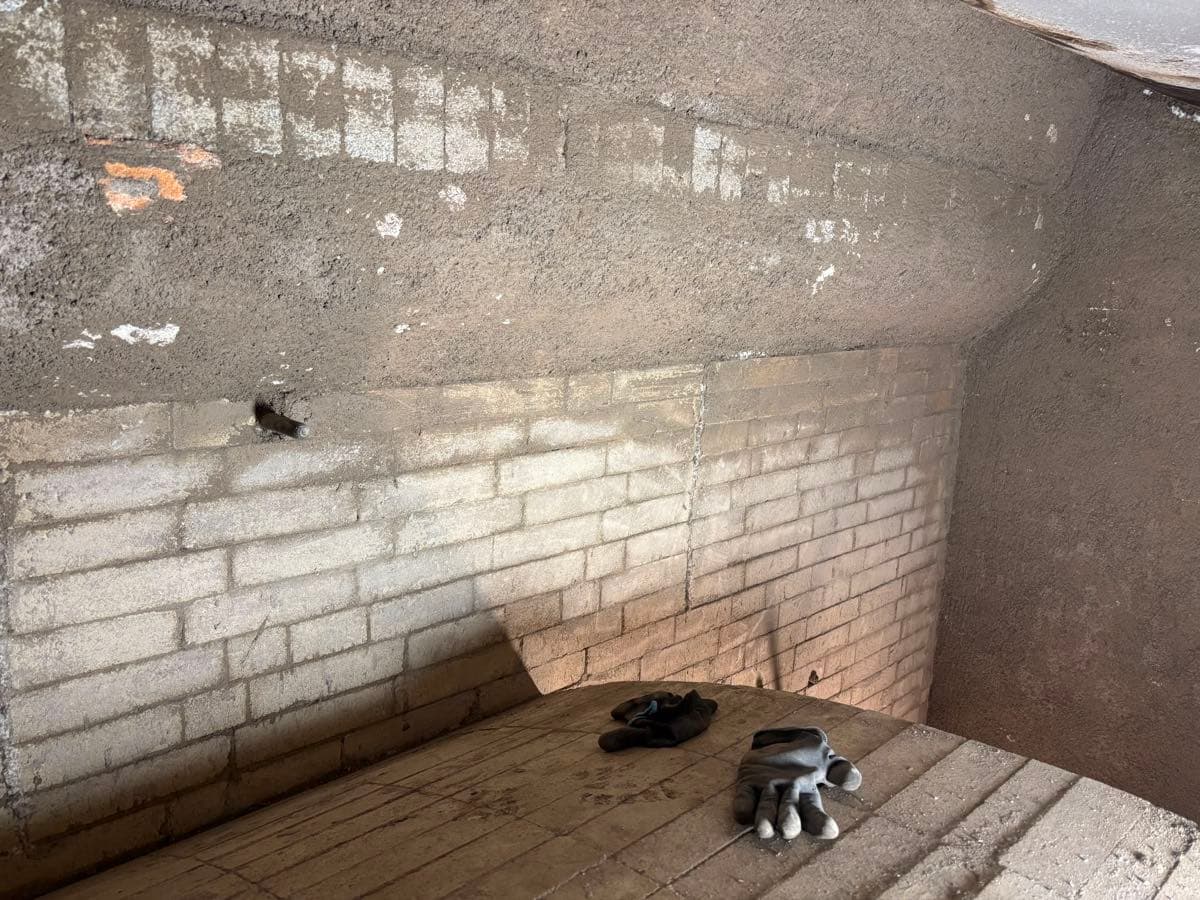
The refractory lining of a chamber furnace is subject to extreme loads: frequent temperature changes in batch operation generate thermal shock stresses that can lead to cracking and spalling. At the same time, the mechanical charging and discharging of heavy workpieces places a load on the furnace hearth and the door area. Outdated dense brick linings also store enormous amounts of heat that are lost with every change of charge. SBS analyses the individual operating conditions of your chamber furnace — cycle times, maximum temperature, atmosphere and workpiece geometry — and develops a tailor-made lining concept that optimises service life, energy efficiency and process reliability.
Modern ceramic fibre linings can lower the energy consumption of your chamber furnace by 20 to 40 per cent — thanks to the drastically reduced heat storage mass, ceramic fibre modules heat up and cool down considerably faster than conventional brick linings. This shortens cycle times and considerably increases the productivity of your heat treatment plant. SBS advises you comprehensively on the economic advantages of a conversion and carries out all work including controlled heat-up and seamless documentation.
Typical problems with the Chamber furnace.
These loads determine the choice of material and the design of the refractory lining.
Thermal shock from batch operation
Frequent temperature changes between charging and discharging generate strong thermal stresses in the lining. This leads to micro-cracks that spread over time and can result in large-area spalling.
Mechanical loading of the furnace hearth
Placing and removing heavy workpieces — often with forklifts or crane forks — places a heavy mechanical load on the hearth bricks. Impact loading causes local break-outs and damages the insulating layer beneath.
Energy losses through an outdated lining
Conventional dense brick linings store large amounts of heat that are lost with every change of charge. This leads to excessive energy consumption and long heat-up times between charges.
Door seals and heat losses
Worn or deformed door seals lead to uncontrolled heat losses and temperature inhomogeneities inside the furnace. A defective seal can increase energy consumption by up to 15 per cent and impair process quality.
Materials & lining
Every zone of your furnace places its own demands on temperature resistance, chemical resistance and mechanical load capacity. We select the optimum material combination.
Click on a material for details
Ceramic fibre modules
Ceramic fibreWall and roof insulation
Lightweight refractory bricks
Refractory bricksHigh-temperature zones
Typical work on the Chamber furnace.
Our services for this furnace type — from complete relining to ongoing maintenance.
From site inspection to acceptance.
Our structured process ensures quality, on-time delivery and safety in every project.
Assessment & site inspection
Condition assessment of the chamber lining
Planning
Insulation concept for energy optimisation
Execution
Renewal or reinforcement of the insulation
Safety
Seamless documentation
Assessment & site inspection
Our refractory specialists carry out a comprehensive condition analysis of the chamber furnace lining. This includes the visual inspection of all chamber areas — walls, roof, hearth and door area — for cracks, spalling and break-outs, as well as a thermographic examination to detect concealed weak points. The residual lining thickness is measured at critical points and the condition of the door seals is assessed. On the basis of these data we prepare a detailed inspection report with a clear recommendation for action — partial repair, insulation upgrade or complete relining.
Planning
During the planning phase we define the optimal material concept for your chamber furnace. We take account of operating temperature, cycle times, atmosphere and mechanical loading in order to define the correct combination of insulating materials and wear layer. The shutdown period is coordinated closely with your production planning, a detailed construction schedule is prepared and all materials are checked for availability in advance. For a conversion to ceramic fibre we calculate the expected energy saving and payback period.
Execution
Execution begins with the controlled cooling of the furnace and the correct dismantling of the old lining. After thorough cleaning and inspection of the furnace shell for corrosion damage, the rebuild follows: installation of the insulating layer, mounting of the ceramic fibre modules or laying of the lightweight refractory bricks, installation of new door seals and renewal of the hearth bricks. Finally, the entire lining is dried and fired in under control following a defined heat-up curve.
Safety
All work is carried out in strict compliance with the occupational safety regulations. Before work begins we prepare a project-specific risk assessment and instruct all employees in the site-specific safety rules. During dismantling of the old lining, dust protection measures are taken and all demolition material is disposed of correctly. Documentation is seamless and comprises material certificates, installation records and an acceptance report.
From our project portfolio.
Over 500 successfully completed refractory construction projects in the DACH region and the Benelux countries.

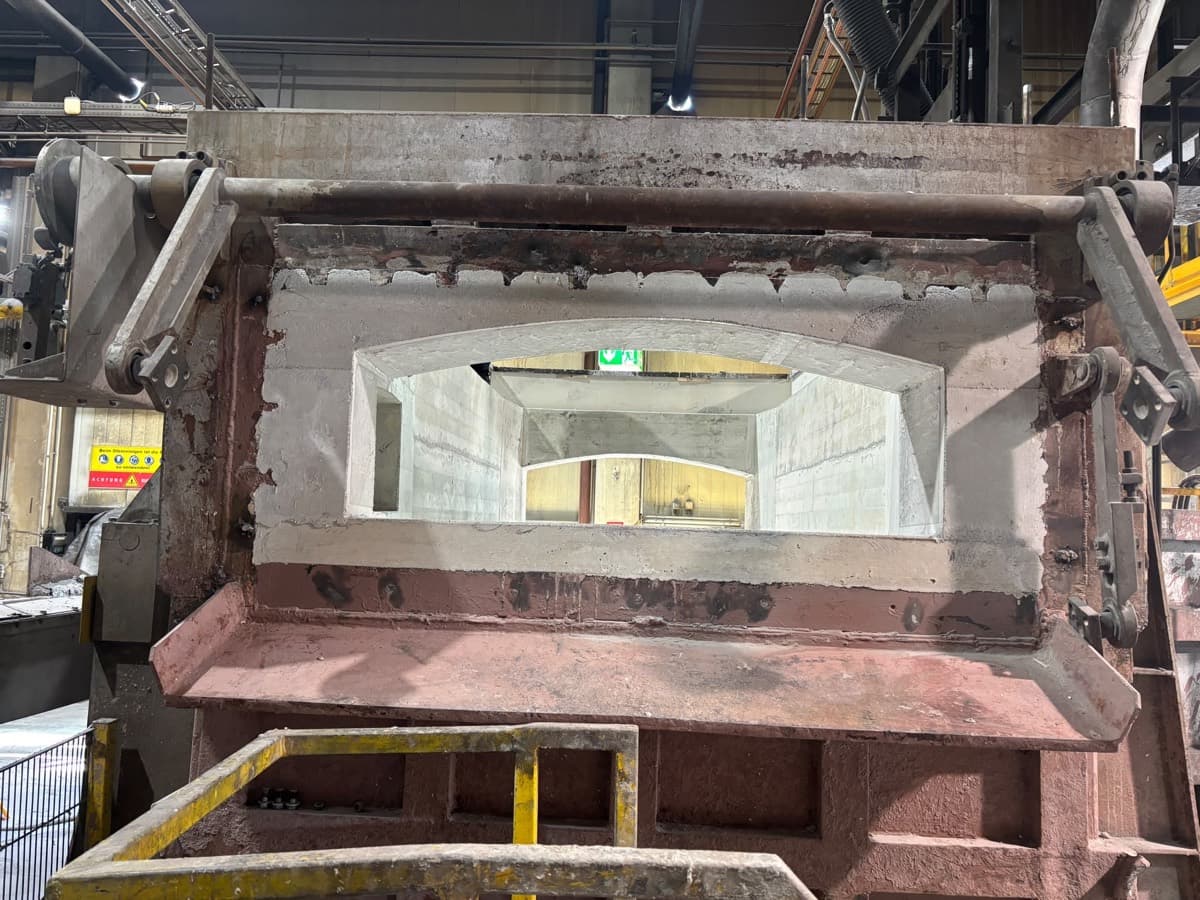
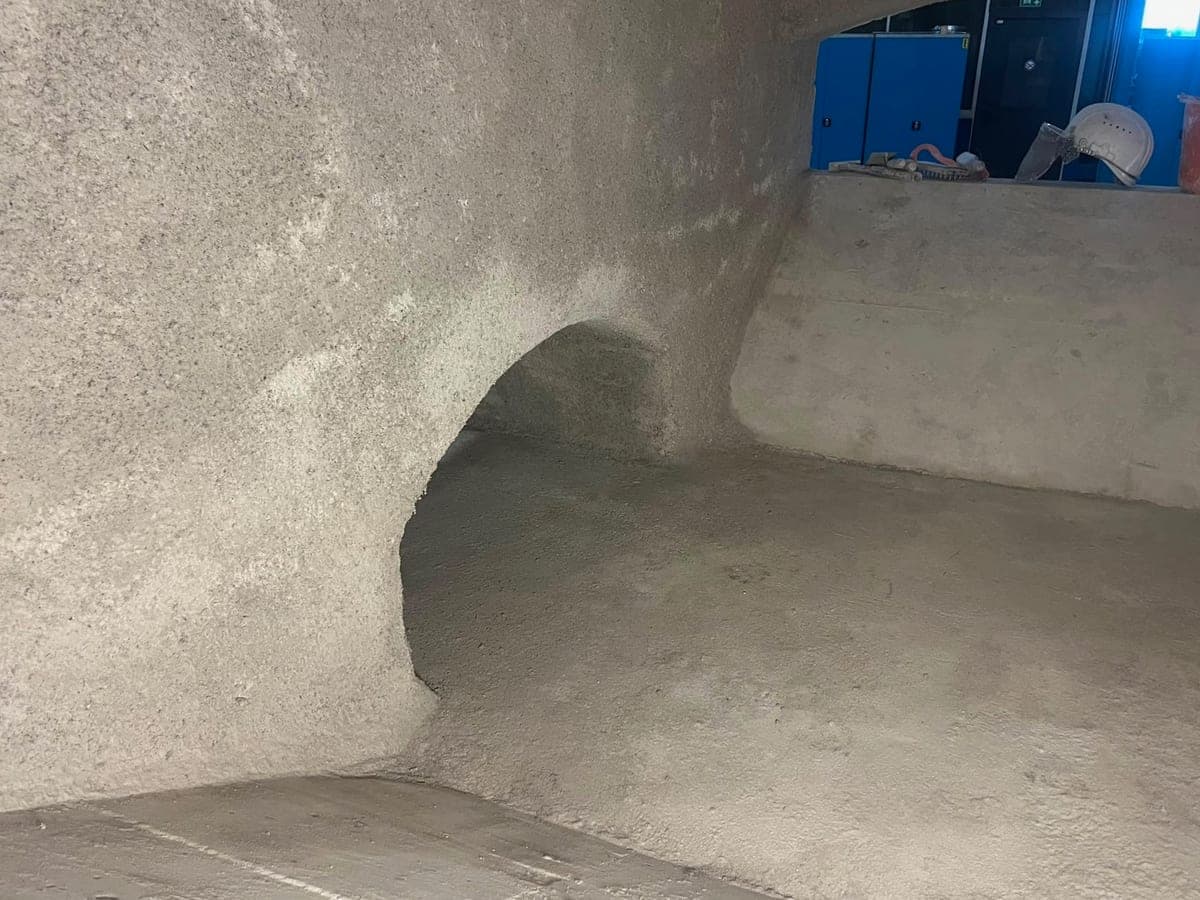

Chamber furnace
Frequently asked questions
Everything you need to know about the Chamber furnace
Go deeper.
Planning a project?
Whether complete relining, repair or emergency — free initial consultation and a fast response.